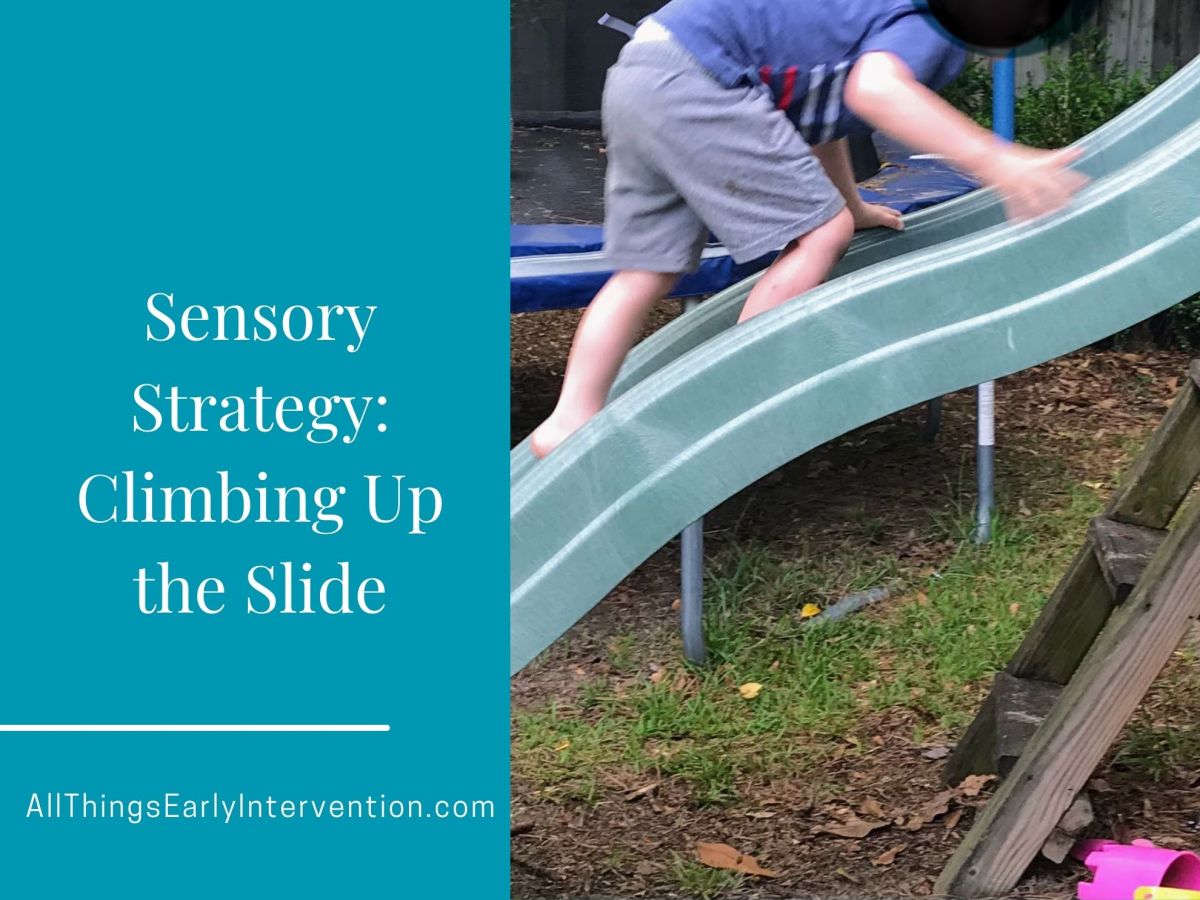
The Choice to Climb: A Lesson in Regulation from My Backyard
When our foster son first came to live with us, we quickly learned that his internal world was often in a state of chaos. When he became unregulated, his energy was high, his focus was scattered, and he could be incredibly difficult to manage within the four walls of our home. In those moments, we found that the best place for all of us was the backyard. We spent hours out there, letting him move in the ways his body seemed to demand.
One of the things we did that might have looked “wrong” to a passing neighbor was encouraging him to climb up the slide backwards. To an observer, it might have seemed like we were ignoring basic playground etiquette. But we were watching him find a way to organize his own nervous system through movement that his body was clearly craving.
Heavy Work vs. Playground Manners
In the world of pediatric development, what we were witnessing is often referred to as “heavy work.” This is a form of proprioceptive input where the body moves against heavy resistance. Research shows that this type of activity provides stimulation to the muscles and joints that is deeply calming and organizing for the central nervous system. When a child pulls their body up a slide, they are engaging their core, upper body, and lower body muscles in a way that regular sliding simply doesn’t offer.
This developmental need often clashes with what has been called The Great Slide Debate. On one side of the playground, there is a strong cultural mantra: “up the stairs and down the slide”. Some argue that allowing children to climb up the slide is a sign of poor manners or lazy parenting, and that it teaches children to ignore social boundaries or even bully those waiting to go down. There are also valid safety concerns in public spaces, as collisions can lead to serious injuries if children are not properly supervised.
Why the “Wrong Way” Was the Right Path
For us, however, the backyard was a controlled environment where those social manners didn’t have to be the priority.
By negotiating the steep, slippery incline, he had to plan his movements carefully—a skill called motor planning. This “conquering of Mount Everest” provided the intense proprioceptive feedback he needed to feel where his body was in space, which in turn helped dampen his over-aroused state. In our own backyard, the physical benefits of core strengthening and the emotional benefits of reaching the top far outweighed the need for traditional slide etiquette.
Practical Ways to Support Your “Slide Climber”
If you work with children who struggle with regulation, it may be time to look past the “rules” and see the “need.”
If you are considering letting your child climb up the slide at a public park, you are entering a space of both significant developmental benefit and social controversy. While often against “traditional” playground rules, this activity provides intense heavy work that can be deeply organizing for a child’s nervous system.
Here is advice on how to navigate this safely and effectively:
1. Prioritize “Right of Way” Etiquette
The biggest concern in public spaces is safety and social friction. To manage this, establish a clear rule that sliding down always has the right of way.
- Check the Line: Only allow climbing when no one is waiting at the top to go down.
- The Exit Strategy: Teach your child that if someone arrives at the top while they are climbing, they should immediately slide back down to clear the path.
- Social Negotiation: Use these moments to teach your child to communicate and problem-solve with other children about whose turn it is.
2. Maintain Close Supervision
Safety is paramount, especially on taller structures or when the park is busy.
- Be a “Lifeguard”: Active supervision means moving through the area and scanning frequently rather than just watching from a distance.
- Age Appropriateness: Toddlers should only use slides meant for their size, and an adult should stay close enough to keep hands on them if needed.
- Check the Environment: Before they start, ensure the slide surface isn’t too hot from the sun and that the “fall zone” (the area at the bottom) has adequate surfacing like wood chips or sand to cushion a potential fall.
3. Manage Social Pressure
You may face “judging eyes” from other parents who adhere strictly to the “up the stairs, down the slide” mantra.
- Speak Up: To relax parents around you, say something out loud like, “It’s okay with me if they go up right now since no one is waiting”.
- Contextual Rules: Explain to your child that while this is okay now with you present, they must still follow specific school or daycare rules during recess when supervisors may not allow it.
4. Know When to Pivot
If the park becomes too crowded, point out that “the slide is only for going down right now” and find another outlet for that heavy work feeling. You can offer other ways to get that same organizing input, such as:
- Animal Walks: Bear crawls or crab walks.
- Functional Pushing: Pushing a heavy stroller or a weighted backpack.
- Alternative Climbing: Looking for logs to balance on or hills to climb if the playground is too static.
Recommendation: If you know a child who is a “sensory seeker” and needs intense input to feel regulated, climbing the slide can be a powerful tool for their development, provided it does not interfere with the safety or play of others.
References
Blue Bird Day. (Accessed April 25, 2026.). Slide climbing: Rethinking the recess rule! https://bluebirddayprogram.com/slide-climbing-rethinking-the-recess-rule/.
This site details the specific physical benefits of climbing, such as core, upper, and lower body strengthening, as well as its impact on bilateral coordination and motor planning. It also provided essential safety tips for parents, such as ensuring an adult is close by and teaching children that school-specific rules may differ from park play.
Broadbent, E. (2021, March 24). I let my kids climb up the slide, and here’s why. Scary Mommy. https://www.scarymommy.com/i-let-my-kids-climb-up-the-slide-and-heres-why.
This article explains how slide climbing provides vestibular stimulation, which is crucial for equilibrium and spatial orientation. It also highlights how this “risky play” builds self-esteem and resilience, while teaching children to use play equipment in creative ways rather than just following dictated rules.
National Program for Playground Safety. (2014). S.A.F.E. outdoor play supervision manual. https://www.playgroundsafety.org/.
This manual provides the traditional safety perspective, categorizing “going up single-wide slides while others are coming down” as an example of unsafe equipment use. It serves as a contrast to the developmental arguments, illustrating why social friction and safety concerns exist in public spaces.
Shumaker, H. (2014, March 25). Climbing UP the slide. https://heathershumaker.com/blog/2014/03/25/climbing-up-the-slide/.
This post discusses the social negotiation and peer conflict resolution that occurs when kids climb up slides. It provided practical advice on how parents can relax other adults at the park by speaking up and addressing concerns directly.
Stone, C. (2023, October 2). Mom shares controversial stance on kids climbing up the slide, sparks TikTok debate. Motherly. https://www.mother.ly/news/viral-trending/mom-debates-over-climbing-up-the-slide-tiktok/.
This source frames the “Great Slide Debate” as a social experiment and identifies the “right of way” rule as a way to balance developmental benefits with playground etiquette.
Some Related Products on Amazon
As an Amazon Associate, I earn on qualifying purchases.