

What are “The Rules of Early Intervention” anyway?
We all have a mental handbook of unwritten rules for navigating the wild world of early intervention.
Keep reading
Learning Not to Judge Parenting Choices Different Than My Own
One of the hardest parts of being a foster parent is finding the middle ground. This is the space between your own family’s ideal normal and the reality of a child’s birth family. It is like walking a tightrope. You want to keep your home healthy, but you also want to make sure a child…
Keep reading
Rule #22 Be Weather Aware.
Close Calls and Cautionary Tales:
Who hasn’t gotten caught in a downpour while driving between visits? I’ve been there. Stuck in a car as a flash flood roared down a country road at dusk. Think scene from “Twister,” but with less flying cows and more frantic map checking.
Keep reading
Rule #23: Park at your own risk.
Parking, while seemingly unimportant, can significantly impact our work. It can lead to delays, damage, and even conflict. As early intervention providers, we need to be aware of the unwritten rules of neighborhood parking and the potential hazards of driving in challenging conditions.
Keep reading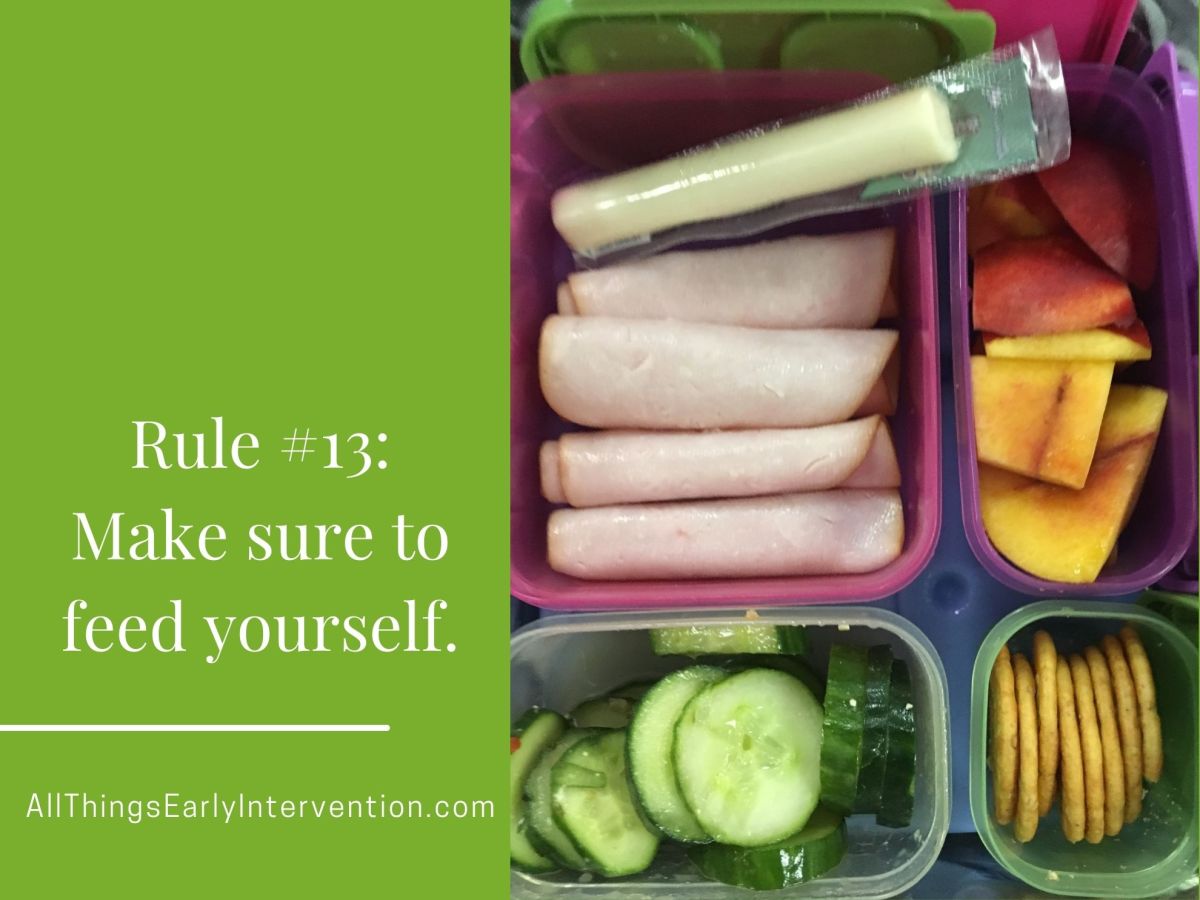
Rule 13: Make sure to feed yourself.
Taking care of your own needs while on the go can easily be pushed aside. In order for us, as Early Intervention providers, to pour into those families we work with, we must take care of ourselves consistently. Let’s explore some creative solutions to keep you powered up for the long day ahead.
Keep reading
Rule 12: Help dads embrace pretend play with dolls.
Our role isn’t to judge or attempt to change these beliefs but rather to find creative ways to ensure all children, regardless of background, can reap the benefits of pretend play. Here are some tips to navigate pretend play with dads who might be hesitant about dolls:
Keep reading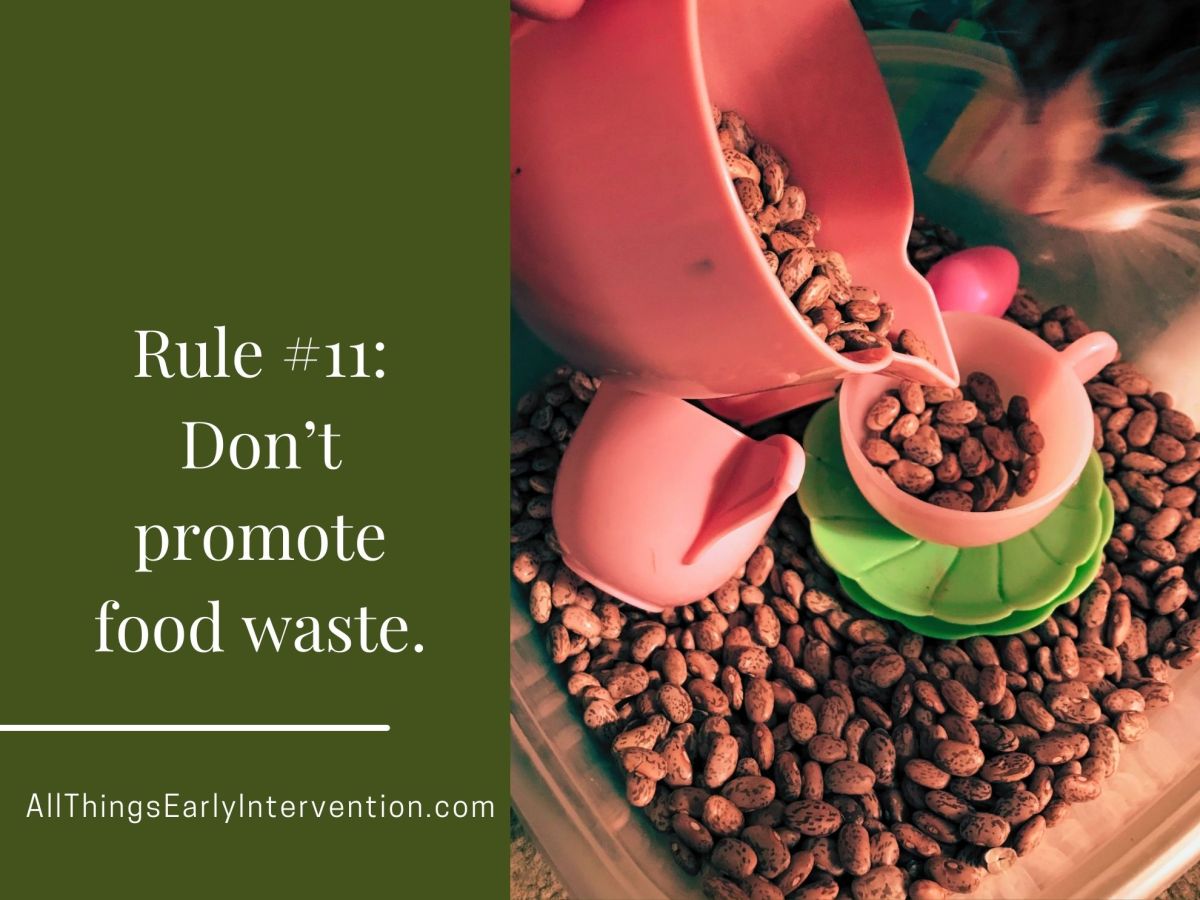
Rule 11: Don’t promote food waste.
Let’s talk sensory bins, a staple in therapy rooms for good reason. They’re a fantastic way to engage little learners and explore textures. But have you ever stopped to consider the ethics of using food in these bins, especially when some families we work with struggle with food insecurity?
Keep reading
Rule 10: Avoid the bugs
All kinds of bugs can spread from a home visit to your home. If someone in the home has something contagious you would consider rescheduling the home visit. Depending on your agency, some insects might be considered contagious. Find out your agency’s policies.
Keep reading
Rule 9: Be aware that exotic pets are out there.
Being an early intervention provider is like embarking on a daily safari – except instead of lions and tigers, you encounter a menagerie of…unexpected pets.
Keep reading
Rule 18: Keep your opinions to yourself.
Remember, our goal is to empower families, not to dictate their parenting choices.
Keep reading
Rule 17: Establish your own boundaries.
Early intervention gives us the opportunity to work with amazing families and incredible little ones, but sometimes, the lines between professional and personal can get blurry. We’ve all been there, right?
Keep reading
Rule 16: Drive Safe.
Remember, a safe early intervention provider is a happy early intervention provider, and a happy early intervention provider can make all the difference in the lives of the children and families we serve.
Keep reading
Rule 15: Don’t compare children.
When you mention that you are a parent to another parent, it elevates your street credit. You are “in the mom club” together and it can be tempting to share personal stories.
Keep reading
Rule 7: Know where to go for the good wi-fi.
Finding Wi-Fi in a rural area is hard, but it makes downtime more efficient. If you learn where you can go for Wi-Fi and to charge your cell phone if needed, and maybe a potty break and snack. You’re set.
Keep reading
Rule 8: Save for a rainy day.
Being a contract worker in early intervention has its advantages – flexibility, freedom, and the joy of making a difference. But it also requires financial responsibility and careful planning. By weighing the pros and cons, and implementing some smart saving strategies, we can ensure that our journeys as contract superheroes are filled with happy endings,…
Keep reading
Rule 6: Know where you’re going and how to get there.
This experience serves as a valuable lesson for anyone navigating rural addresses. Here are some strategies to ensure you arrive on time and avoid any “cornfield confusion”:
Keep reading
Rule 5: Watch your back.
This van comes with a backup camera, which is new to me, and let me tell you… a whole new world. Ever since I got a rear camera, backing up out of crowded driveways is so much easier. I can clearly see how close I am to random trees or other cars parked nearby as…
Keep reading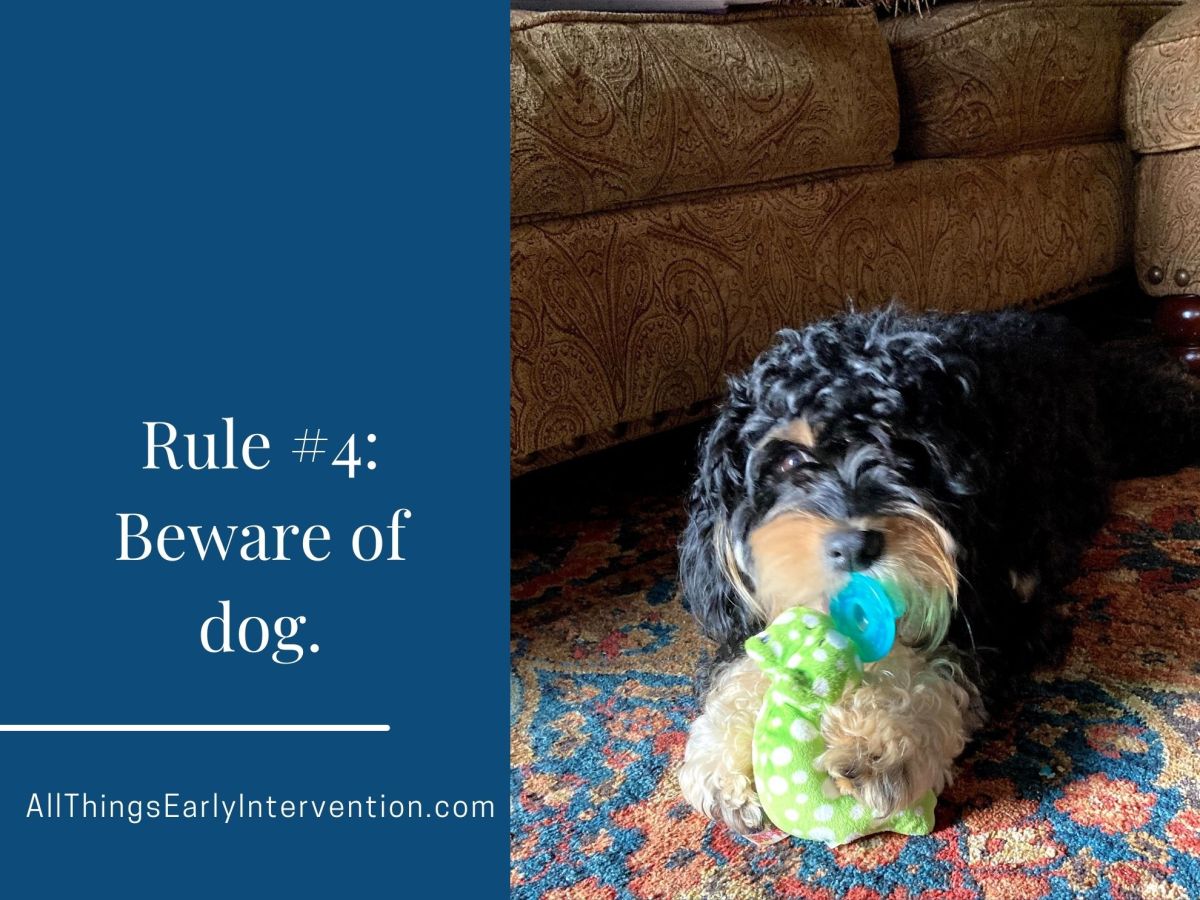
Rule 4: Beware of dog.
The most important thing is to remember that we, as home visitors, are strangers invading that dog’s space. His instinct, no matter his breed, is to protect his people. It is up to us to use caution.
Keep reading
Rule 3: Take your name tag off in public.
Our name tags are a double-edged sword. They create an avenue for connection, but can also lead to unexpected consultations. Let’s talk about some best practices on and off duty.
Keep reading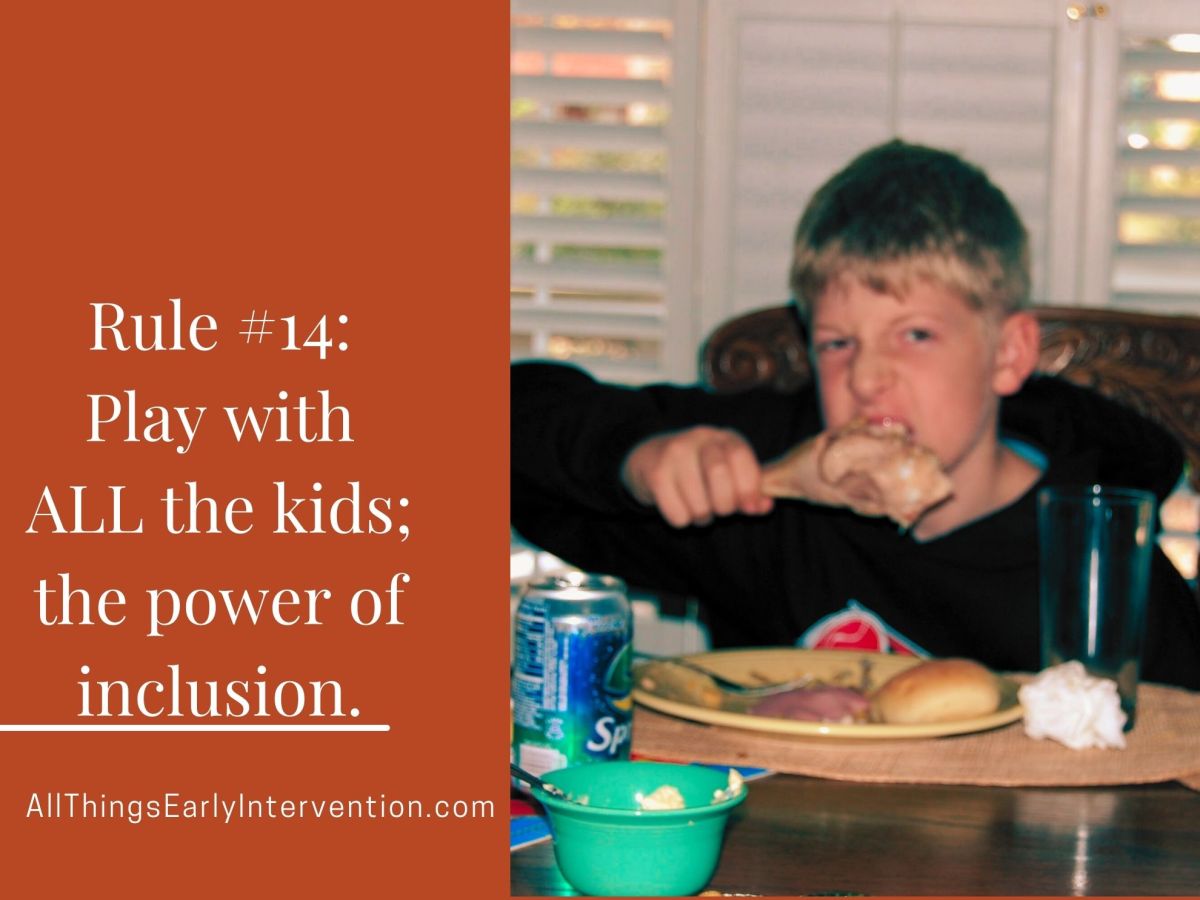
Rule 14: Play with ALL the kids.
On this particular “normal” day, I walked into a home visit with visions of one-on-one therapy in mind. Little did I know, nine visiting cousins eating fried chicken for lunch would turn it into a glorious, chaotic group experience.
Keep reading
Home visits–what’s the point?
At the end of each Early Intervention session, I recap, thinking, “What was the point?” I don’t leave until I let the family know the purpose of the visit. Being on the other side of Early Intervention, I realized that in those past home visits, I may have known what my intent was, but they…
Keep reading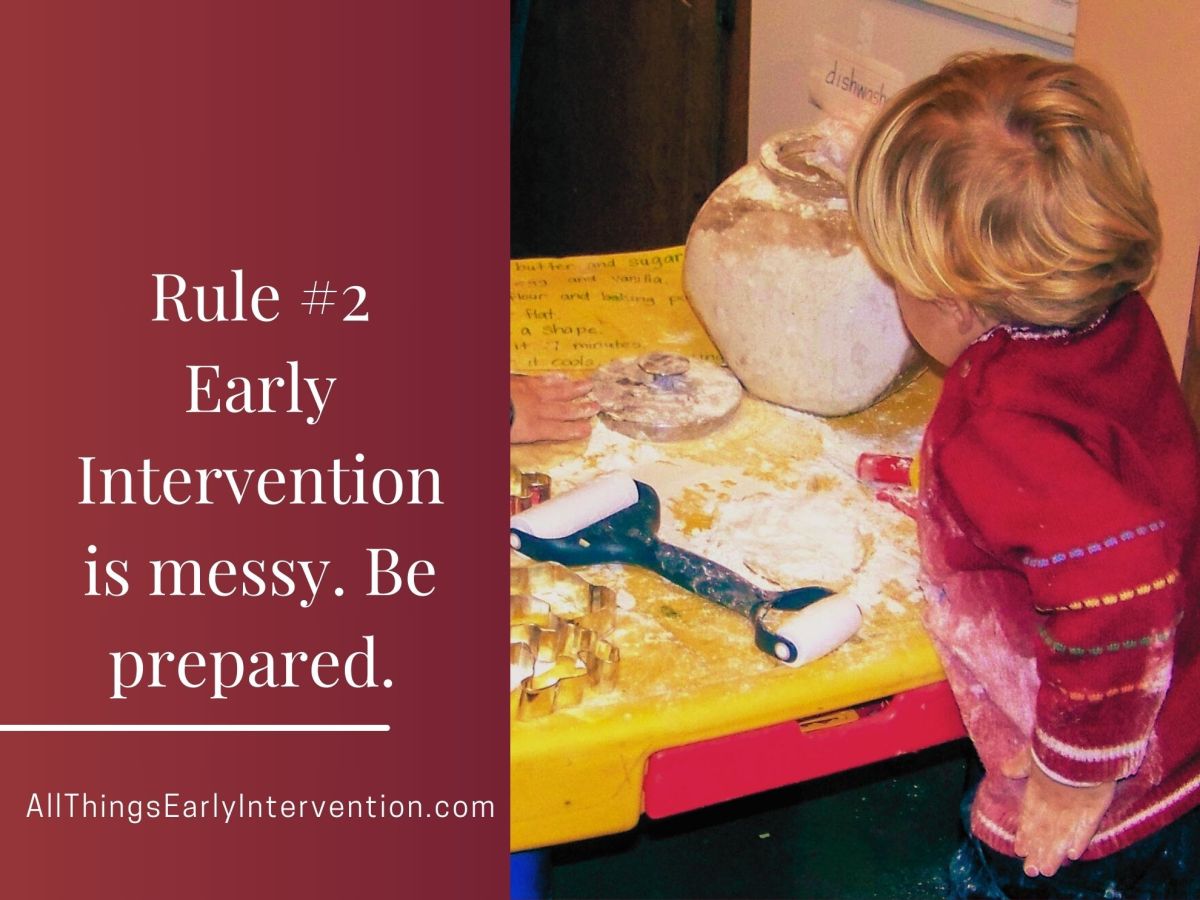
Rule 2: Prepare to get messy.
Each situation brings with it a different set of mess risk factors. You have to know your situation, know your risk factors, and be prepared for whatever you think you may encounter.
Keep readingSomething went wrong. Please refresh the page and/or try again.

