
One of the hardest parts of being a foster parent is finding the middle ground. This is the space between your own family’s ideal normal and the reality of a child’s birth family. It is like walking a tightrope. You want to keep your home healthy, but you also want to make sure a child never feels they have to choose between you and their first home.
My Internal Conflict of the “Smokes”
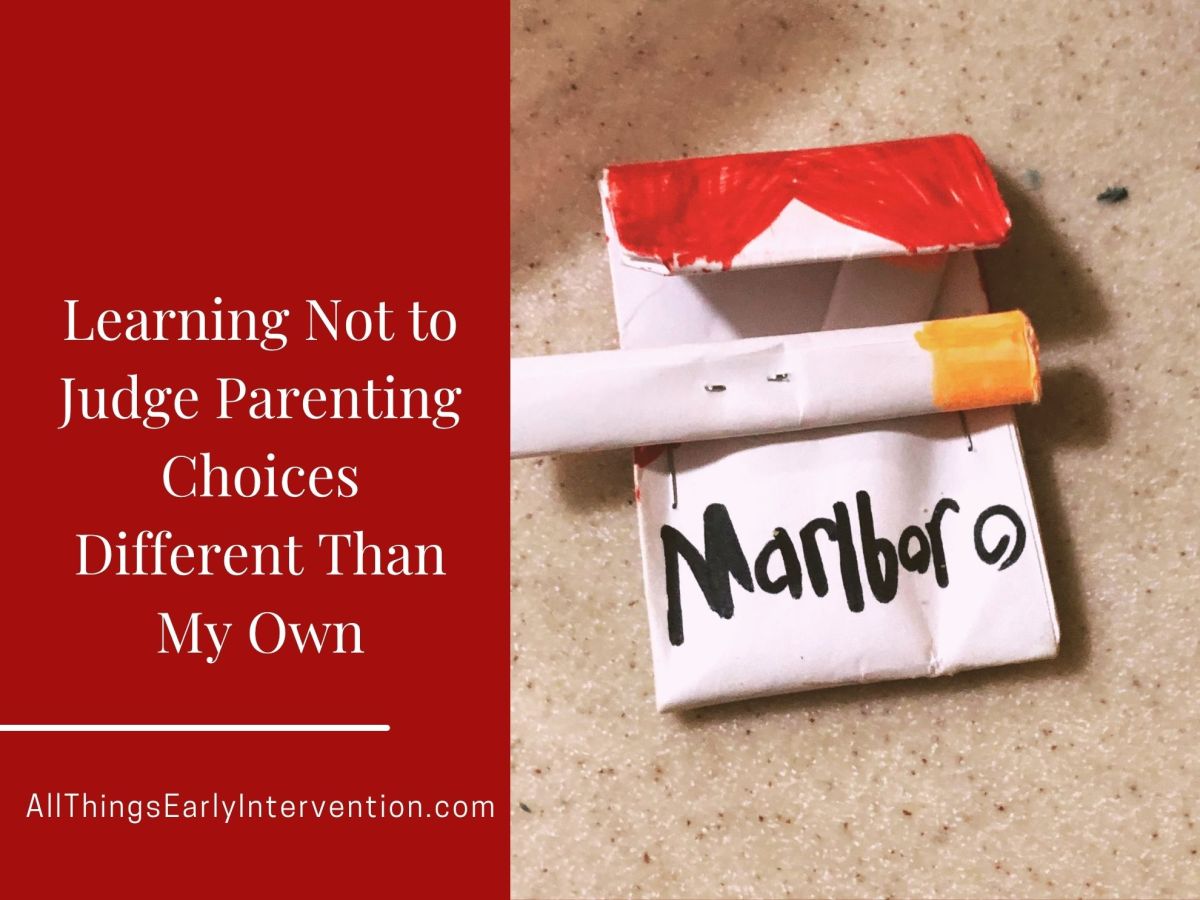
I remember when our foster daughter started play acting smoking, which she saw at home. She would put pencils and crayons behind her ears and call them her “smokes” that she was saving for later. My first reaction was to stop her. My internal alarm was screaming that this was wrong because smoking is “bad.”
However, I had to stop and think. For a foster child, smoking isn’t “bad” it’s something the people they love most do. If I shamed her for her play, I was shaming her parents. In a child’s mind, the logic is simple: “If Mom and Dad are bad because they smoke, and I am like them, then I must be bad too”. Choosing to let her play was a way to protect her heart. It helped her keep a positive image of her parents, which is so important for her self-esteem and healing.
The “Middle-Class Lens”
This gut feeling I had—this “internal alarm” about the crayons behind her ears—is actually a perfect example of a much bigger challenge in foster care. It came from my own bias.
This means we often use our own lifestyle as the “correct” way to live, rather than looking for real safety risks. When we look through this lens, we risk confusing things that are just “unfamiliar” with things that are actually “unsafe”.
To grow as a foster parent or an early intervention professional, you have to learn the difference between the two.
The Shift: From Judging to Adjusting
I learned to hold a boundary by asking myself three simple questions:
- Is it illegal? No.
- Is it abusive? No.
- Is it neglectful? No.
If the answer to all three is “no,” then I have to let go of the worry. Just because a birth parent makes a choice I wouldn’t make doesn’t mean they are a bad person.
Instead of judging, we adjusted our routine. When she came home from visits smelling like smoke, we didn’t say anything about it. We just used washable bags for her stuff and gave her a warm bath as soon as she got home. We did a load of laundry to clear the smell, and life went on. This allowed “We don’t smoke here” to live peacefully alongside “Your parents love you, and they do things their way”.
Practical Steps You Can Take
We can all work toward being more supportive and less judgmental. Here is how:
Check Your Alarms: When you feel upset by a parent’s choice, ask if you are judging them based on your own “middle-class” ideas rather than actual safety.
| Legal Parenting Practice; Don’t report. | Child Abuse/Neglect – Do report |
|---|---|
| Corporal Punishment: Spanking a child over one year old on a non-sensitive area (arms/legs) that results in temporary redness or minor marks not requiring medical treatment. | Excessive Discipline: Physical discipline that is inappropriate for the child’s age or development, results from a parent losing control, or involves striking vulnerable areas like the head, face, or torso. |
| Supervision: Leaving a teenager or pre-teen in a vehicle briefly if they are capable of removing themselves, or using age-appropriate containment (playpens/highchairs) for reasonable periods. | Endangerment: Leaving an infant or toddler alone in a car where temperature/weather creates risk, or confining a child to small, dark, or isolated spaces like cages, sheds, or closets. |
| Substance Use: Use of legal substances (alcohol or marijuana) by a parent that does not result in behavioral impairment or impact the parent’s ability to provide age-appropriate care. | Impairment: Substance use that results in a lack of age-appropriate supervision, an inability to meet the child’s basic needs, or driving under the influence with a child in the car. |
| Sleeping Arrangements: Intentional bed-sharing or co-sleeping with an infant, which is often a cultural preference or parental decision. | Safety Threat: Co-sleeping with an infant while the caregiver is impaired by drugs or alcohol, or an unsafe environment that results in serious harm. |
| Economic Hardship: Temporary homelessness, inadequate housing, or a lack of sufficient food caused solely by a family’s financial struggles and a lack of resources. | Intentional Neglect: Intentional refusal to provide food or shelter when a parent has the financial capacity/resources or has been provided assistance and chooses not to seek or use it. |
| Medical Decisions: Refusing immunizations or opting for spiritual healing for non-life-threatening conditions; missing appointments due to work or lack of transportation. | Medical Neglect: Failure to seek or follow through with medical/mental health treatment for serious, life-threatening conditions or injuries that could cause permanent disability. |
| Hygiene: A child having dirty clothes, poor hygiene, or treated head lice when there is no immediate health risk. | Neglectful Hygiene: Poor hygiene that impacts physical/emotional health (e.g., chronic tooth pain, loss of hair/teeth) or untreated head lice leading to open sores and infection. |
| Nudity: Taking non-sexual photographs of a child (e.g., toddler playing in a bathtub) | Sexual Abuse/Exploitation: Engaging in or allowing a child to be photographed for sexual gratification, or any sexual activity between a child and an adult or older child involving coercion. |
| Schooling: A child missing school where the parent is making attempts to intervene in truancy or has no knowledge of the absence. | Educational Neglect: Consistently keeping a child home to care for siblings or failing to enroll a child in school, to the extent that academic progress is significantly impeded. |
| Discipline Methods: Disciplining a child by yelling or using minor non-toxic methods like a drop of hot sauce or washing the mouth with soap without causing illness. | Mental Injury: Repeatedly belittling or threatening a child with extreme punishments (torture, killing a pet) that results in severe anxiety, depression, or behavioral regression. |
What are some parenting choices that you find yourself judging others for? I want to encourage you to look closer. Is it a threat to the child, or is it just a different way of surviving? Let’s choose to adjust our own world before we try to “fix” a child’s family.
References
The chart comparing legal parenting practices with reportable child abuse and neglect was created using information from the following sources.
Boone, M. M. (2022) Chilling Parental Rights, 90. Fordham L. Rev. 2469. https://ir.lawnet.fordham.edu/flr/vol90/iss6/1
This essay discusses the increasing “criminalization of parenting” and highlights cases where legal but scrutinized choices—like allowing a child to play alone in a park—were unfairly labeled as neglect.
Dernbach, M. R., & Appel, J. M. (2025). A framework for mandated reporting for substance-related parental abuse and neglect. Journal of the American Academy of Psychiatry and the Law, 53(4). https://jaapl.org/content/early/2025/09/09/JAAPL.250059-25 This source provides the distinction that parental substance use alone is typically not sufficient for a report; rather, it becomes reportable when it results in behavioral impairment, such as a lack of age-appropriate supervision or an inability to meet basic needs.
Coleman, D. L., Dodge, K. A., & Campbell, S. K. (2010). Where and how to draw the line between reasonable corporal punishment and abuse. Law and Contemporary Problems, 73(107), 107–165. https://pmc.ncbi.nlm.nih.gov/articles/PMC3805039/
This defines the “uncertain and wavering line” between acceptable discipline and abuse. It notes that spanking is often considered a legal “family business” unless it involves vulnerable areas like the head or results in injuries.
Illinois Department of Children and Family Services. (Accessed April 24, 2026). Report neglect or support poverty-related needs: Know when to report, know how to support [Graphic]. https://dcfs.illinois.gov/content/dam/soi/en/web/dcfs/documents/safe-kids/reporting-child-abuse-and-neglect/documents/report-neglect-support-needs.pdf
This educational graphic from the Illinois Department of Children and Family Services (DCFS) provides a framework to help mandated reporters distinguish between actionable child neglect and poverty-related needs that should be addressed through community support. It offers side-by-side examples.
Ng, V., & Tung, G. (2016, November). Marijuana and child abuse and neglect: A health impact assessment. Colorado School of Public Health. https://coloradosph.cuanschutz.edu/docs/librariesprovider151/default-document-library/mj-cw-hia-final-report-11-3-2016.pdf?sfvrsn=ed49ffb9_0
This source outlines specific recommendations for mandatory reporters. It distinguishes between legal adult use and reportable endangerment.
Ohio Department of Job and Family Services. (2024). Ohio child protective services screening guidelines. https://jfs.ohio.gov/wps/wcm/connect/gov/0f725b1f-5f0b-482e-9ac8-0695814cabf5/CPS-ScreeningGuidelines.pdf?MOD=AJPERES&CONVERT_TO=url&CACHEID=ROOTWORKSPACE.Z18_K9I401S01H7F40QBNJU3SO1F56-0f725b1f-5f0b-482e-9ac8-0695814cabf5-owNg7uM
These guidelines provide concrete “Screen In” and “Screen Out” examples for various categories of maltreatment, including neglect and substance use.
Oregon Department of Human Services. (2024, November 14). Understanding child abuse: What it is – and what it isn’t. https://apps.oregon.gov/oregon-newsroom/OR/ODHS/Posts/Post/blog-understanding-child-abuse-what-it-is-and-what-it-isnt
This source provides clear guidelines from the Oregon Department of Human Services (ODHS) to help the public distinguish between actual child abuse and practices that do not require reporting.
Schrader-McMillan, A., & Glaser, D. (2014). Emotional abuse and neglect: Identifying and responding in practice with families. Research in Practice. https://www.researchinpractice.org.uk/media/da5msg2v/emotional_abuse_and_neglect_identifying_and_responding_in_practice_with_families_chart_2014.pdf
This source defines emotional abuse as persistent harmful parent-child interactions and distinguishes it from minor, non-reportable disciplinary methods like yelling.

