
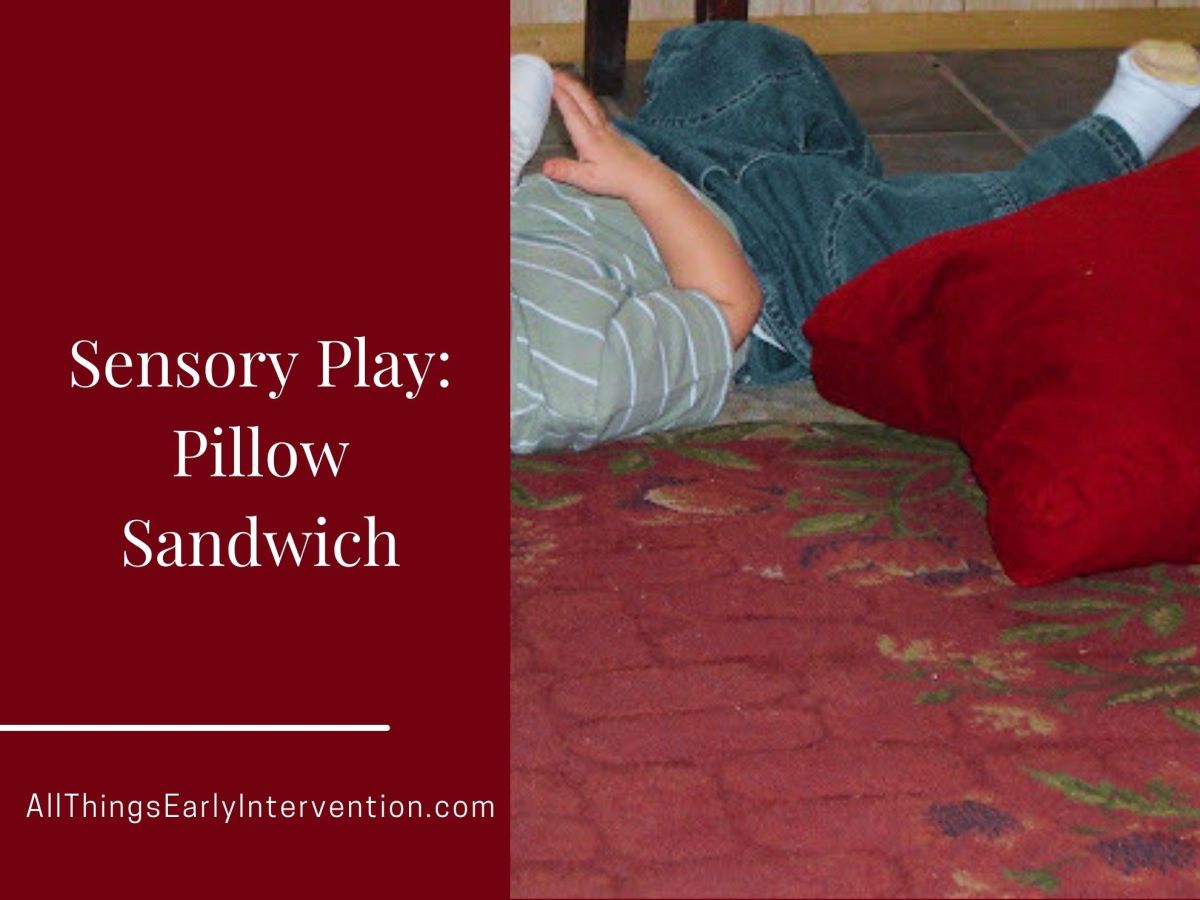
Calming Sensory Strategy: The Pillow Sandwich
In early intervention, we often talk about proprioceptive input—the sensory information we get from our muscles and joints. It’s what tells our brain where our body is in space, and, crucially, it’s intensely calming and organizing for many children.
My foster child actively sought this deep pressure. When he was feeling over-excited, overwhelmed, or just needed a reset, he had a request: “Pillow Sandwich!” This was a simple, family-led intervention that provided therapeutic compression.
Recipe for One Pillow Sandwich
Recipe for One Pillow Sandwich
Ingredients:
2 pieces of bread (2 thick pillows)
1 serving of peanut butter (one wiggly little boy)
Directions:
Lay one pillow on the floor like bread. Spread your wiggly little guy on the pillow like peanut butter. Put the other pillow on top like the second slice of bread.
Squeeze!
Carefully lie down on top of the pillow sandwich to give a gentle, full-body squeeze.
The Research Behind the Squeeze: Why Deep Pressure Works
While our Pillow Sandwich was a spontaneous family creation, its effectiveness is rooted firmly in decades of research. The most famous example of this concept in action is the squeeze machine, developed by Dr. Temple Grandin.
Dr. Grandin, an individual with autistic disorder, created the machine to manage her severe anxiety and oversensitivity to touch and sound. She designed the device—which applies deep, lateral, inwardly directed pressure via two foam-padded panels—after observing that cattle in a squeeze chute would calm down when the pressure was applied.
The research she published in 1992 explained the mechanism:
- Deep Pressure vs. Light Touch: Deep Touch Pressure (like a firm hug or swaddling) is inherently calming and relaxing, whereas light touch (like a tickle) can be alerting or even aversive.
- Sensory Regulation: The calming effect of DTP helps to modulate the sensory system, which Dr. Grandin hypothesized may relate to cerebellar function—the brain’s “volume control” for sensory input. By providing this strong, steady input, it helps children with sensory processing challenges feel more grounded.
- Observed Benefits: Studies on the squeeze machine showed it could reduce anxiety and hyperactivity in children with autism and was found to be relaxing for most college students. The most effective method was slow, varying pressure over a sustained period.
In short, the deep, firm pressure from our Pillow Sandwich or Dr. Grandin’s machine works by lowering a child’s state of arousal, which promotes calm, enhances focus, and improves tolerance of overwhelming stimuli.
Simple Ways to Offer Proprioceptive Input
The wonderful thing about this research is that you don’t need a machine to provide this vital input. Our role in Early Intervention is to translate this scientific principle into accessible, everyday activities.
Beyond the “Pillow Sandwich” there are countless ways to offer that organizing, heavy-work input:
Other Ways to Use Direct Pressure & Touch in Early Intervention
- Bear Hugs: Provide a gentle but firm hug as needed.
- Calming Firm Squeezes: use your hands to apply pressure to a child’s shoulders, pushing down gently.
- Targeted Pressure: If a child resists having their face washed or teeth brushed, use gentle but firm pressure around the mouth and jaw area beforehand to desensitize the area.
- Compression Tools for Attention: Use a weighted lap pad or a shoulder snake intermittently (15–20 minutes at a time) for focus during tabletop activities.
Calming Heavy Work Activities in Early Intervention
These are great “muscle warm-ups” to do before quiet activities like meals or schoolwork, as they put regulating pressure on the joints:
- Pushing: Have the child push heavy items like a laundry basket, a loaded wagon or stroller, full bag of toys, or even help push furniture slightly.
- Crawling and Climbing: Encourage crawling on hands and knees (through a tunnel or simply across the room)
- Rhythmic Jumping: jumping activities like frog jumps.
- Carrying: Ask the child to carry heavy books or a weighted yoga ball or help put away objects like large jars of peanut butter that require the child to lift with two hands.
By consistently offering these simple inputs, we proactively address the needs of a child experiencing sensory overload and support their ability to regulate themselves.
What Are Your Family’s Deep Pressure Tricks?
The need for deep touch pressure is universal, and families have been finding creative solutions for generations. When I shared the “Pillow Sandwich” story with a friend, she mentioned that growing up with her brother, who had autism, he used to crawl under the couch cushions and have his siblings sit on him—a perfect, self-directed deep touch pressure intervention!
It’s clear that the best sensory tools are often created by the very people who need them. What other squeezing solutions are out there? Let me know in the comments. I’d love to add your family’s favorite DIY deep pressure trick to our collective toolkit!
References
- Grandin, T. (1992). Calming Effects of Deep Touch Pressure in Patients with Autistic Disorder, College Students, and Animals. Journal of Child and Adolescent Psychopharmacology, 2(1). Retrieved from http://grandin.com/inc/squeeze.html
- NHS Lothian. (2025). Deep pressure to help prevent sensory overload. Retrieved from https://services.nhslothian.scot/cypot/wp-content/uploads/sites/147/2025/09/Deep-pressure-to-help-prevent-sensory-overload-v1.0.pdf
 All Things Early Intervention