

Many children crave constant sensory input. This can be a challenge for parents and caregivers, as these “sensory seekers” may exhibit energetic behaviors or struggle to focus in calm environments. This post shares my experience living with our foster child, who thrived on a type of sensory input that occupational therapists call “heavy work.”
Sensory Seekers and Their Big Energy
With sensory processing challenges, he required a lot of stimulation. He craved all kinds of sensory input: touch, movement, sound, you name it! We were fortunate to have access to occupational therapy, which provided valuable guidance on activities to help him manage his sensory needs.
Understanding Sensory Seeking
What might a sensory seeker look like?
Sensory seeking: What it is and how it looks, from Understood
- Stand too close when talking to others and **not have a good sense of personal space.
- Have an unusual tolerance for pain.
- Walk with loud, heavy steps.
- Enjoy jumping, hopping, and bumping and crashing into things and people — sometimes to the point of being unsafe.
- Not know their own strength. (Kids may rip paper when writing, break toys, or hurt others by accident.)
- Prefer “rough play” on the playground.
- Touch people and objects often.
- Seek out or make loud noises.
- Chew on shirt sleeves or collars and other non-food items.
Sensory Processing Research
Research suggests that children with autism or other neurodevelopmental conditions are more likely to experience sensory processing difficulties. These difficulties can lead to behavioral problems.
A positive correlation was found between sensory processing abnormalities and behavioral problems…The results of our study show a trend for children with ASD to have higher rates of atypical sensory processing in all sensory domains compared to peers with other neurodevelopmental diagnoses…Atypical sensory processing is highly prevalent among children with neurodevelopmental conditions and can negatively impact their health, quality of life, and developmental trajectories.
Gigliotti, et al, 2024
Structured Play Activities Can Help Sensory Seekers
What should you do to help satiate a sensory-seeking child?
Developmental Pathways
- Create organized movement experiences that are goal- directed and purposeful. A child who desires constant movement (vestibular input) must be interrupted with functional tasks or else he is likely to become over-aroused. For example, if running he could be guided to pick up an object, take it to the next station, drop the object, and then run back to the start. Instead of having your child jump on a trampoline, play red light green light on the trampoline and do different kind of jumps for each color light.
- Provide activities that have a clear start and stop. Sensory seekers can keep going on and on like an energizer bunny and you will end up having a child that is dysregulated and one that has trouble transitioning. Use a “waiting spot” in between activities, incorporate a visual timer so that your child knows how much time he has in an activity, If the child likes to swing high, swing him only to a certain count (e.g., 5); then have him jump off the swing and pick up a stuffed animal and throw it in a container. Then swing again to the specified count and pick up another object and place it in a different container. The child receives some of the input he is looking for (e.g., swinging,), but it is paired with an organizing game or task.
- Incorporate heavy work activities. Many individuals with SS benefit from “slow, heavy work” proprioceptive input. This includes tasks that involve sustained pushing, pulling, and carrying (e.g., Jumping, pulling a heavy wagon, carrying heavy objects, animal walks, wall pushes) input simultaneously. This is usually easy to do because there are many activities that include both vestibular and proprioceptive input ( hanging on monkey bars, jumping on a trampoline, wheelbarrow walks, spinning jumps).
- Use small spaces to control activity, especially when playing with friends. Help the child with Sensory Seeking learn personal boundaries when playing with peers. Provide a defined space and make a game out of being able to stop. Construct small spaces like tents or forts to help contain and organize the child during an activity.
Heavy Work Play Ideas From NAPA Team
Sensory Seeking Activities: Providing sensory-rich experiences is integral in helping your little one to make sense of and interact with the world around them.
How to Tame Your Sensory Seeker Jun 22nd, 2018 by NAPA Team
- Use an Air Cushion: Use an air cushion for movement while your child stays seated during school work
- Pushing and Pulling Activities: Have your child perform work activities like pushing a shopping cart, carrying groceries, or pulling a wagon
- Playing on the Playground: Encourage them to play on the playground on climbing equipment or by sliding or swinging
- Swinging: Encourage them to swing or jump with consistent, rhythmic patterns (for calming linear input, place the child on a swing and swing them in a back-and-forth linear motion)
- Crash Pads for Whole Body Sensory Input: Let them squish in big pillows for whole body sensory input (DIY sensory crash pad here!)
- Deep Pressure: Provide deep pressure by rolling a therapy ball along the child’s back
Keep Him Working: What Worked For Us
After incorporating more opportunities for heavy work activities into his day, he started to show improvement with emotional regulation. When he had access to these activities, it made a big difference. Here are some of the more creative heavy work activities we found most successful.
Sensory Play: Jumping on the Indoor Trampoline
Jumping can be a powerful tool in our sensory toolkit. By understanding the science of it and incorporating it thoughtfully, we can help sensory-seeking children find regulation, improve their motor skills, and engage more fully in their world.
Keep reading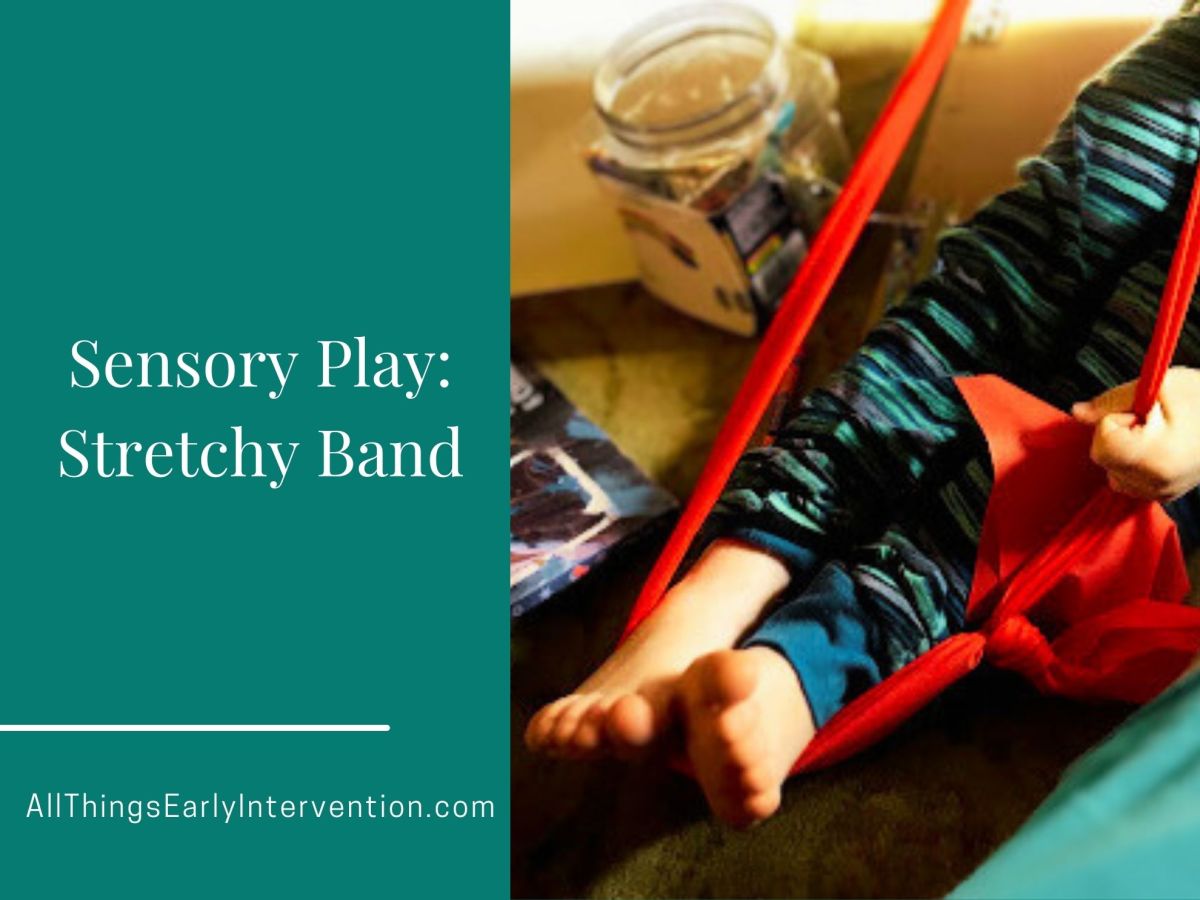
Sensory Play: Stretchy Bands
For a sensory-seeking child who is always looking for movement, if that movement comes in the form of a fun, voluntary activity—like using an elastic band to play with—that is an improvement.
Keep reading
The Purple Road: Sensory Regulation with a Yoga Mat
Sometimes, the most effective tools are the ones we already have. A simple yoga mat became a “purple road” to sensory regulation for Little Monkey.
Keep reading
Skateboard and Scooter Board: Tools for Sensory Play
Scooter boards, or even a simple skateboard, can be part of a fun engaging play experience. They provide valuable opportunities to move, improve motor skills, and may help children feel more regulated. Remember, every child is unique, so adapt these activities to fit their needs.
Keep reading
Sensory Play: The Body Sock
We tried all sorts of heavy work activities, and one that really stood out was the sensory body sock. It was like magic! He’d climb in, push against the stretchy fabric, and… instant calm. It gave me peace to see his little body find some peace.
Keep reading
Escaping the Car Seat: What Worked for Us
The most important lesson I learned is that prevention is key. When your child is actively escaping their car seat while you’re driving, you’re helpless. Focus on creating an environment that minimizes the likelihood of escape.
Keep reading
Using A Cardboard Box to Support Sensory Needs On the Go
The cardboard box solution, a simple early intervention strategy, addressed several of his sensory needs and made a challenging situation much more manageable. It also underscores the many benefits of cardboard box play for children in general.
Keep reading
Early Intervention Heavy Work for Sensory Seekers
Sensory seekers may naturally seek out various sensory experiences, but it’s crucial to guide them toward appropriate and regulating activities. Often, this means prioritizing proprioceptive feedback through heavy work.
Keep reading
Sensory Play: How We Included Heavy Work Into Our Home And Routines
By understanding sensory seeking and incorporating these heavy work activities into your child’s routine, your child may benefit by feeling calmer, more regulated, and better able to focus throughout the day.
Keep reading
Sensory Input: Compression Sheets
Now, the research on compression as a therapeutic tool is a bit mixed results. Some professionals swear by it, while others are less convinced. But, as we often say when we are sleep deprived and desperate, “It couldn’t hurt to try, right?” And boy, were we glad we did! It was awesome.
Keep reading
Sensory Play: The Calming Effect of Weighted Blankets
“Little monkey” was a classic sensory seeker. He craved deep pressure and had difficulty self-regulating. By providing appropriate sensory feedback, we helped him find a sense of calm, particularly during sleep.
Keep reading
10 Bath Time Activities For A Sensory Seeker
Gross motor heavy work is hard to do during a bath, but fine motor heavy work is doable. After providing him with the following activities, his need for sensory input was satisfied by the work with his hands and exposure to texture.
Keep reading- Future Blog Post Links Coming Soon
- Pulling a weighted wagon
- Climbing up a slide (outside)
- Provide access to a spinning chair
By incorporating these heavy work activities into your child’s routine, your child may benefit by feeling calmer, more regulated, and better able to focus throughout the day.
Remember, it’s important to find activities that your child enjoys. If you have concerns about your child’s sensory processing, consult an occupational therapist for personalized guidance.
As an Amazon Associate I earn from qualifying purchases.
References
Understood
Sensory seeking: What it is and how it looks from Understood.org
Gigliotti, et al, 2024
Developmental Pathways
Berry, R. (2020, December 22). Sensory seekers. Developmental Pathways.
 All Things Early Intervention
2 replies on “Sensory Play: How We Included Heavy Work Into Our Home And Routines”
[…] Sensory Play: How We Included Heavy Work Into Our Home and Routines […]
LikeLike
[…] If you offer a high amount of heavy work play activities that your child enjoys throughout the day, he may be less likely to engage in maladaptive behaviors like hitting, breaking toys or yelling. Read about that here. […]
LikeLike