This is a four part series diving into the answer to that question using the Division of Early Childhood Position Statement as a reference.
 All Things Early Intervention
What is Early Intervention? This. This is Early Intervention.
This is a four part series diving into the answer to that question using the Division of Early Childhood Position Statement as a reference.

Our experiences with the first child—whether navigating the physical milestones of infancy or the digital dangers of adolescence—shape us profoundly. We learn, we adjust, and we seek out tools that help us create loving boundaries for all our children. Let me share my “First Draft” parenting lessons with you, so you can we can enjoy the spillover effect together.

Where does Special Instruction Take Place? The simple answer is Special Instruction takes place in natural environments, which vary from child to child.
When you meet someone new, small talk starts flowing, and then they say, “So, what do you do?” For me, this question used to be a dreaded one. For Early Intervention providers, it can be a social tap dance because no one has ever heard of us, so we have to explain everything. I wondered if anyone else experienced this, so I did some googling. Let me share with you what I found.
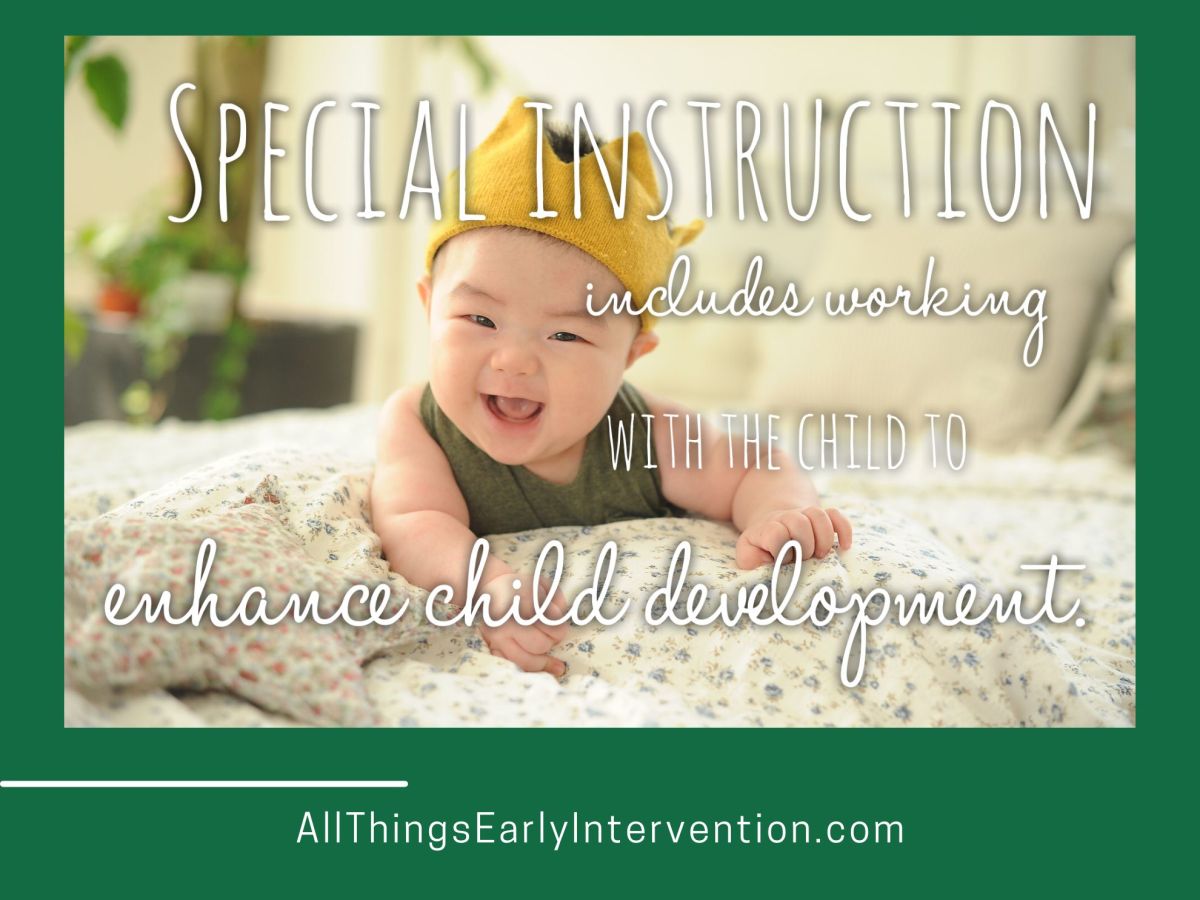
Working with a child to enhance child development is where I get to PLAY with those babies. Get hands-on! Experiment with different strategies. Observe. Try something new. Teach. Provide learning opportunities. This is the part we are most likely to think about when we think of early intervention, but it is actually only one part of what a special instructor does. Because I’m a teacher at heart, I love this part though.
Special Instruction includes providing families with information, skills, and support related to enhancing the skill development of the child;

Curriculum planning, including the planned interaction of personnel, materials, and time and space, that leads to achieving outcomes in the child’s individualized family service plan,

Part 1: The designing of learning environments and activities that promote the child’s acquisition of skills in a variety of developmental areas, including cognitive processes and social interactions.
Have a WordPress.com account? Log in now.

