
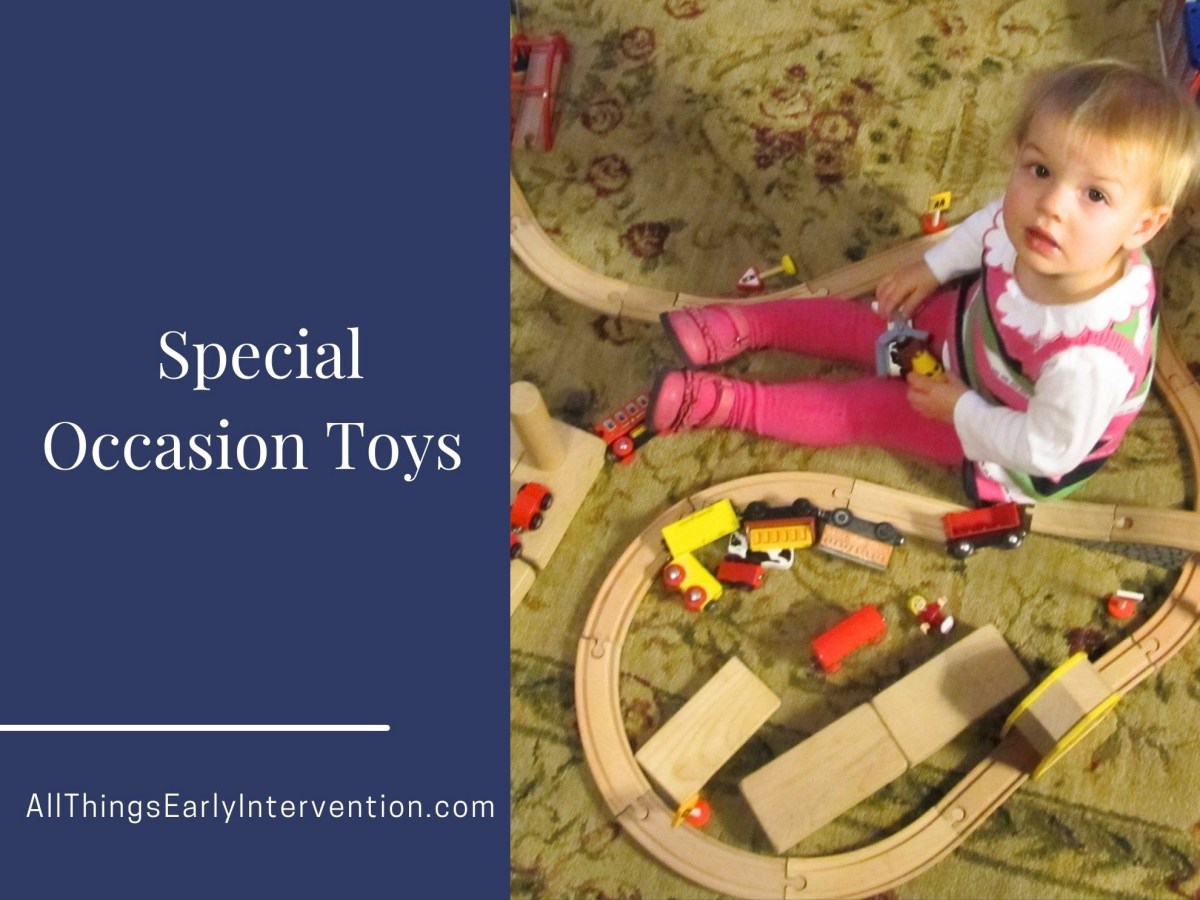
Some toys are just a bit “extra.” Maybe they are super messy, maybe they have small parts that require you to watch like a hawk, or maybe they just make a noise that gets on your nerves after ten minutes.
I like to call these “Special Occasion Toys.” These are the ones you keep tucked away for a rainy day when everyone is bored. You could even make them toys that only come out everyday, but only when a younger sibling is napping or when Daddy gets home. There are plenty of reasons to save certain things for a special time.
The science behind this actually makes a lot of sense. Our brains do something called habituation. This is a fancy way of saying we get used to things. If a child sees the same toy every single day, their brain eventually tunes it out and stops paying attention to it. However, research shows that if you “rest” a toy by hiding it for a while, the child will be super excited to see it again when you finally bring it back.
Using these special toys is also a great way to practice joint attention. This is when you and a child focus on the same object at the same time for a social reason—like saying, “Look at this cool car!”. Sharing these moments is a huge deal because it helps children learn how to talk and make friends as they grow up. Plus, playing with something new and exciting releases dopamine in the brain. This is a chemical that makes us feel happy and motivated to keep playing and learning.
I really recommend this strategy for toys that require a lot of work to supervise, like crayons or playdough. Since you have to be right there anyway to make sure the walls stay clean, keeping these as “special” items ensures that both you and the child are focused and excited. It turns a “chore” of watching them into a fun, shared moment that helps their brain grow.
Examples of Special Occasion Toys
Sensory Bins: bins of sensory materials like beans, rice, water, sand etc.
Art Supplies: crayons, markers
Complex Building Toys: Lego or Magnet Tile
What toys do you have that might work better as a “Special Occasion” treat? By keeping a few things hidden, you aren’t just cleaning up the mess—you’re making playtime way more exciting for their developing brains.
References for Special Occasion Toys
Advancing Social-Communication and Play. (2026). About joint attention. UNC School of Medicine. https://asap.fpg.unc.edu/about-joint-attention
This resource defines joint attention, and it explains that joint attention is a critical building block for language and social development, noting that children who struggle with these skills, such as those with autism, may face significant delays in communication and school success.
Cherry, K. (2025, November 6). Habituation in psychology: How it works and affects relationships. Verywell Mind. https://www.verywellmind.com/what-is-habituation-2795231
This article describes habituation as a decrease in response to a stimulus after repeated exposure, a process the American Psychological Association defines as “growing accustomed” to a situation. The author explains that habituation is a form of learning that allows the brain to tune out non-essential information, but it can be reversed by reintroducing novelty or “resting” the stimulus for a period of time.
Trezza, V., Baarendse, P. J. J., & Vanderschuren, L. J. M. J. (2010). The pleasures of play: Pharmacological insights into social reward mechanisms. Trends in Pharmacological Sciences, 31(10), 463–469. https://doi.org/10.1016/j.tips.2010.06.008
This article identifies social play as a natural reinforcer. The research details how play activates systems in the brain associated with reward and pleasure.
Some Related Products on Amazon
As an Amazon Associate, I earn on qualifying purchases.




 All Things Early Intervention