Helping Your Sensory Seeking Child
In the first part of this series, we explored the importance of self-care for caregivers navigating the often-stressful world of bedtime routines. We acknowledged that a peaceful bedtime experience starts with a calm and patient caregiver. Now, let’s shift our focus to the little ones themselves, particularly those with sensory processing challenges.
Every Child is Different, But My Experience May Help You
Our foster child was a whirlwind of energy. Diagnosed with autism, he also had significant sensory processing difficulties. Sleep was a constant battle, leaving both of us exhausted. If your little one struggles with similar challenges, then perhaps my experience can offer some guidance.
Understanding Sensory Needs is Key
Children with autism spectrum disorder (ASD) frequently experience sleep problems. These difficulties can be compounded by the trauma many foster children experience. Adding sensory processing challenges to the mix creates a perfect storm for disrupted sleep.
Here’s what the research tells us:
- ASD and Sleep: Approximately 50% to 80% of children with ASD experience sleep issues. These challenges can include difficulty falling asleep, staying asleep, and restless sleep.
- Trauma and Sleep: Children who have experienced adverse childhood experiences (ACEs), which includes foster care placement, are more likely to have sleep problems.
- Sensory Needs and Sleep: Sensory seekers, children who crave intense sensory experiences, often struggle to settle down at night. They may not have had enough movement throughout the day, lack calming sensory input before bed, or have a sleep environment that is too stimulating.
Creating a Sensory-Friendly Bedtime Routine
When designing a bedtime routine for your child, consider their sensory needs, learning needs, and possible trauma history. Here are some tips:
- Incorporate Sensory Activities: Provide opportunities for your child to seek out calming sensory experiences throughout the day. This can help them expend energy and wind down before bedtime.
- Create a Predictable Routine: Children with autism thrive on routine. A predictable bedtime routine provides comfort and security.
- Make it Comfortable: A warm bath, a weighted blanket, or a favorite stuffed animal can create a calming sensory environment.
- Address Specific Sensory Needs:
- Touch: Deep pressure activities like firm back rubs or a weighted blanket can be calming for some children.
- Smell: Lavender essential oil or a calming lotion can promote relaxation.
- Taste: A crunchy or chewy snack before bed can provide some children with proprioceptive input (sensory input from the muscles and joints) that can be calming.
- Sound: Use white noise or nature sounds to block out distractions and create a peaceful atmosphere.
- Movement: For some children, a period of vigorous activity before bed can be helpful. This is followed by a calming wind-down routine.
- Sight: Dim the lights and use calming visuals, like an aquarium screen saver, to create a relaxing environment.
Our Bedtime Sensory Rich Routine
Our bedtime routine involved a bath with lots of sensory exploration activities, followed by a rough towel dry-off and a deep pressure lotion rubdown.
We offered him gummy vitamins with his evening medicine for proprioceptive input and said goodnight to everyone and everything in the house (including the occasional toy).
Reading any book really, but social stories helped prepare him for bedtime expectations. We incorporated rocking, lullabies, firm back pats, and bear hugs to provide calming sensory input.
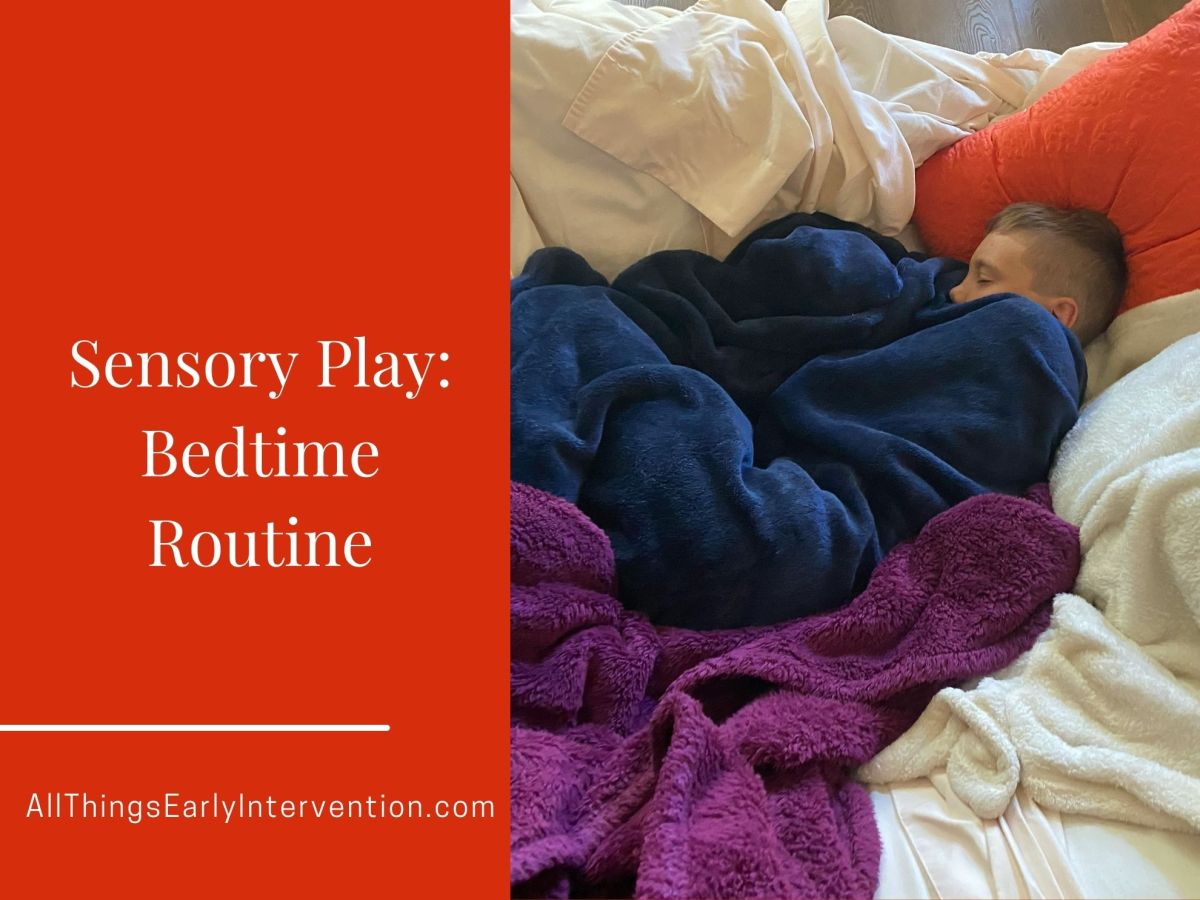
His sleep space included a weighted blanket, an egg crate mattress topper to reduce noise from his movements, extra pillows and blankets for proprioceptive input, and a soft fidget toy or two.
We used brown noise and a calming screen saver to provide auditory and visual input.
The most important aspect of our routine was staying calm and consistent. We enforced gentle boundaries around staying in bed but ignored minor disruptions like wiggling or talking to himself. Remember, this is a skill your child is learning. Be patient and consistent!
Conclusion
Creating a peaceful bedtime routine for a child with sensory processing challenges takes time, patience, and experimentation. By understanding your child’s unique needs and incorporating sensory strategies, you can create a bedtime routine that promotes relaxation and sleep for everyone.

Sensory Seeker Bedtime Routine Part 1
We know that children with ASD experience sleep issues and challenging behaviors. Parents then experience stress, and then parent’s stress can worsen a child’s behavior problems. Therefore, effective stress management becomes a critical for both parent and child’s well-being.
Keep reading
Sensory Play: The Calming Effect of Weighted Blankets
Our son was a classic sensory seeker. He craved deep pressure and had difficulty self-regulating. By providing appropriate sensory feedback, we helped him find a sense of calm, particularly during sleep.
Keep reading
10 Bath Time Activities For A Sensory Seeker
Gross motor heavy work is hard to do during a bath, but fine motor heavy work is doable. After providing him with the following activities, his need for sensory input was satisfied by the work with his hands and exposure to texture.
Keep reading
Brown Noise: A Sleep Solution
Brown noise is a funny name, but it’s awesome for blocking out household sounds. I highly recommend the sound machine, but if your zoo–I mean, home is especially loud during a baby’s bedtime, you have another louder solution in a basic CD player.
Keep reading
Sensory Play: A Calming Aquarium Scene
My experience reminded me that sensory input doesn’t always have to be about high-energy stimulation. Nature scenes, whether real or simulated, can offer a gentle, calming alternative. This aligns with the research, which emphasizes the stress-reducing effects of nature.
Keep reading All Things Early Intervention