
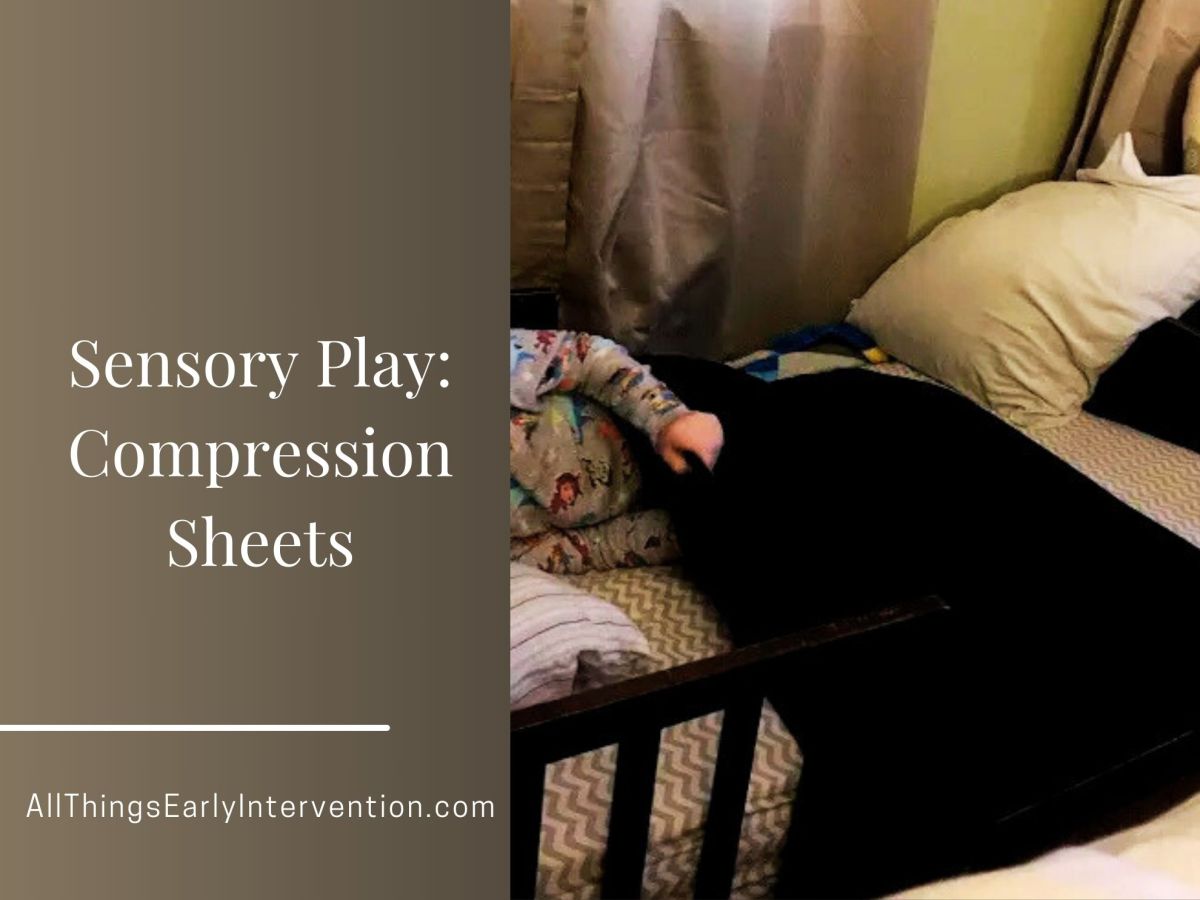
I want to share a story about a sensory strategy that made a surprising difference in our household, despite the mixed research: compression sheets.
Sensory Needs and Compression
“Little Monkey,” bless his heart, was a sensory seeker through and through. 24/7, he was on a quest for sensory input, and bedtime was no exception. Our sleep routine was…well, let’s just say it was a work in progress.
One of the things we tried, almost out of desperation, was a compression sheet.
Now, the research on compression as a therapeutic tool is a bit mixed results. Some professionals swear by it, while others are less convinced. But, as we often say when we are sleep deprived and desperate, “It couldn’t hurt to try, right?” And boy, were we glad we did! It was awesome.
Compression for Deep Pressure and Sensory Regulation
Compression garments, compression sheets, and weighted blankets all work on the principle of providing deep pressure sensory input. This input can be incredibly calming and organizing for children with sensory processing differences. However, the professional community is divided on its effectiveness. As The OT Toolbox points out,
“Because of the nature of sensory based treatment strategies, much of what is done is trial and error. What works for one may not work for another. One child may need a combination of ten strategies to find the organization they need. The strategy used successfully for three months, may suddenly stop working. This is the exciting (and frustrating) element to treating sensory processing difficulties.”
OT Toolbox
Research of Mische Lawson et al., 2022 supports this idea of individual variability. Results line up with what we already know: that sleep treatments work differently for every child with ASD, and older kids who have specific sensory needs are often the ones who benefit the most. It seems that the best way to help children with ASD sleep better is to mix standard sleep training methods with sensory aids, like weighted blankets or compression vests.
While most research focuses on fixing the child’s sleep to reduce the parent’s stress, it might be more helpful to try reducing the parent’s stress first, as that could also lead to better sleep for the child.
Read about how we did that here. and here
The OT Toolbox also mentions helpful alternatives to compression vests:
“Alternatives to compression vests may include:
OT Toolbox
- Compression blankets
- Compression clothing like Under Armour
- Weighted toys
- Weighted blankets.”
Trial and Error, and a Little DIY
Our experience with our Little Monkey taught us that sensory strategies are worth trying, as long as you follow safety guidelines. If you think it might help, give it a shot.
DIY Compression Sheet
Here’s a simple DIY compression sheet for a toddler bed-sized mattress I used from And Next Comes L.
- Get the Fabric: Buy about one yard of compression spandex fabric.
- Sew It Up: Sew the ends together to create a cuff.
- Slip It On: Slide the cuff around the mattress. It will be slightly loose, allowing the child to get underneath. When stretched, it should provide gentle compression from the shoulders to the knees.
For Little Monkey this simple DIY solution provided much-needed input. He would rock and roll under the sheet until he wore himself out, leading to more restful sleep.
Sharing Our Compression Success
While the research may be mixed, our experience with compression sheets was overwhelmingly positive. Have you tried compression strategies with your clients or children? What are your experiences and tips? Let’s share our insights and support each other in this journey of sensory exploration.
Some Related Products on Amazon
As an Amazon Associate, I earn on qualifying purchases.

Spandex by the Yard for DIY sheets

Premade Fun and Function Compression Sheets


Under Armor Compression Top
 All Things Early Intervention
One reply on “Sensory Input: Compression Sheets”
[…] Read more about the mixed research of compression in the blog post about Sensory Input: Compression Sheets […]
LikeLike