
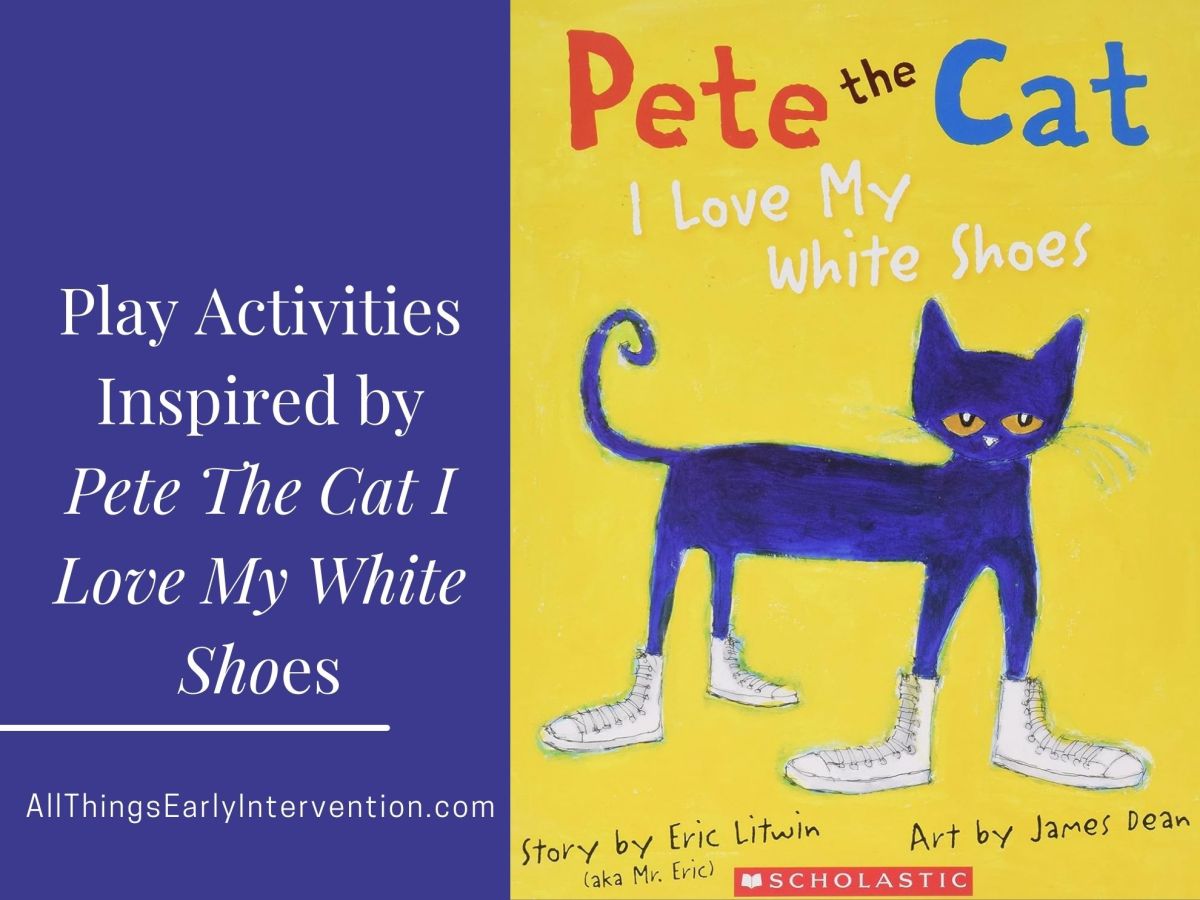
Using “Pete the Cat” to Build Skills Through Play
Integrating play-based activities with engaging children’s books, such as Pete the Cat: I Love My White Shoes, is a highly effective way to support early language development. This method uses the natural appeal of stories to help young children learn new words and understand concepts.
Early Intervention Activities Inspired By Pete the Cat
As an early intervention provider, I see how repeating stories and combining them with hands-on play can make a real difference. Activities I’ve done with “Pete the Cat” in the home or in the classroom include:
Verbal Imitation
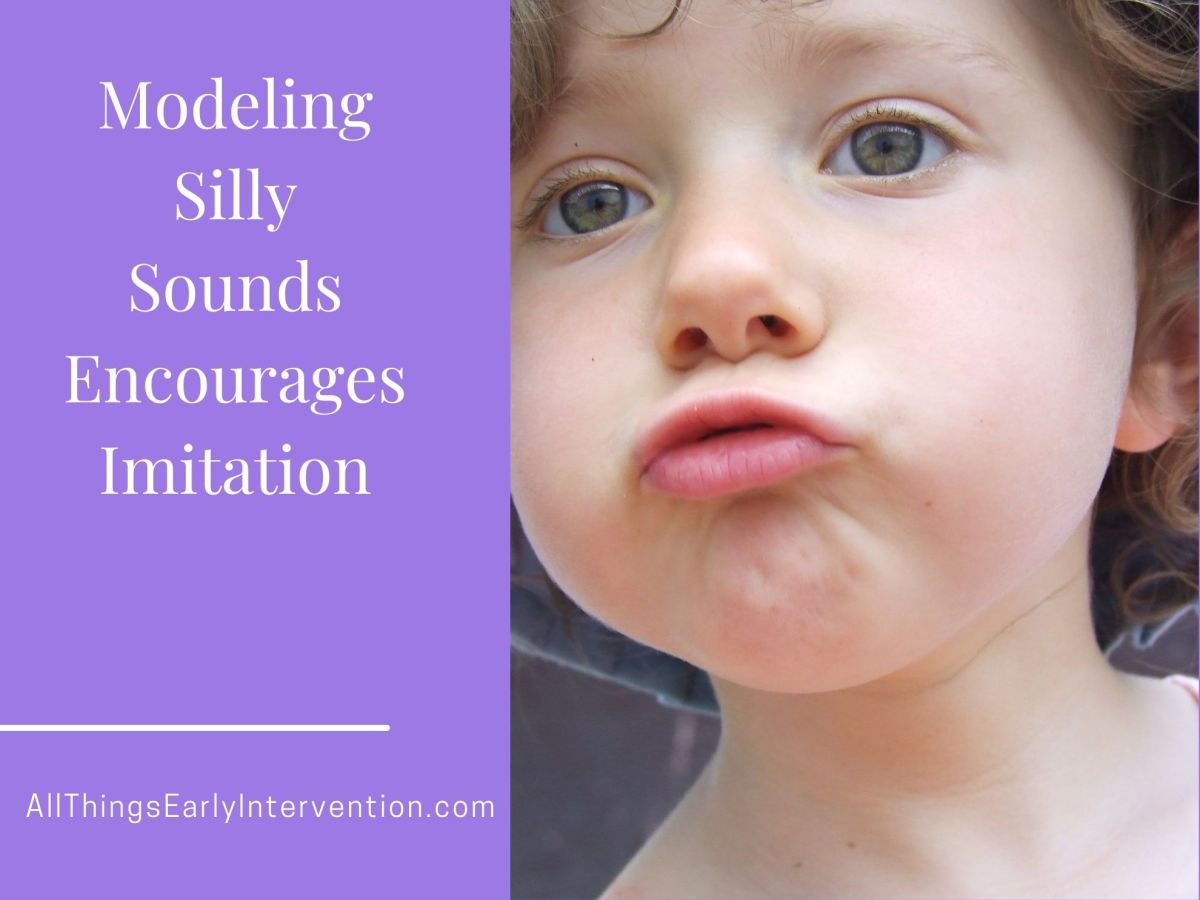
- Verbal Imitation: We practiced saying “Oh no!” and making other fun sounds from the book like, “Did Pete cry?” “Goodness NO!”
Speaking of Verbal Imitation….
Sensory Exploration
- Sensory Exploration: We tasted strawberries, which helped the children experience new flavors and textures.
Speaking of Sensory Exploration…

Art Projects for Fine Motor Skills
- Fine Motor Skills: We did art projects, like coloring and gluing, to work on small muscle movements, with a focus on shoes. For example, I had the children rip red paper into small pieces and glue them on white shoes.
Speaking of Fine Motor Skills…

Musical Engagement
- Musical Engagement: We sang and danced to the “I Love My White Shoes” song, which helped with listening and movement. The song is available as sheet music if you are so inclined. Or a downloadable MP3. Or Apple music. Or Spotify.
Sheet Music from Learning Groove
Hands On Experiences for Role Playing
- Hands on Learning: We played with shoes, putting them on and taking them off, and talking about their features.
Connecting Books to Play Activities (one reading at time) Builds Meaningful Language Experiences
Imagine a little one, easily distracted, whose world opens up one new detail at a time. Familiar things bring comfort, but only one unfamiliar spark can hold their attention before they move on.
Day 1
On Monday, we read ‘Pete the Cat.’ His ears perk up at ‘I like my white shoes,’ the words repeating like a catchy tune. That’s all he takes in that day. Later, we sing and dance to the song. It’s not just words anymore; it’s a feeling, a memory of moving and singing together.
Day 2
Tuesday arrives, and we read ‘Pete the Cat’ again. The song is familiar now, and he joins in, swaying and smiling. With that connection established, he notices something new: ‘OH NO!’ and the silly sounds that follow. He laughs, delighted. Throughout the day, we play with ‘OH NO!’—when a toy falls, when a block tower tumbles. He watches, then tries it himself, mimicking the sound and the action.
Day 3
Wednesday’s story time brings more familiarity. He sings and dances to ‘I like my white shoes,’ then remembers to say ‘OH NO!’ Now, he’s ready for another layer. We talk about shoes. ‘Where are your shoes?’ ‘I like my brown shoes!’ We point to shoes in pictures and on our feet. Shoes big, shoes small, shoes everywhere! Shoes are suddenly fascinating.
Later, we decorate shoe pictures. He might not fully grasp the art project’s theme, but he enjoys the glue and crayons, and hears us talking about shoes. ‘Yes, I have shoes!’ he seems to think.
Day 4
Thursday, he’s excited for ‘Pete the Cat.’ He sings, he says ‘OH NO!’, he points to his shoes. All familiar, all good. Now, he notices the different colors of Pete’s shoes.
Then later that day, we explore strawberries. We taste them, cut them, read about them. Strawberries become the day’s focus.
Day 5
Finally, we read ‘Pete the Cat’ again. The song, ‘OH NO!’, and shoes are mastered. But today, he sees the strawberries. ‘Yes, I know strawberries!’ he thinks. He’s listening, truly listening, and maybe, just maybe, he’s ready to take in the whole story.
A Simple View of Reading
The “simple view of reading” theory tells us that understanding language is just as important as being able to sound out words. Getting a good start with language early on, through books and play, is essential for learning to read later.
Play Builds a Foundation for Language
Learning through experiences, like tasting strawberries and dancing to music, helps children understand and remember new words. This kind of learning builds the foundation they need for talking and reading.
If you’re a teacher or early interventionist wanting to help children develop their language skills:
- Use play-based activities that go along with the books you read. Whatever book it is!
- Read the books over and over again.
Using play and repeating stories is a great way to help young children learn language. It helps them build vocabulary, understand concepts, and get ready for reading.
Shop Pete the Cat on Amazon
As an Amazon Associate, I earn on qualifying purchases.

Pete the Cat: I Love My White Shoes Book

Pete The Cat I Love My White Shoes Audio CD

Pete the Cat Flannel Board Figures
 All Things Early Intervention
One reply on “Early Intervention Activities with Pete The Cat I Love My White Shoes”
[…] 27 is National Strawberry Day! I had planned to share my “Pete the Cat and His White ShoesEarly Intervention Activities with Pete The Cat I Love My White Shoes” early intervention learning activities, complete with some fun strawberry-themed ideas. And […]
LikeLike