
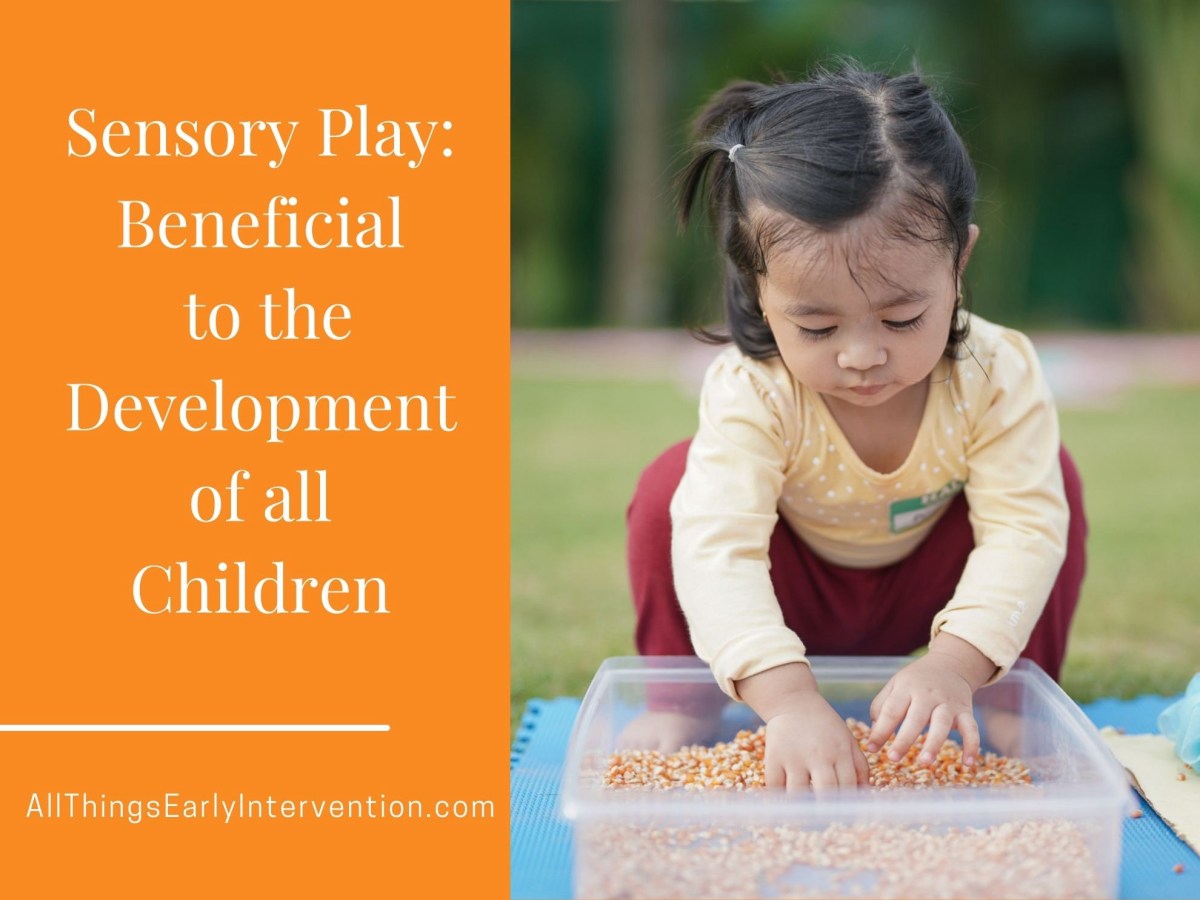
What is sensory play?
Sensory play encompasses any play activity that engages a child’s senses, which allows them to learn. This includes the five common senses along with two additional senses– vestibular and proprioception, which are senses related to movement and balance.
This post explores the benefits of sensory play just for fun and how it can be incorporated into everyday interactions with children with and without special needs.
“The term sensory play describes a variety of creative, play and movement-based activities that help children develop their sensory processing skills. Sensory play is a great developmental tool for all children, no matter how they handle sensory input. Sensory play can also be particularly helpful for children whose over sensitivity to sensory information, or need for extra sensory input, is affecting daily routines.”
Sensory play: A fun developmental tool for all kids (AUGUST 03, 2016) written by Children’s Hospital in Richmond.
The Power of Sensory Play
As an Early Intervention Special Instructor and a regular mom, I’m very familiar with the positive impact of sensory play. It’s not just fun and engaging for children; it plays a vital role in their development.
Here are two child development learning theories that stress the importance of sensory play:
- Piaget’s theory of learning emphasizes that learning happens through hands-on exploration during the sensorimotor stage (birth to 2 years old). Sensory play allows babies and toddlers to understand the world through their senses.
- Montessori’s approach highlights the importance of sensory experiences, particularly from birth to age five. During this time, children have a heightened sensitivity to touch, taste, sight, and smell, and sensory play activities cater to this natural curiosity. These experiences provide children with a system to classify objects within their environment.
What Is Sensory Integration Therapy?
Sensory Integration Therapy (SIT) is a form of therapy designed to help children with sensory processing challenges. A trained therapist uses sensory play activities as part of an individualized treatment plan to address these specific needs.
“ Sensory integration therapy, which was developed in the 1970s by an OT, A. Jean Ayres, is designed to help children with sensory-processing problems (including possibly those with ASDs) cope with the difficulties they have processing sensory input. Therapy sessions are play-oriented and may include using equipment such as swings, trampolines, and slides.”
From American Academy of Pediatrics in Healthy Children on 10/7/2019
Swings, trampolines, and slides are part of Sensory Integration Therapy, but that doesn’t mean regular caregivers can’t try adding sensory play experiences into their child’s play anytime they want. As long as the play activities are safe, age-appropriate, and enjoyable to both parent and child, it is just playtime, so give it a try!
Sensory Play for All
While SIT is beneficial for children with sensory processing issues, all children can flourish through sensory play experiences. Here’s why:
- Sensory play supports healthy development: It strengthens cognitive skills, builds nerve connections, and refines motor skills.
- Sensory play promotes emotional well-being: These activities can be calming and help children regulate their emotions.
Sensory Play for Managing Behavior
In addition they can be a help when managing behaviors. If your child enjoys a particular play activity, it can be used to redirect or replace a negative behavior.
For example, If you offer your child a trampoline to play on, he is less likely to jump on the couch. Read about that here.
If you offer scented lotion or slime or play dough, he is less likely to play with the poop in his diaper. (Ask me how I know) Read about that here.
If you offer a high amount of heavy work play activities that your child enjoys throughout the day, he may be less likely to engage in maladaptive behaviors like hitting, breaking toys or yelling. Read about that here.
Bringing Sensory Play into Everyday Activities
The good news is that you don’t need fancy equipment to incorporate sensory play into your interactions with children. Here are some tips:
- Age-appropriate activities: Choose materials that are safe for children to explore and consider their developmental stage.
- Supervise closely: Always keep an eye on children during sensory play.
- Consider allergies: Be mindful of any allergies before using food items in sensory activities.
- Monitor for risks (like choking or falling): Be aware of potential hazards based on the materials used and adjust accordingly.
Sensory Play Ideas
At 100+ Awesome and Easy Sensory Diet Activities from Your Kids Table
- For babies: Tummy time on a textured blanket, playing with crinkly paper, or exploring safe chew toys.
- For toddlers: Building with blocks, finger painting, playing with shaving cream in the bathtub (with supervision!), or creating a sensory bin with rice, beans, and small toys.
- For preschoolers: Playing with play dough, making slime, building a fort, or having a dance party.
Conclusion
Sensory play is a simple yet powerful tool that can benefit all children. By incorporating these activities into your daily routines, you can support your child’s development and create lasting memories together.
Plan some sensory play with your child today! There are many resources available online to inspire you.
Some Related Products on Amazon
As an Amazon Associate, I earn on qualifying purchases.




References
Children’s Hospital in Richmond
Montessori Approach
Montessori School of San Marcos. (n.d.). Our Montessori approach. Retrieved November 24, 2025.
AAP HealthyChildren.org
Your Kid’s Table
 All Things Early Intervention
One reply on “Sensory Play: Beneficial To The Development Of All Children”
[…] Sensory Play: Beneficial to the Development of All Children […]
LikeLike