
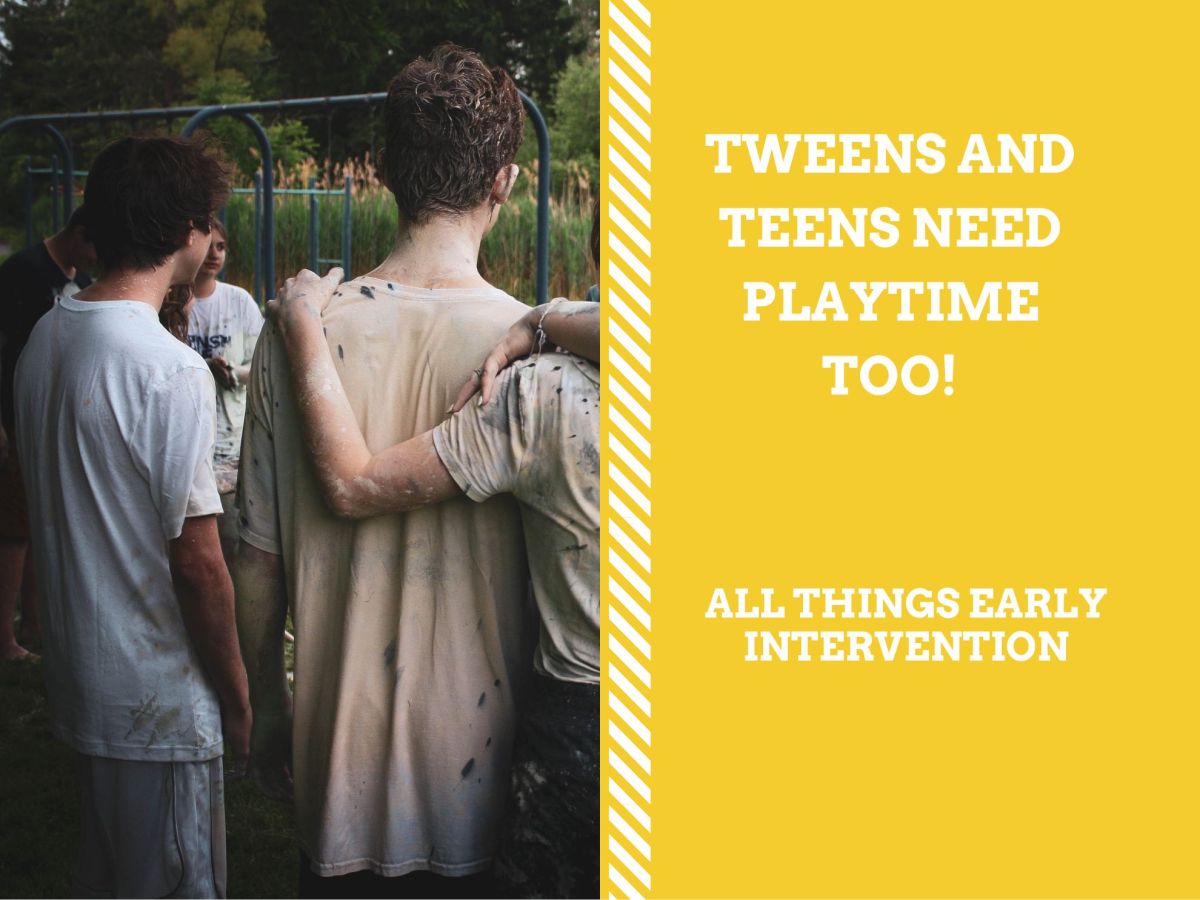
Tweens and Teens need playtime too. We are never too old for play. Adolescents need playtime for stress relief, joy and health. Let me share with you the highlights of some really good articles on the why your tweens and teens need playtime too! Why do we overlook the importance of play in teenagers?
We are Never Too Old for Play
Think about it. How has your teen or tween’s playtime changed since they were younger?
From, “How to Bring Playfulness to High School Students,” by Zaidee Stavely
“It’s easy to focus on academics and college transcripts when children become tweens and teens, but retaining the agency and creativity inherent in play is crucial for them, too. But what is the high school equivalent for the kind of inquisitive learning that happens when little kids play in the sandbox, finger-paint, build with blocks or play make-believe?”
“How to Bring Playfulness to High School Students” by Zaidee Stavely on Jul 24, 2015 from KQED.org
Adolescents Need Time to Play
In Time “Playtime Isn’t Just for Preschoolers—Teenagers Need It, Too,” author Hilary G. Conklin reminds us that
“And while play has gotten deserved press in recent months for its role in fostering crucial social-emotional and cognitive skills and cultivating creativity and imagination in the early childhood years, a critical group has been largely left out of these important conversations. Adolescents, too—not to mention adults, as shown through Google’s efforts —need time to play, and they need time to play in school.”
Did you ever realize those hobbies and interests that we enjoy doing are considered play and actually good for our health?
Play Provides Opportunities to Demonstrate Competence
Conklin also says play “addresses teenagers’ developmental needs for greater independence and ownership in their learning, opportunities for physical activity and creative expression, and the ability to demonstrate competence.”
Depriving Play Makes Us Cranky
From the Washington Post, “Why it’s good for grown-ups to go play,” by Jennifer Wallace, May 20, 2017
“Over time, he says, play deprivation can reveal itself in certain patterns of behavior: We might get cranky, rigid, feel stuck in a rut or feel victimized by life. To benefit most from the rejuvenating benefits of play, he says, we need to incorporate it into our everyday lives, “not just wait for that two-week vacation every year.”
Play Shapes the Brain, Fosters Joy, and is Essential for Our Health
In “Wholehearted Living Guidepost 7: Cultivating Rest and Play,” Posted on January 11, 2014 by Erica Djossa at https://the-love-compass.com.
“Play isn’t just about imagination; it is about rest and rejuvenation. It shapes our brain, fosters joy, creativity and innovation, and is essential to our health…To rest and play does not mean that you are lazy, weak or unproductive; it means that you value your health, want to take care of yourself and experience the present.”
Play Requires That We Are Totally Actively Engaged in What We Are Doing
From “Wholehearted Living Guidepost 7: Cultivating Rest and Play posted on January 11, 2014 by Erica Djossa
“Many people feel that TV and movies are a form of rest; the problem with watching TV is that it is passive. It can also be used to numb or avoid because it helps us to escape reality. Play and true rejuvenating rest requires that we get actively engaged.
Play for the Fun of it
From “Brené Brown: Why Goofing Off Is Really Good For You,” by Brené Brown at Huffington Post,
“Play — doing things just because they’re fun and not because they’ll help achieve a goal — is vital to human development. Brown believes that play is at the core of creativity and innovation.
Play can mean snorkeling, scrapbooking or solving crossword puzzles; it’s anything that makes us lose track of time and self-consciousness.”
Is it play, work, or passive?
From “Why it’s good for grown-ups to go play” by Jennifer Wallace, May 20, 2017, at the Washington Post.
“Soccer icon David Beckham has said that he plays with Lego pieces to control stress. Comedian Ellen DeGeneres playfully pranks her television guests. While serving as Britain’s prime minister, David Cameron was known to decompress at the end of a long day with the video game Angry Birds…How we play is “as unique to an individual as a fingerprint”
Playtime Reduces Stress
From “Why adults coloring books are the latest trend” by Nora Krug, May 2, 2016, in the Washington Post,
Like yoga and meditation, coloring has a calming effect which can be enhanced by focusing on the mindfulness of the process, “the gentle pressing of the crayon or pencil on the page, the texture of the paper across your hand, and the soft sounds of the coloring instrument moving back and forth in a rhythmic fashion.”
Learning through Playtime: Tweens and Teens
In high school, kids’ development really takes off. If you’re unsure what to expect these years, look at the developmental milestones you can expect to see in a teen. Remember that not all kids develop at the same rate, so if your child isn’t doing all of these things at the same time as other teens, don’t panic.
Read about teen milestones at “Developmental Milestones for High-Schoolers” By Amanda Morin at Understood.org. Teen milestones include but are not limited to the following…
- reasoning
- educated guesses
- sort fact from fiction
- thinking abstractly
- use numbers in real-life situations
- strive to be independent
- don’t want to talk as much
- argumentative
- may appreciate siblings more than parents
- begin to see parents as real people
- develop a better sense of who they are and what positive things they can contribute
A printable Teen Milestones List
View teenage milestone list from CDC here
Play Can Be a Vehicle for Learning
Tween and Teen Playtime Game: Silence
Silence is exactly what the game is about. The game is good for large groups and challenges children to accomplish tasks together but without speaking to each other. Write down the names of months, days of the week, or any other set of words that must be arranged in a particular order. Give one sticky note to each person randomly. Tell the players that they have to arrange themselves in the right order in as little time as possible. The trick is to do it without speaking at all. There is no competition in this game. However, this game helps children develop organizational, coordination, and non-verbal communication skills.
Tween and Teen Playtime Game: Conversation
Conversation is a simple vocabulary game that can be played anywhere. Give the players a set of 10 words. Tell them to use the words in a conversation. Give them 10 seconds to think and one minute to complete the conversation. Participants have to use the listed words in a meaningful way. It is extra funny when the words mismatch! You can read even more ideas at “23 Popular Educational Games For Teens,” written by Harshita Makvana at Mom Junction .
Playing Extracurricular Activities
What about playing sports and other extracurricular activities? Good question!! Extracurricular activities are awesome! Don’t forget to include some non-structured, just for fun playtime. Depending on the situation, playing an organized sport may be more stressful than playing it because of the increased focus on winning.
From “How to Bring Playfulness to High School Students” by Zaidee Stavely
“There is something to be learned from being in a professional production or a fully competitive orchestra. But there’s also something to be learned from putting together a garage band and jamming with your friends, or doing improv for fun.
It’s important that they’re doing it for its own sake. They’re not doing it for a reward, they’re doing it because they love it. Especially for teenagers, who are under a lot of stress,” Russ said.
Encouraging teens to play more informal games, like pickup sports, or to play music with each other just for fun can be ways to let them play without emphasizing competition.”
KQED.org “How to Bring Playfulness to High School Students” by Zaidee Stavely on Jul 24, 2015
According to this article in Parenting Science,
“Physical exercise has important cognitive benefits in its own right. But physical education classes don’t deliver the same benefits as recess. Researchers suspect that’s because PE classes are too structured and rely too much on adult-imposed rules. To reap all the benefits of play, a play break must be truly playful.”
“The social and cognitive benefits of play: Effects on the learning brain” by Gwen Dewar, Ph.D.
This training was presented live on Facebook, and is available upon request in person.

Prelanguage Skills: Steps To Communication
This training session looks at the prelinguistic skills every child must learn before they can learn to talk. Participants will learn playful intervention strategies to promote these skills and, as a result, promote language to the little ones in their care.
Keep reading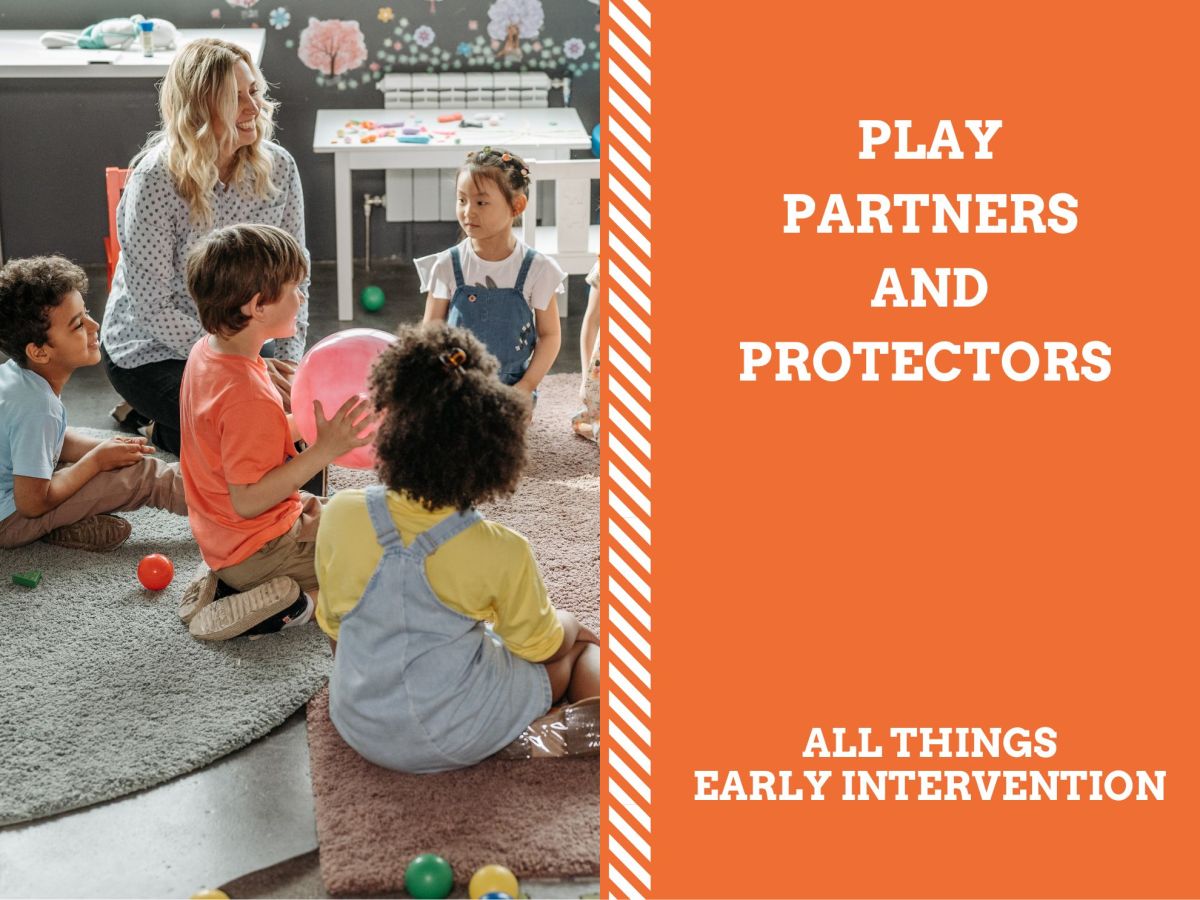
Play Partners As Well As Protectors
This training, available upon request, was created to orient new childcare providers to the basics of best practices in childcare. Those providing high-quality care for children are called to be play partners and protectors of little ones. The training emphasizes play and safety.
Keep reading
Grace-Based Discipline For The Preschool Classroom
This presentation is for teachers who teach in a Christian faith-based classroom, such as those located in a church, which is where many preschool programs are based across the state. This presentation, available upon request, draws connections between neuroscience, positive discipline strategies, and lessons in grace to promote positive discipline in a preschool classroom.
Keep readingSomething went wrong. Please refresh the page and/or try again.
 All Things Early Intervention
One reply on “Tweens and Teens Need Playtime Too!”
Yes, they do!!
LikeLike