My own approach to dealing with challenging behavior is influenced by positive behavior support, social-emotional learning, and trauma-informed care. It is a hodgepodge of trial and error, and I’d love to share the stories with you.
A stern voice, or even the word “no,” would trigger meltdowns. Thankfully, I discovered the magic of Daniel Tiger’s Neighborhood, a children’s television show that offered practical solutions for navigating these situations.
Creating a safe space for him was a journey with uncertainties. While the effectiveness in calming him down was not always consistent, the times when it did work made all the effort worth it.
By understanding sensory seeking and incorporating these heavy work activities into your child’s routine, your child may benefit by feeling calmer, more regulated, and better able to focus throughout the day.
While I wasn’t consciously aware of these principles at the time, my improvised actions aligned to promote positive behavior. I was encouraged and reminded that we can effectively teach children new skills, including cleaning up, without resorting to power struggles.
While it wasn’t an overnight success, the social story proved to be a game-changer. Equipped with a road map for what to expect, Little Monkey was able to navigate the drive-thru experience with newfound calm.
Being a foster parent to a child with behavioral challenges can be emotionally draining. By developing strategies for maintaining composure, you can have a clear head to make decisions to put into practice to maintain a positive environment for both yourself and the child.
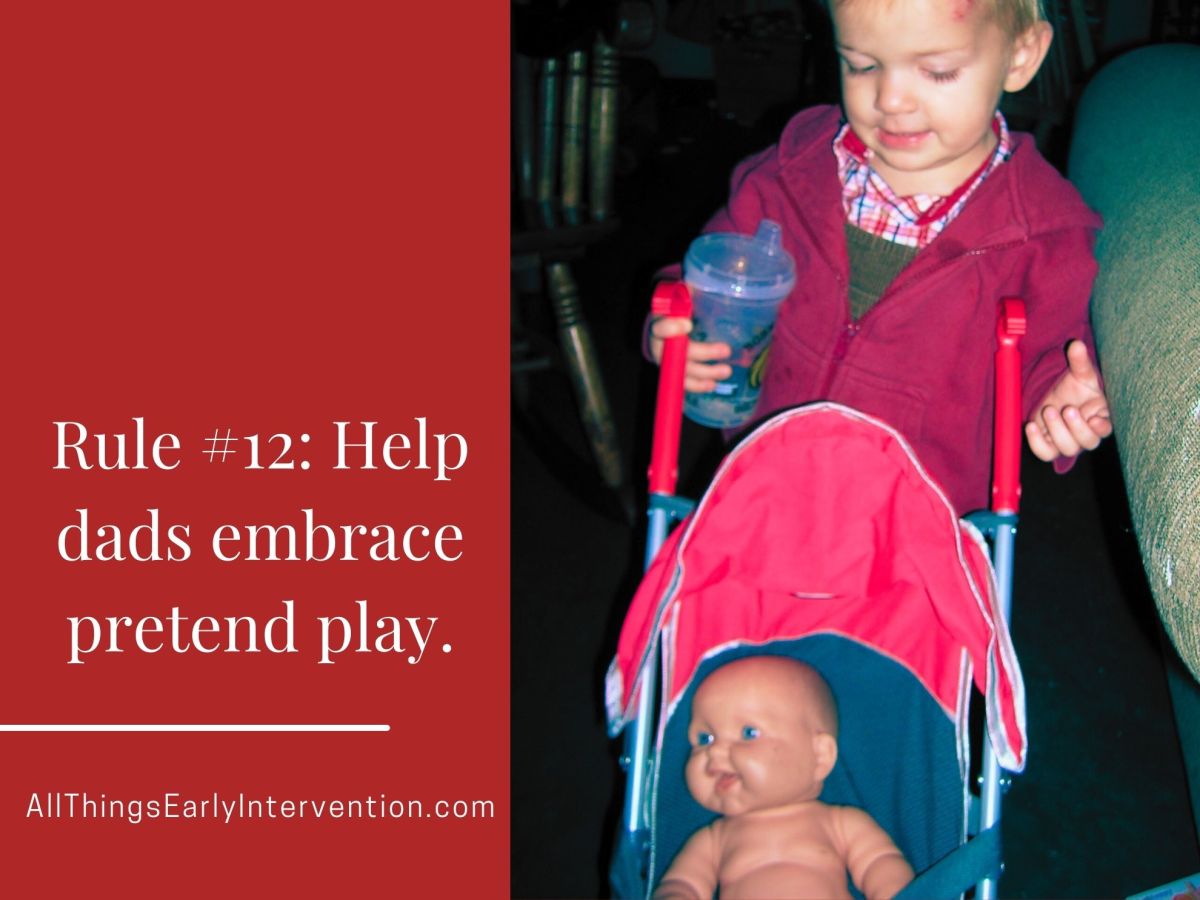
Our role isn’t to judge or attempt to change these beliefs but rather to find creative ways to ensure all children, regardless of background, can reap the benefits of pretend play.
Here are some tips to navigate pretend play with dads who might be hesitant about dolls:
This training session looks at the prelinguistic skills every child must learn before they can learn to talk. Participants will learn playful intervention strategies to promote these skills and, as a result, promote language to the little ones in their care.
On this particular “normal” day, I walked into a home visit with visions of one-on-one therapy in mind. Little did I know, nine visiting cousins eating fried chicken for lunch would turn it into a glorious, chaotic group experience.