Through this Early Intervention to Piano Teacher transition, I have realized that the fundamental learning process of humans learning new skills is the same: language, walking, holding crayons, or playing piano.
 All Things Early Intervention
Through this Early Intervention to Piano Teacher transition, I have realized that the fundamental learning process of humans learning new skills is the same: language, walking, holding crayons, or playing piano.

Remember: This isn’t about relinquishing control but fostering collaboration. Incorporating student choice creates a more engaging and empowering learning environment. After all, the ultimate goal is for our students to develop a lifelong love of music.
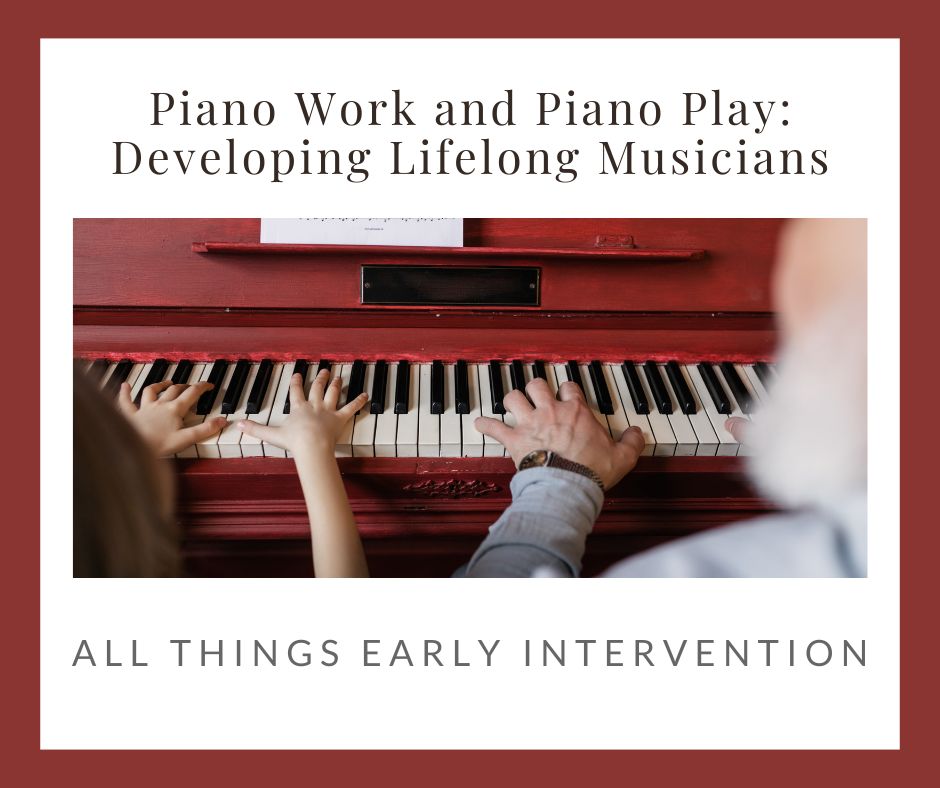
We might not turn every student into a concert pianist, but we can do something far more valuable: plant the seeds of a lifelong love for music. Imagine former students, years down the line, casually picking out a melody on a piano at a party or surprising themselves by jamming along with a favorite song. That’s the power of fostering musicianship.

Remember: The key is to create a safe and supportive environment where exploration and creativity are celebrated. We’re not aiming for perfection but for the joy of musical discovery.

Piano instruction includes five key areas: hands, eyes, ears, play, and work. Each element is interconnected, and I strive to incorporate all five into every lesson.

 All Things Early Intervention