Research suggests that activities targeting the vestibular and proprioceptive sensory systems can enhance our sense of rhythm. So, what are these mysterious systems, and how can they help students feel the beat?
Piano Hands: Feel The Beat
Research suggests that activities targeting the vestibular and proprioceptive sensory systems can enhance our sense of rhythm. So, what are these mysterious systems, and how can they help students feel the beat?
Integrating both fine and gross motor activities into piano teaching can significantly benefit students. Their full piano-playing potential will be unlocked by laying a strong foundation in motor skills.
Imagine you’re trying to pat your head and rub your tummy at the same time. That’s using bilateral coordination – using both sides of your body together in a coordinated way. It’s like your left and right hand are working as a team, even if they’re doing different things.
To have good posture for piano lessons, a student needs to have a good understanding of what good posture is and maintain it in other settings as well. In order to do so, one must have the muscles required to maintain balance. These muscles can become strong through movement. If a student has bad posture at the piano because they have weak core muscles, simply telling them to “sit up straight” won’t help. They need to strengthen those muscles first through repetitive movements, and then practice calling on those muscles to maintain balance for good posture.
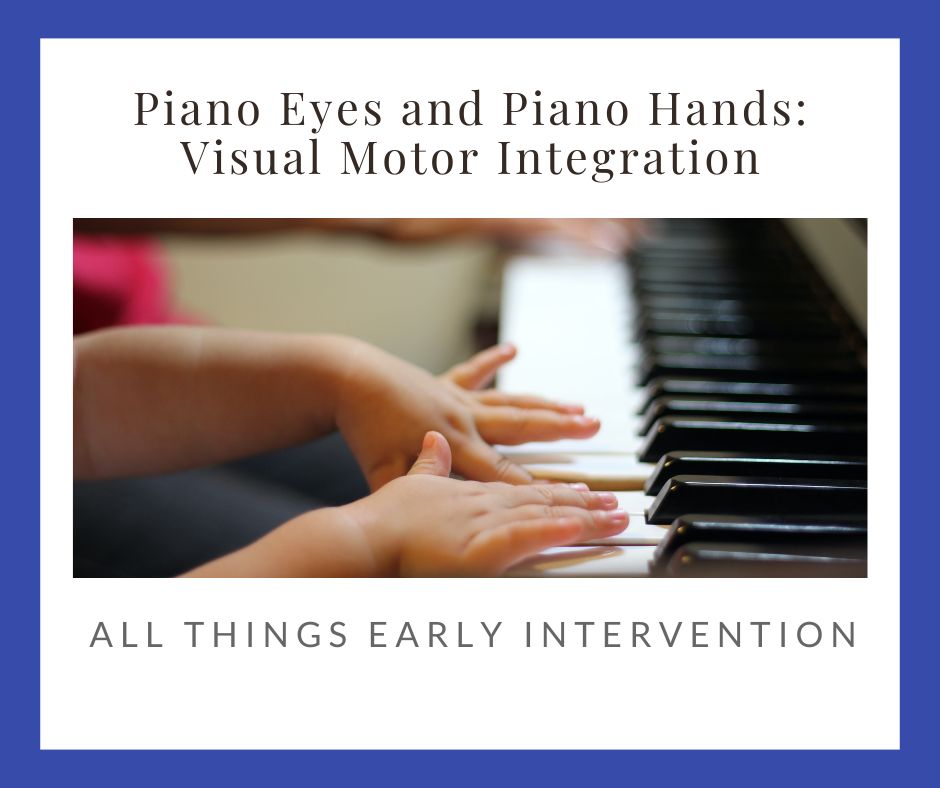
Visual-motor integration refers to the smooth teamwork between what we see and what our hands do. Think of it as your eyes sending information to your brain, and your brain sending it to your hands.
Piano instruction includes five key areas: hands, eyes, ears, play, and work. Each element is interconnected, and I strive to incorporate all five into every lesson.
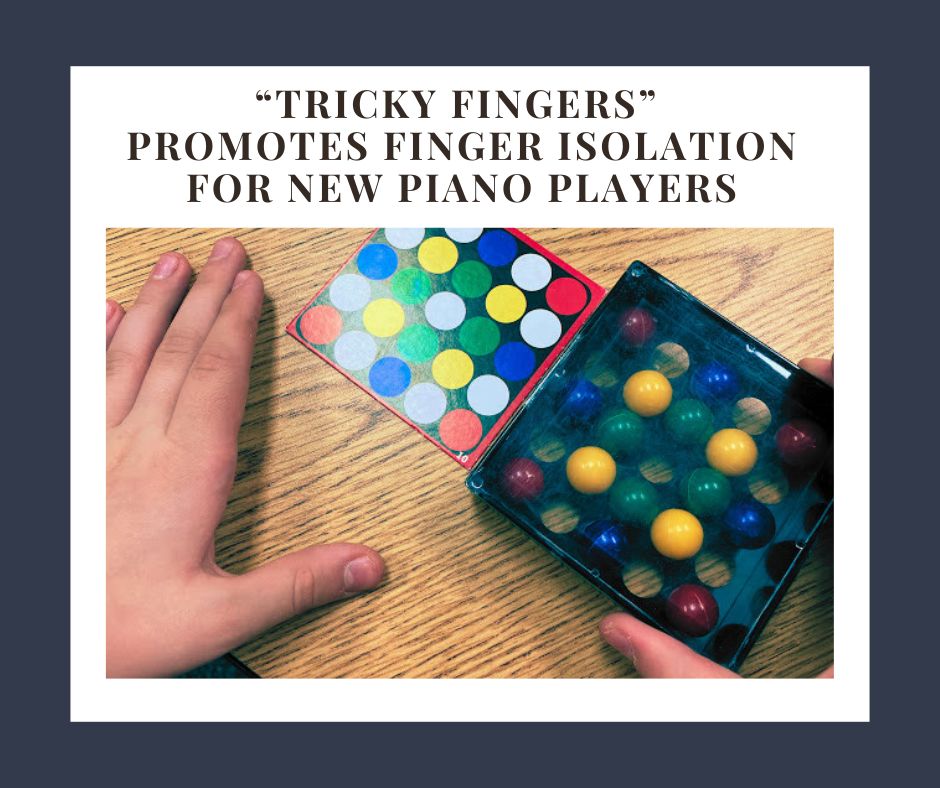
This clever little game challenges players to use their fingers to manipulate pegs in a variety of patterns. I have it in a regular rotation in my bag of tricks for piano lessons. Newbie piano students have a hard time moving one finger at a time. This toy helps students with that.