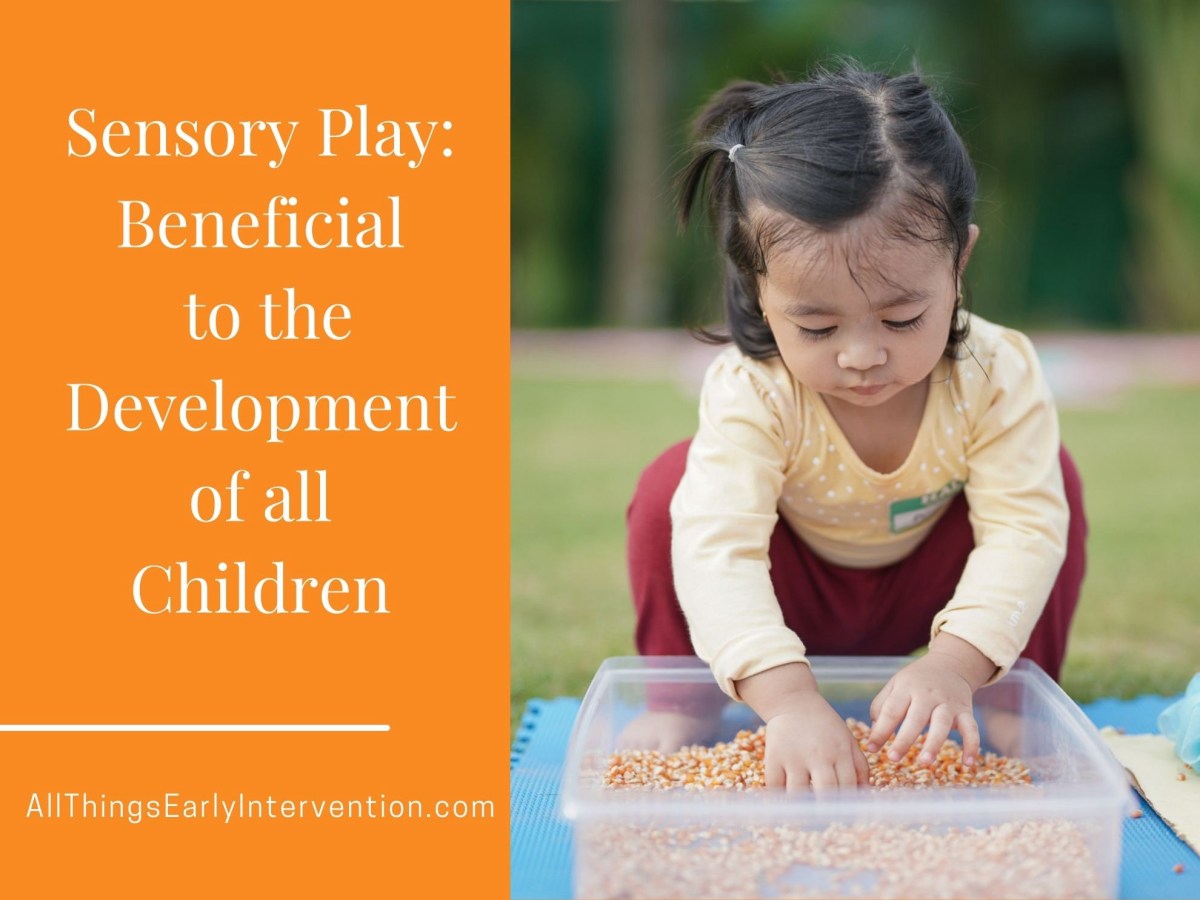
This post explores the benefits of sensory play just for fun and how it can be incorporated into everyday interactions with children with and without special needs.
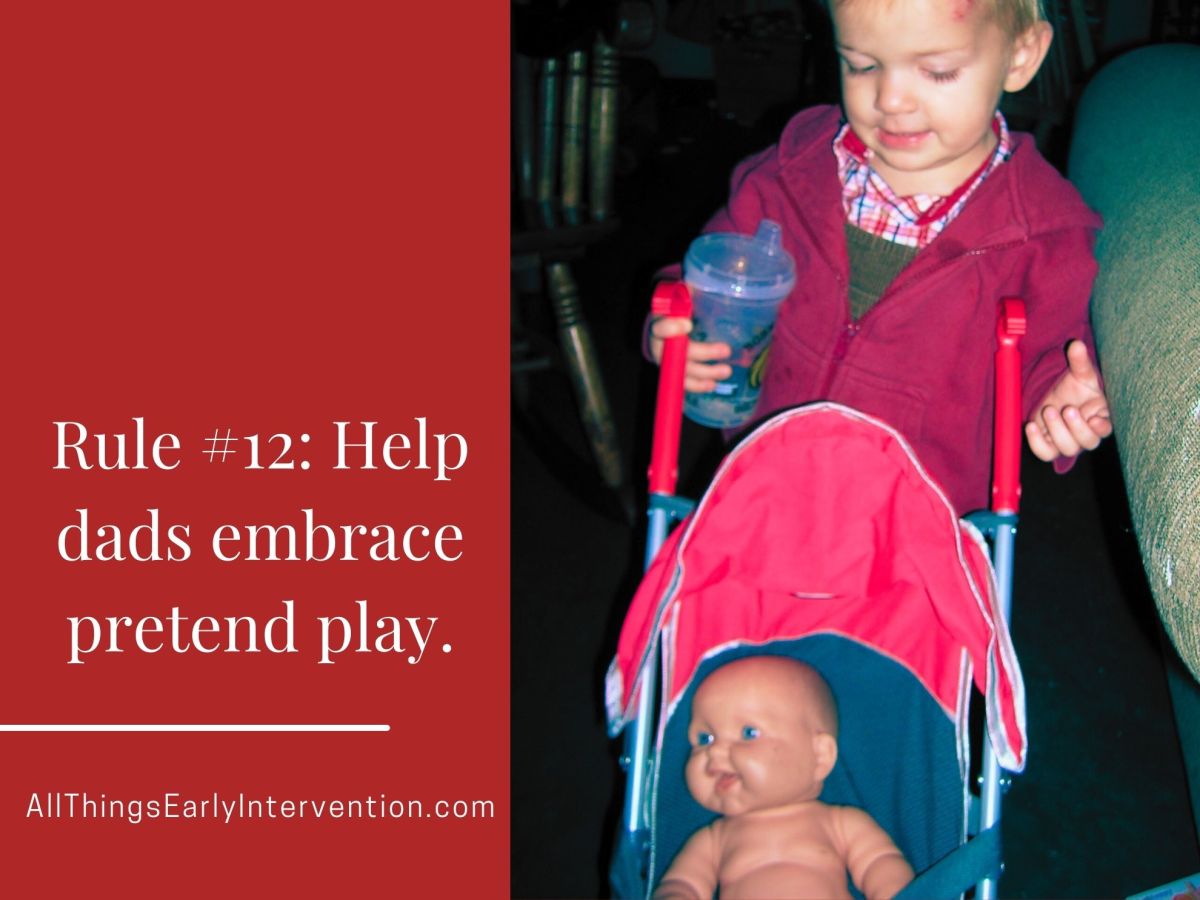
Our role isn’t to judge or attempt to change these beliefs but rather to find creative ways to ensure all children, regardless of background, can reap the benefits of pretend play.
Here are some tips to navigate pretend play with dads who might be hesitant about dolls:
Being an early intervention provider is like embarking on a daily safari – except instead of lions and tigers, you encounter a menagerie of…unexpected pets.
Gross motor heavy work is hard to do during a bath, but fine motor heavy work is doable. After providing him with the following activities, his need for sensory input was satisfied by the work with his hands and exposure to texture.
In Early Intervention, our job is to find that delicate balance between letting the child explore independently and gently guiding them to the next skill. We can root this “gentle dance” in two foundational learning theories
Every home has its own stuff. Learning how to use what you have to teach babies in their natural environment can be a creative puzzle.
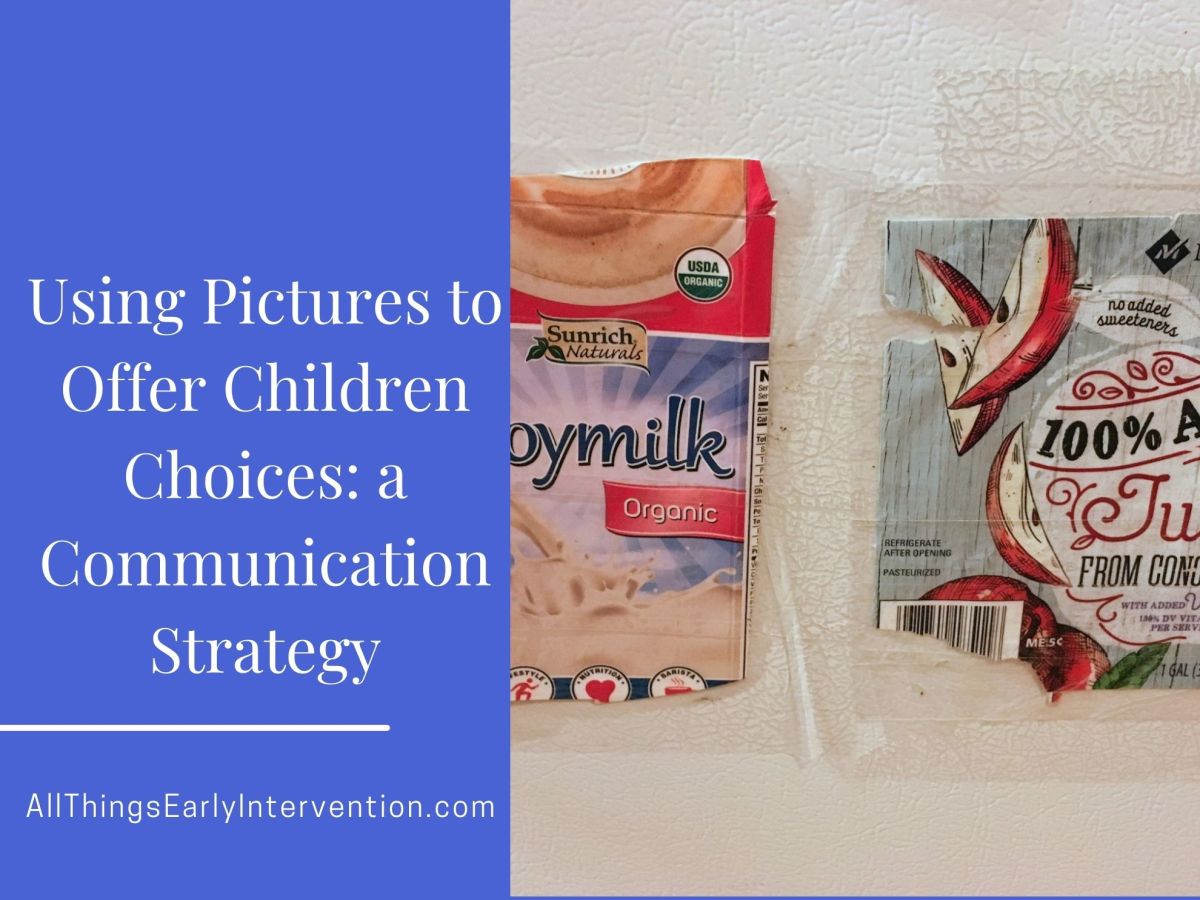
It takes some experimenting to find a strategy that works. One strategy that I try early on is using a picture, an object, or a sign/gesture to bridge the gap in communication.
Brown noise is a funny name, but it’s awesome for blocking out household sounds. I highly recommend the sound machine, but if your zoo–I mean, home is especially loud during a baby’s bedtime, you have another louder solution in a basic CD player.
Here is what I know to be true.
You cannot make a child eat.
You cannot make a child sleep.
You cannot make a child pee or poop.
You cannot make a child talk.
Do you know what you can end up making a child do? You can “make” a child cry.
Part 1: The designing of learning environments and activities that promote the child’s acquisition of skills in a variety of developmental areas, including cognitive processes and social interactions.