
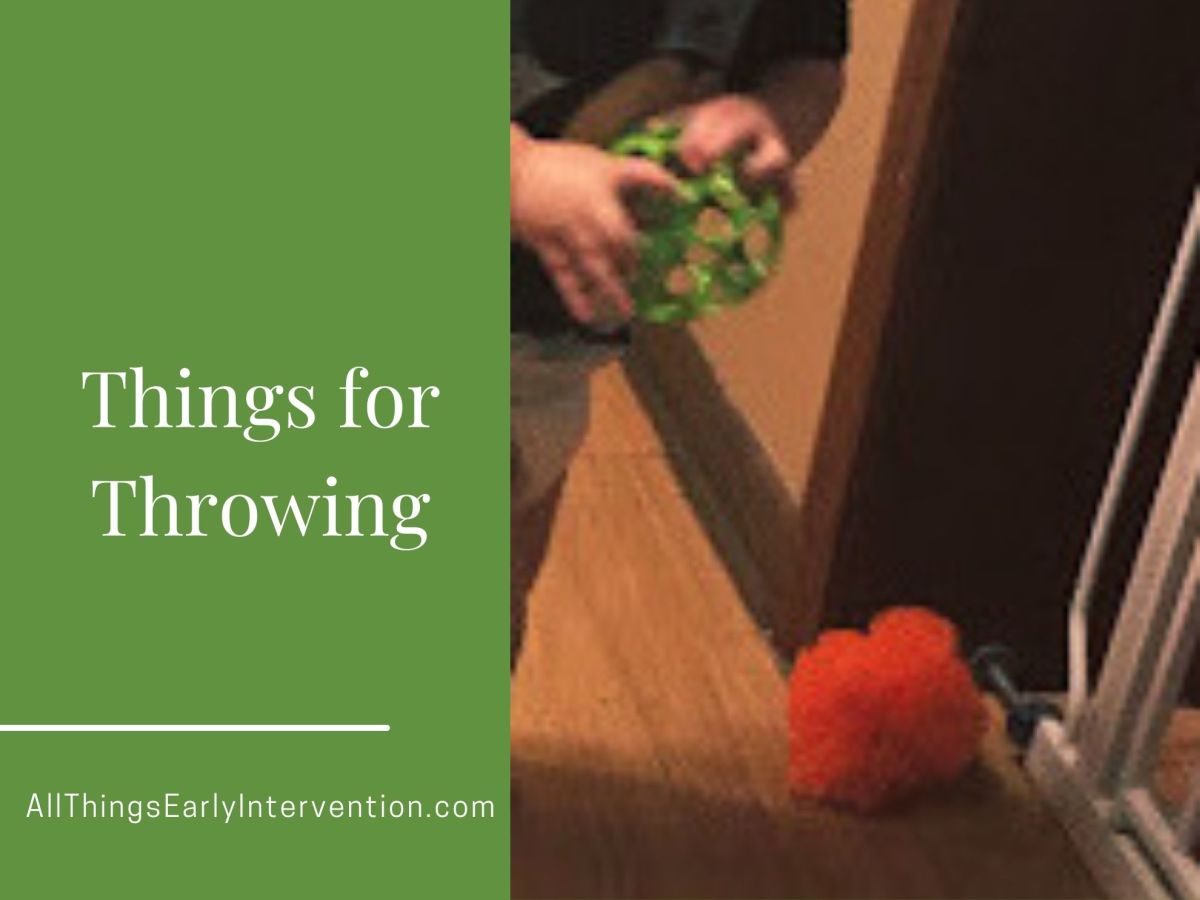
If you work with young children, you’ve been there: that moment of slow-motion panic when a piece of food, a block, or even a shoe sails through the air.
Our immediate, instinct is to say, “Stop throwing stuff!” But what if we paused and changed that instruction? It’s not about stopping the throwing; it’s about redirecting the throwing to a replacement throwing activity instead.
Some children just love to throw stuff, and it’s a powerful developmental drive. Fighting that impulse often leads to frustration for both the adult and the child. Early in my career, I realized the most successful approach wasn’t confrontation, but redirection to acceptable targets and materials.
For instance, I quickly learned to keep a stash of crinkled paper balls and inexpensive, soft shower loofas handy in my classroom. They’re light, quiet, and satisfyingly textured for little hands, making them perfect substitutes for hard toys or food. Tossing these soft items into a basket provides littles with a throwing outlet.
Safe Substitutions for Indoor Throwing Playtime
When we embrace the philosophy of redirection, we need a list of safe, indoor-friendly items. Resources from pediatric therapy, early education, and children’s activity programs all reinforce the need for soft, lightweight materials. The goal is to facilitate important developmental skills like trajectory and gross motor control without damaging our environments or risking injury.
Here is a consolidated list of recommended indoor-friendly items for toddlers to throw, categorized by purpose:
| Category | Recommended Items | Developmental Benefit |
| Super Soft & Sensory | Scarves, Cotton Balls, Pom Poms, Feathers, Socks, Paper Balls | Excellent for visual tracking (due to slow fall) and gentle fine motor release. |
| Grip & Proprioception | Bean Bags, Stuffed Animals, Yarn Balls, Sponges, Tin Foil Balls | Provides varied texture, requires a better grip, and offers valuable Proprioceptive Input (sensory input to muscles/joints) due to their slight weight. |
| Air & Targets | Soft Balls, Foam Balls, Soft Frisbees, Rings | Ideal for Target Toss activities into a laundry basket or a taped area, promoting aiming and coordination. Balloons are especially useful for slow-motion throwing (like “Balloon Volleyball”). |
What else can you throw?
For those of us in Early Intervention (EI), providing families with these tangible, low-cost solutions is paramount. Knowing some safe items to offer allows us to be proactive rather than and prohibitive.
When working with families, I always recommend starting with those household staples, like my personal favorites: the shower loofa and balls of paper. They are proof that we don’t always need fancy equipment to meet a child’s needs. The paper provides an auditory cue (the crumpling and the landing sound), while the loofa provides an unexpected texture. Furthermore, these redirection activities naturally address key EI goals:
- Gross Motor Skills: The act of throwing engages the core, shoulder, and arm strength.
- Visual-Motor Skills: Aiming at a taped target or a laundry basket develops the ability to coordinate vision with movement.
- Joint Attention and back and forth turn-taking
Addressing the Underlying “Why”
While having a replacement activity is half of the battle, the most crucial step we miss if we don’t look deeper is the underlying reason for the behavior. The Montessori approach identifies key motivators for throwing, and understanding them helps us tailor our advice beyond just “use a bean bag.”
According to The Montessori Room, we must consider:
- Communication: Is the child throwing a plate to signal they are “all done” or tossing a toy when they are frustrated? The solution isn’t a new toy; it’s teaching a functional replacement, such as baby sign language for “all done” or “help.”
- Attention Seeking: If the throwing only happens when you are busy, the child may need connection. We must deliberately pause and offer full, dedicated one-on-one time to satisfy that need proactively.
- Developmental Schema: Is the child driven purely by the joy of seeing objects fall and scatter? This is the Throwing Schema in action. This is where our safe alternatives shine! Redirection can include dropping pom-poms into a container or throwing leaves outside—safe outlets that fulfill the natural impulse.
Our call to action, then, must be to first assess the child’s “Why” before implementing the “What.” By understanding the child’s need—whether it’s communication, connection, or exploration—we can provide a safe, constructive outlet that truly supports their development, rather than just masking the behavior.
References
- CMAS Canada. (n.d.). Do you have a child in your program who loves to throw things? Retrieved from https://cmascanada.ca/activity-resources/throw-things/
- NAPA Center. (2025). 35+ Indoor Activities for Kids That Boost Development. Retrieved from https://napacenter.org/indoor-activities-for-kids/
- Rockstar Academy. (2025). Your Children Love to Throw? Here’s Throwing Activities for Toddlers. Retrieved from https://www.rockstaracademy.com/blog/throwing-activities-for-toddlers
- The Montessori Room. (n.d.). 4 Alternative Activities for Children Who Like to Throw. Retrieved from https://themontessoriroom.com/blogs/montessori-tips/4-alternative-activities-for-children-who-like-to-throw?srsltid=AfmBOoq1zRsPWI6RXXtUez5GrmyCGSdtc790V1dye9f8TcULSdo8Eu7k
 All Things Early Intervention