
Sometimes, the most valuable resources are the ones that have been right under our noses the whole time, hiding in plain sight.
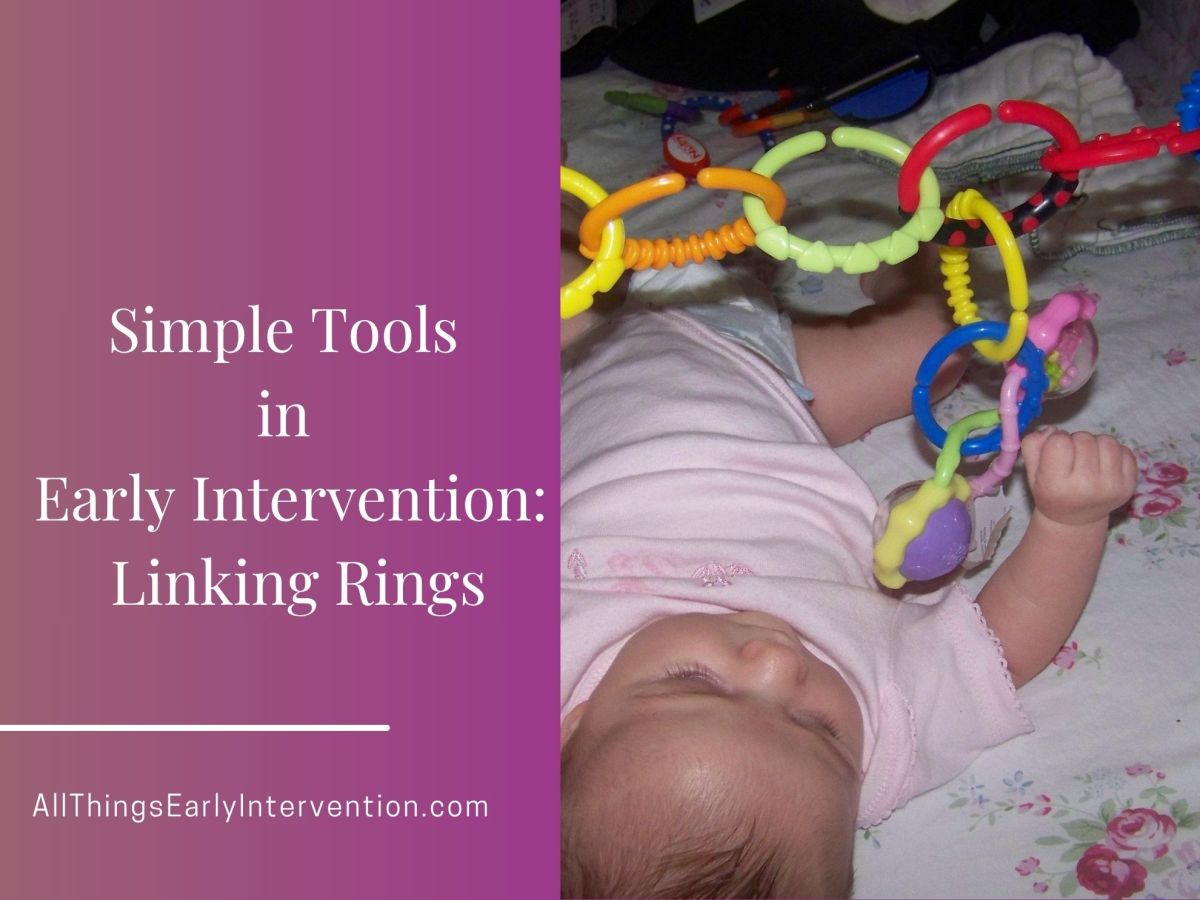
I’m talking about the common baby toy linking Rings or baby links. These unassuming plastic rings are so much more than a baby toy—they’re a truly fantastic tool for development and organization.
Our Road Trip Trick: The Toy Chain
I recently found myself on a long road trip with my youngest, and anyone who has traveled with a baby knows that those car seat hours can be challenging. I packed the usual assortment of toys, but after a short amount of time, they were dropped out of sight and out of reach.
At a rest stop, I took a handful of links, strung them together into one long chain of links, and then attached a few different toys at varying lengths.
The one she could easily reach and bring to her mouth was a textured teether. The ones just barely within her reach were rattle toys that made sounds when she hit them.
Keeping her favorite toys in ideal position led to a long streak of happy play time without tears. She was happily batting, grasping, and maneuvering the rings. Even my older kids noticed and commented, “Mom, she is loving reaching for those toys!” It was a simple solution, but it kept her engaged, stimulated, and, most importantly, happy for miles.
Linking rings really are the unsung heroes of on-the-go parenting, serving double duty as a useful parenting tool and as a open-ended toy for early intervention.
Ways to Play with Linking Rings In Early Intervention
- Early grasp: Let little babies practice grasping by placing one link in their hand.
- Hand to Mouth: a lightweight and colorful, easy to hold link is an ideal toy for baby to learn to put in her mouth.
- DIY rattle: As their grasp gets more steady, add 1 or 2 links to the one to create a little rattle. The extra links gives it some weight. As they get better add more links to make it heavier.
- Create a chain of links for dangling down… and attach to a highly motivating toy like an O-ball or Super Yummy. You can dangle the toy above the child to encourage looking or reaching.
- Create a chain across: attach it above and across the crib to put colorful items within sight. This is especially helpful or babies who are sick and limited in their ability to engage in play.
- Keeps Toys Off the Ground: Links easily attach to car seats, strollers, and high chairs, ensuring toys stay secure and accessible, not on the floor
- UNEXPECTED USE: attach them to cabinet knobs for a not-too-too-secure baby proofing solution.
Even More! The Developmental Benefits of Toddlers playing with Links:
- Fine Motor Skills: The interlocking design is an excellent tool for developing fine motor skills and hand-eye coordination as the child works to connect and disconnect the rings. This requires bilateral coordination.
- Building Play (creating chains, structures, or wearable jewelry like necklaces)
- Pattern Play and Color Sorting.
What simple, inexpensive item has been your greatest secret weapon? I’d love to hear your experiences and ideas!
References
- 10 Reasons That We Love Links. The Sensory Sessions. (https://www.thesensorysessions.com/10-reasons-that-we-love-links/)
- How to Use Toy Links When Traveling with Your Little One. Nest and Sprout. (https://nestandsprout.ca/blogs/news-from-the-nest/how-to-use-toy-links-travle)
 All Things Early Intervention