
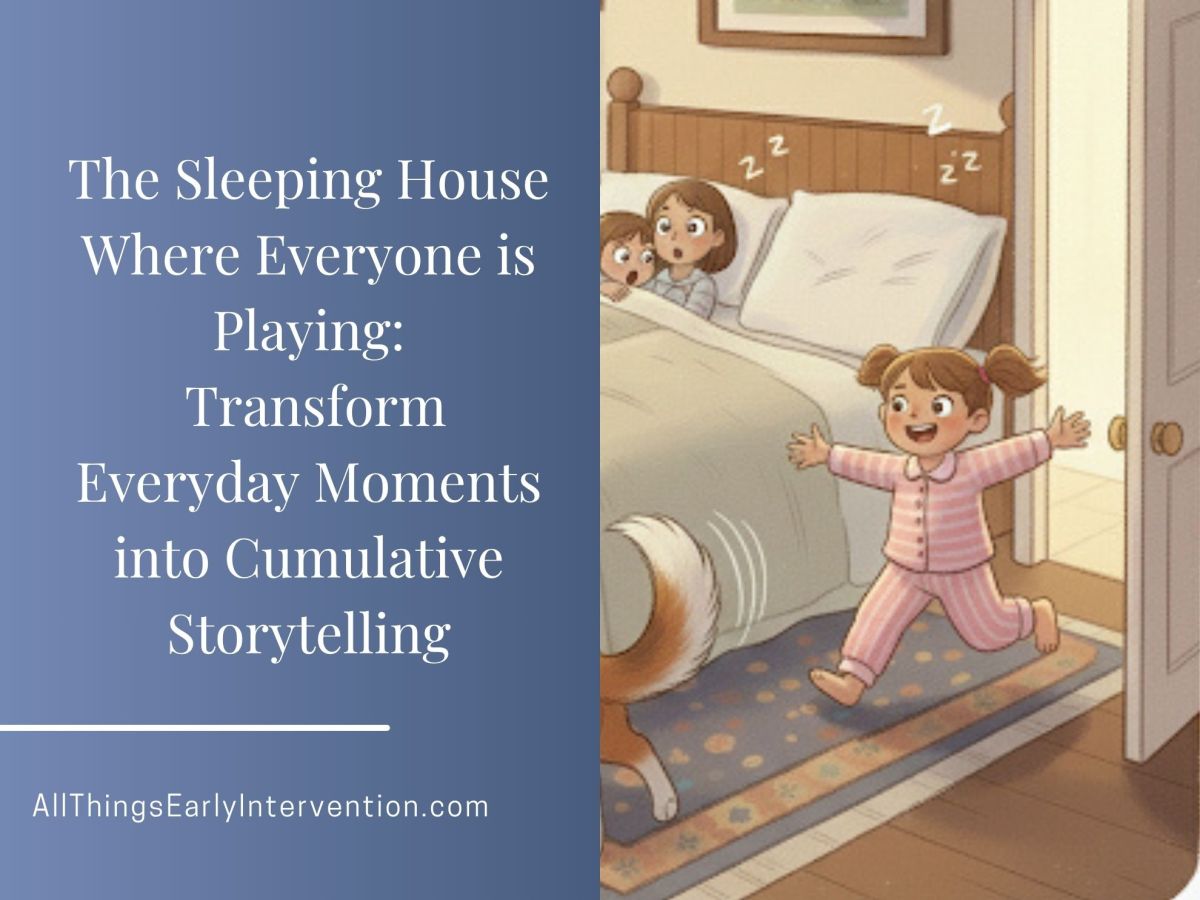
The Sleeping House, Inspired by The Napping House by Audrey Wood
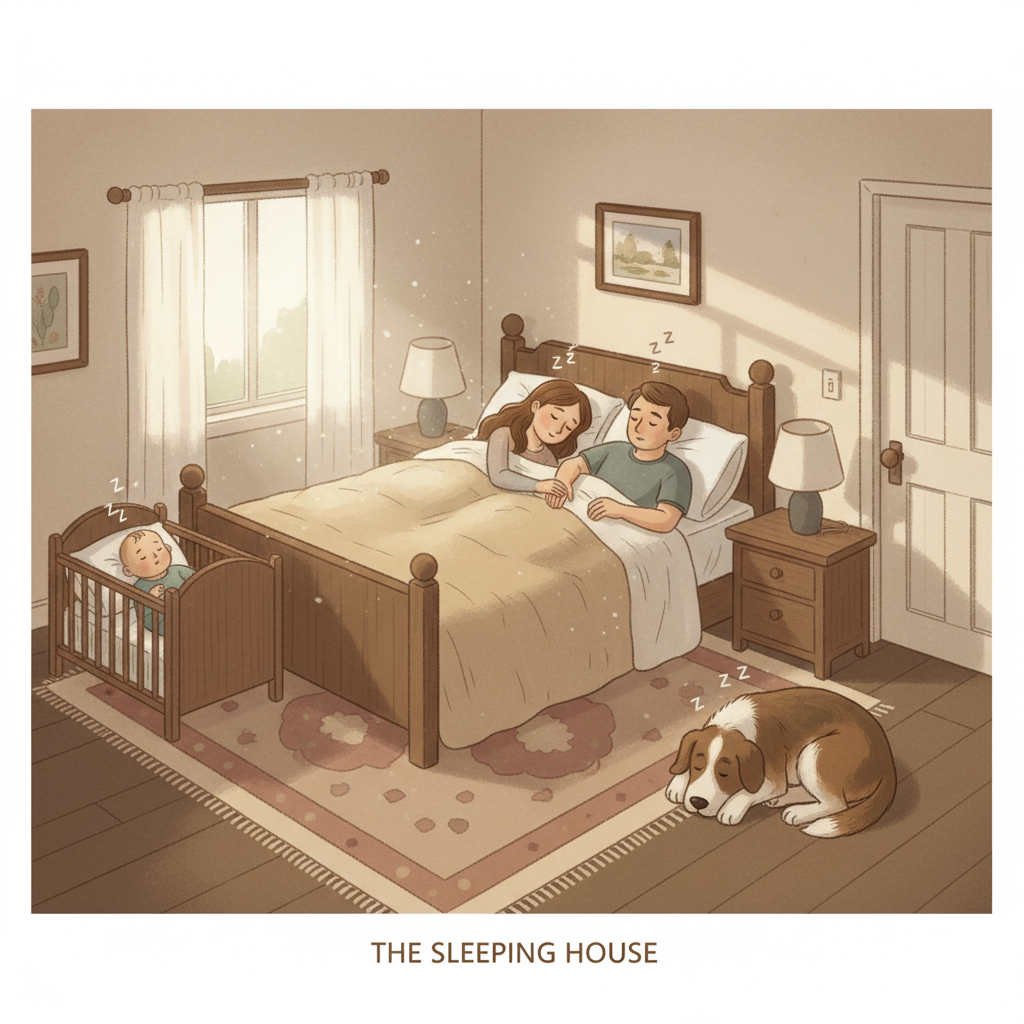
There is a house, a sleeping house, where everyone is cozy in their beds.
And in that house, there is a bed, a warm, wide bed, where a dreaming Mama loves to sleep in.
And curled up beside the dreaming Mama, there is a snoring Papa, a famously light sleeper.
And in that house, far from the light-sleeping Papa, there is a crib, a quiet crib, where a dozing Baby is cute as a button.
And by the door, in the silence of the house, there is a snoozing Dog with super-sonic hearing.
But then…
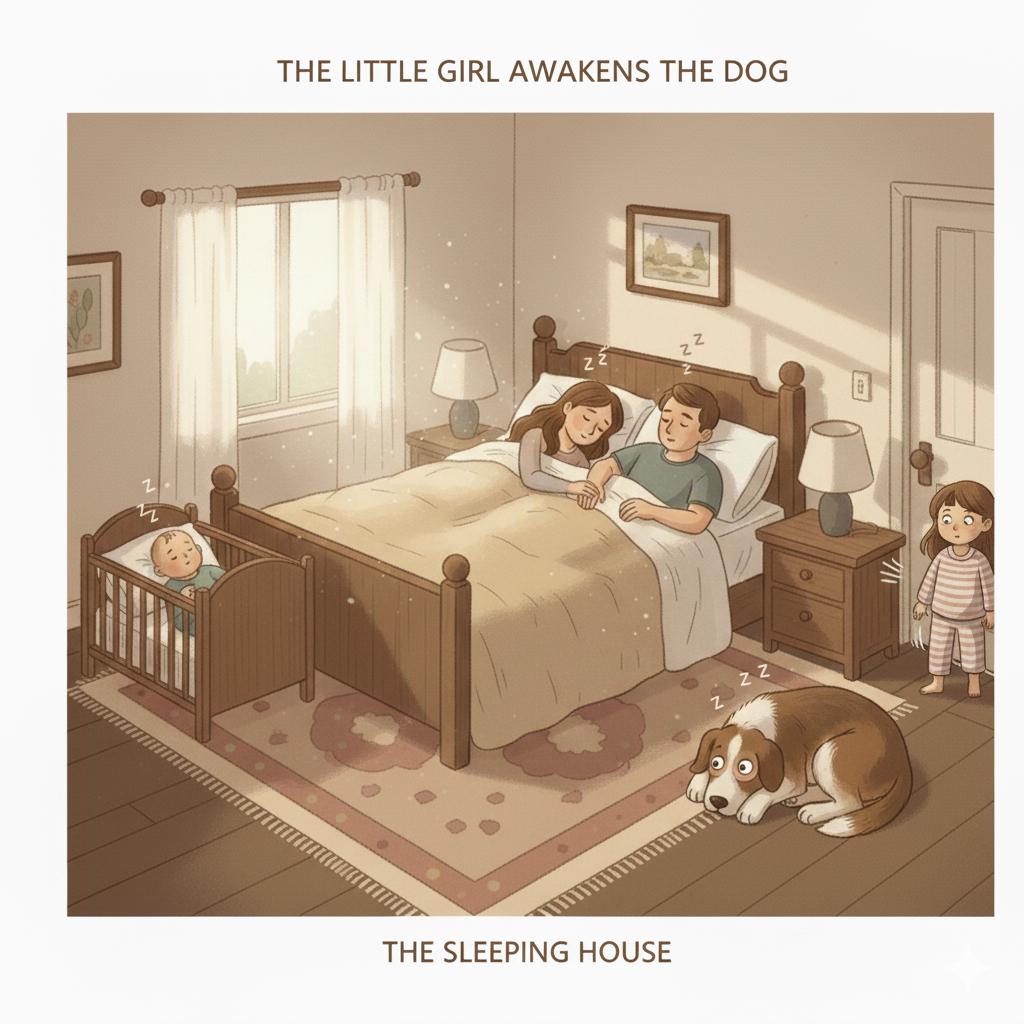
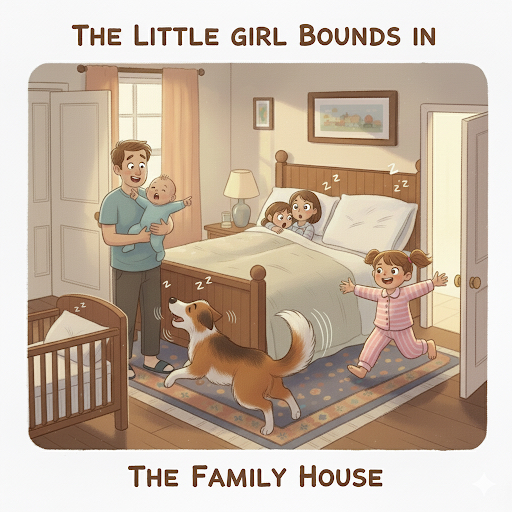
In creeps a Little Girl, quiet as a ninja.
A ninja-quiet girl, who is heard by the Dog with super-sonic hearing.
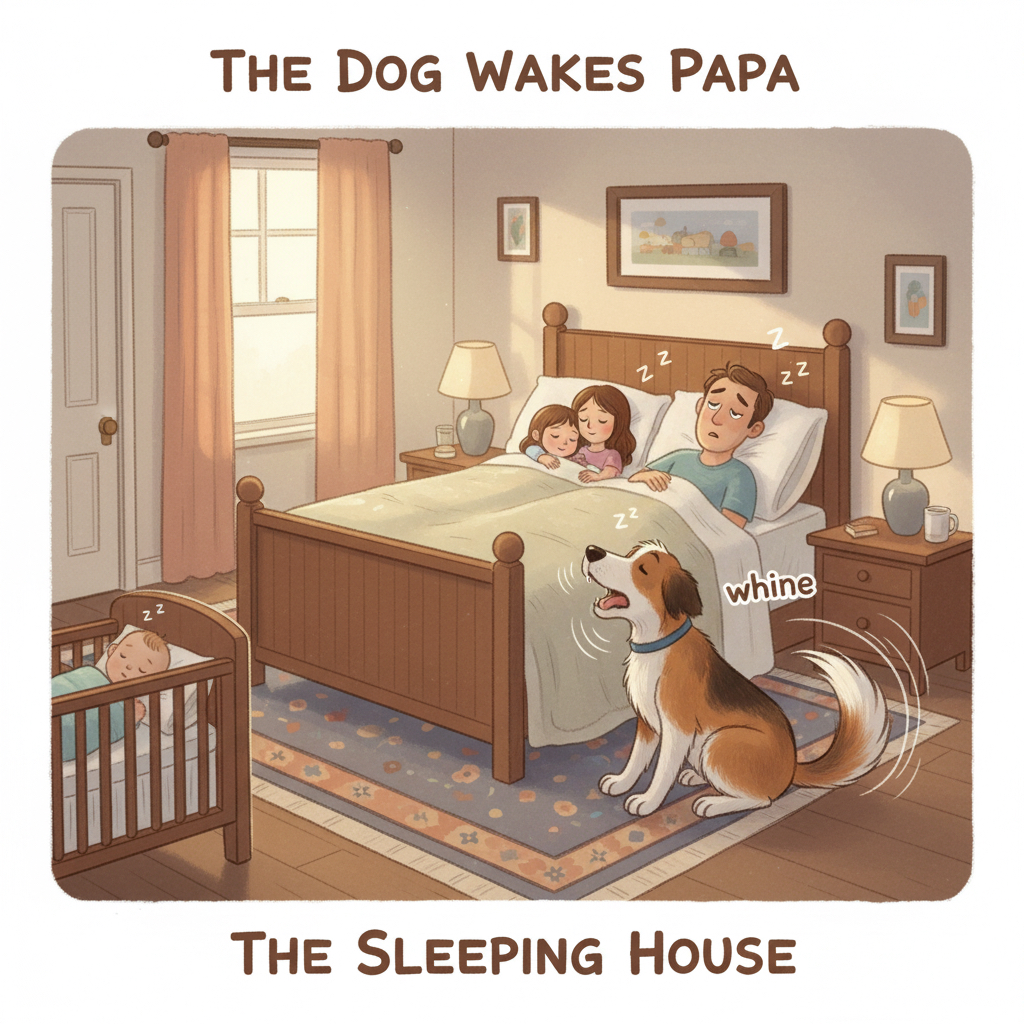
A super-sonic Dog, who wags his tail—thud, thud, thud—on the floor.
A thudding tail, that wakes the light-sleeping Papa.
A wide-awake Papa, who rises from bed to let the Dog out.
A happy Dog, who wags his tail harder—thud, thud, thud—against the crib.
A thudding crib, that wakes the dozing Baby, still cute as a button.
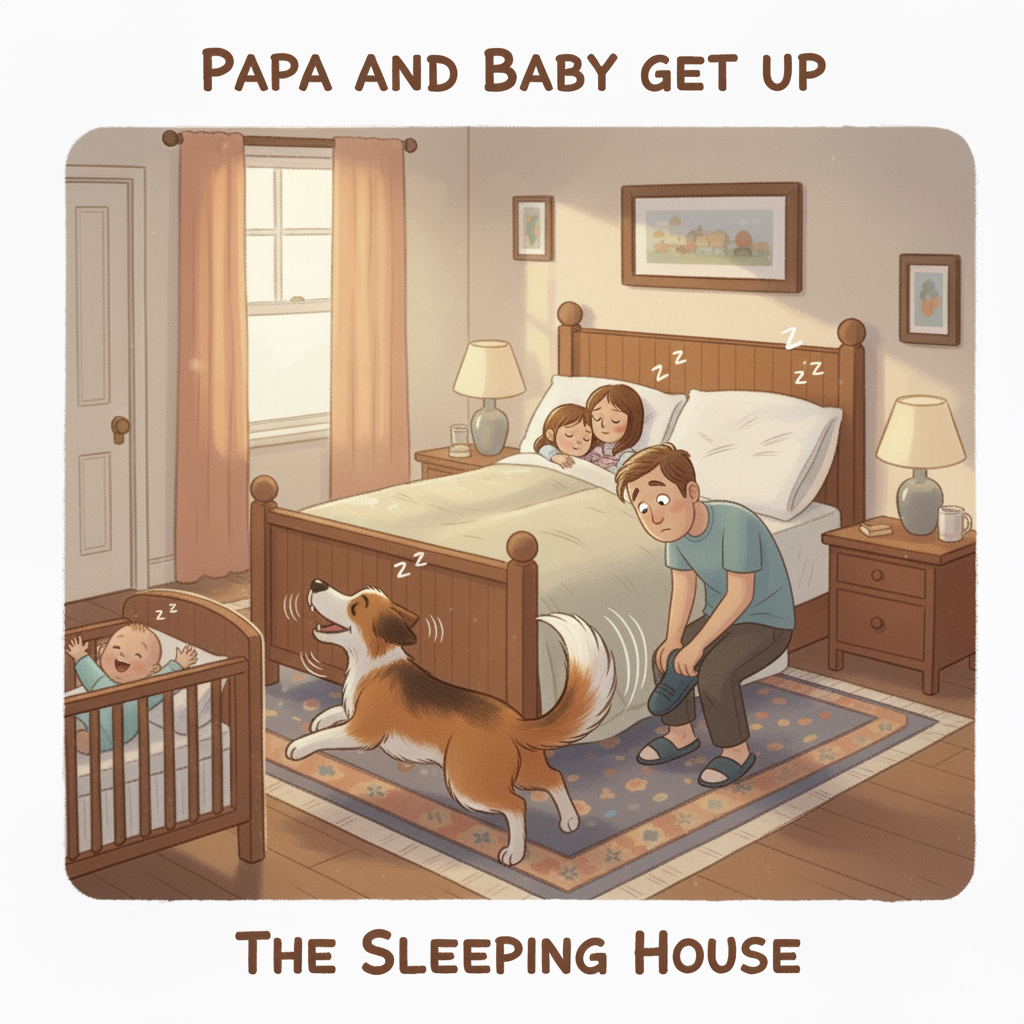
A reaching Baby, who is toted by the Papa to the door.
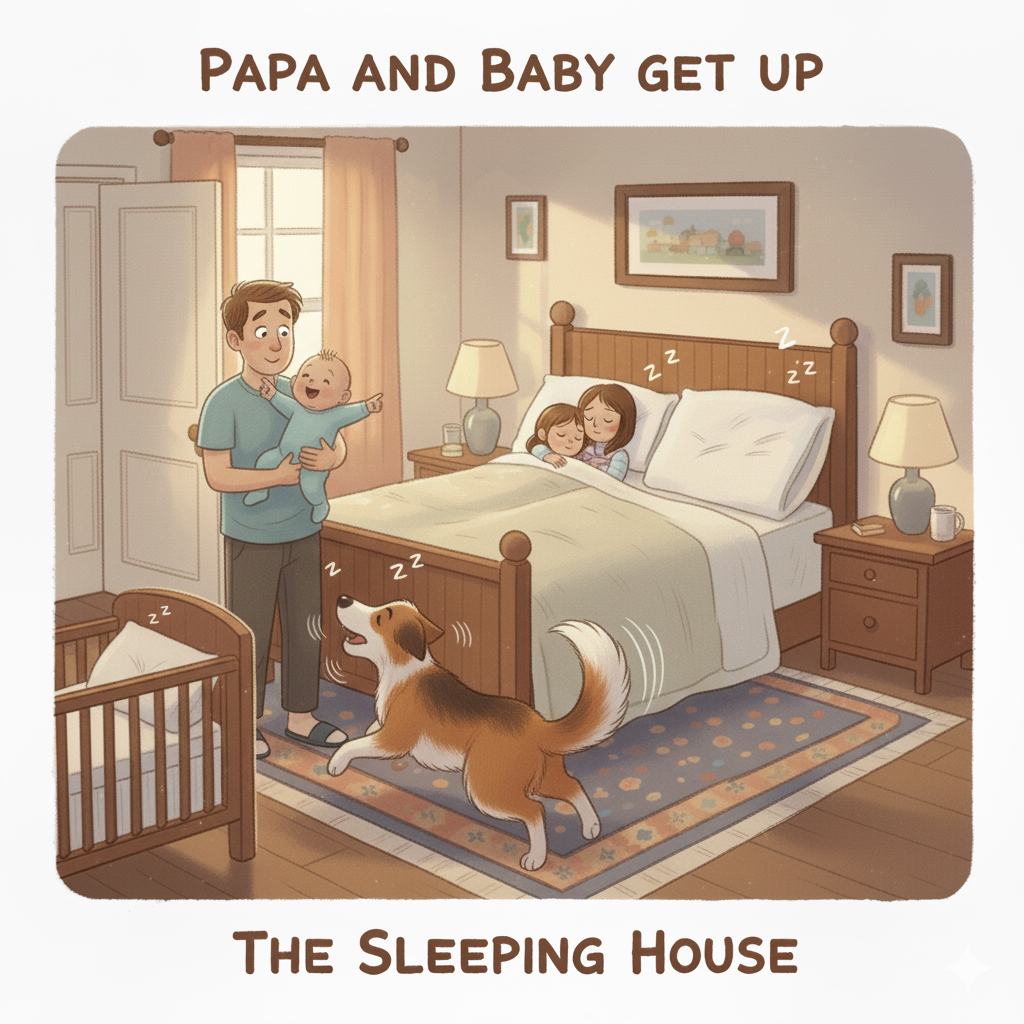
A clicking door, that wakes the Big Girl, who likes her morning snuggles.
A snuggly Big Girl, who is met by the Little Girl, quiet as a ninja—no more!
A talking Little Girl, who finds the Dreaming Mama, who now is wide awake!
In that sleeping house, where everyone is playing…
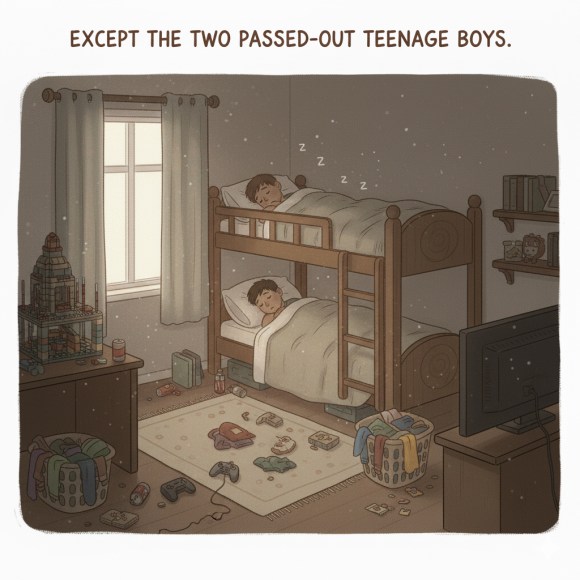
…Except for the two passed-out Teenage Boys. They will sleep until noon.
Turning a Saturday Morning into a Cumulative Story
As an early childhood educator, I have always loved the sweet rhythm and pace of Audrey Wood’s The Napping House. My story is based on a true Saturday morning at our home. While it started with everyone cozy and dreaming, a single wagging tail set off a chain reaction that brought our “sleeping house” to life.
The Napping House is an example of a cumulative story because the action builds upon itself and is repeated throughout the story. Writing this story was fun for me–a way to remember a sleepy Saturday morning. It might be fun for you too to write your own using this guide. It could be illustrated by the children in your story to make it even more special. In my case, I used AI to bring the pictures in my mind to life.
More Examples of Cumulative Stories
- The House That Jack Built: Perhaps the most famous example, where each verse adds a new character or object (the malt, the rat, the cat) while repeating everything that came before.
- There Was an Old Lady Who Swallowed a Fly: A classic cumulative tale where the “swelling” happens inside the old lady as she swallows increasingly larger animals to catch the previous one.
- The Mitten: Very similar to the “pile” on the bed in The Napping House, this story features a growing group of animals that squeeze into a lost mitten until a tiny “catalyst” (a mouse’s whisker) causes a big reaction.
- The Gingerbread Man: A cumulative “chase” story where the Gingerbread Man runs away from a growing line of people and animals, repeating his famous rhyme at each stop.
- Bringing the Rain to Kapiti Plain: Uses the rhythmic, repetitive structure of The House That Jack Built to describe a chain reaction in nature that ends a drought.
Features of a Cumulative Story
Cumulative Structure: The heart of this style is the repetitive chain. Every time a new character is added, the writer can re-list the entire stack in reverse order of their arrival.
Character Descriptions: Each character can be assigned a “character tag”—a recurring label that defines them. Dreaming Mama, Snoring Papa, Slumbering mouse, etc.
Bonus! Synonyms build vocabulary.
The Catalyst: Every cumulative story needs a turning point where the “pyramid of sleepers” begins to topple. In the original book, it is a “wakeful flea”. In your own version, look for a small trigger that sets off a chain reaction.
Focus on Rhthym and Repetition to make the book appealing for reading aloud.
The Transformation: Contrast the “before” (piled high and silent) with the “after” (everybody is up and ready to play).
Step-by-Step Guide for Adapting Real-Life Events for Your Own Story
Use this “formula” to craft your own classroom or family story that captures a special day.
- Select Your “House”: Choose a central location (the living room, a car, a tent).
- Assign Your Epithets: List 4–6 characters and assign each a personality tag (e.g., “The snoring Bulldog who dreams of bones”).
- Choose Your Catalyst: Identify the one “wakeful” element. What is their specific “bite” or “creep”?
- Map the Sensory Chain: Ensure each wake-up is caused by the character before it. You can include a trigger like a sound or a movement.
- Practice the Snowball: List the stack of characters and their actions in the chain in order.
Creating your own version of a “swelling story” like The Napping House is an excellent way for parents and teachers to transform everyday family or classroom experiences in your own rhythmic narrative.
References
Scholastic Inc. (2026). The Napping House.
This source identifies the book as a “swelling story” characterized by its use of rhyme and repetition to encourage young children to read along and make predictions. The plot details a “pyramid of sleepers”—including a snoring granny, a dreaming child, and various pets—who are all disturbed by the bite of a single wakeful flea. It is highlighted as a classic pick for children ages 3 to 6 to help develop early literacy skills. https://clubs.scholastic.com/the-napping-house/9780545683098-rco-us.html
Salve Regina University. (2025, August 29). EDC-243: Children’s literature: Cumulative stories.
This research guide defines cumulative stories as narratives where all previous events are repeated whenever a new event occurs. It provides an extensive reference list of picture books that follow this pattern, such as The Mitten, The House That Jack Built, and Today Is Monday. The guide is intended to support educators in exploring predictable picture books and early childhood literacy genre. https://salve.libguides.com/childrensliterature
 All Things Early Intervention