

Early Interventionists. We are already experts in child development, but we must also become fluent in the language of the medical world. It’s a lot to ask of ourselves, and even more to ask of the families we support.
I learned this firsthand when a tiny little one, Boo Boo Bear, came to live with us. He was considered medically complex which included a G-tube with a feeding pump. While the nurses provided all the essential training before discharge, I quickly realized how much I’d forgotten once we were home. In moments of late-night uncertainty, I turned to the internet. I found amazing, clear, step-by-step videos and articles on G-tube care and pump operation—from the libraries of other major children’s hospitals, not the one we were discharged from.
See what I’m talking about here…
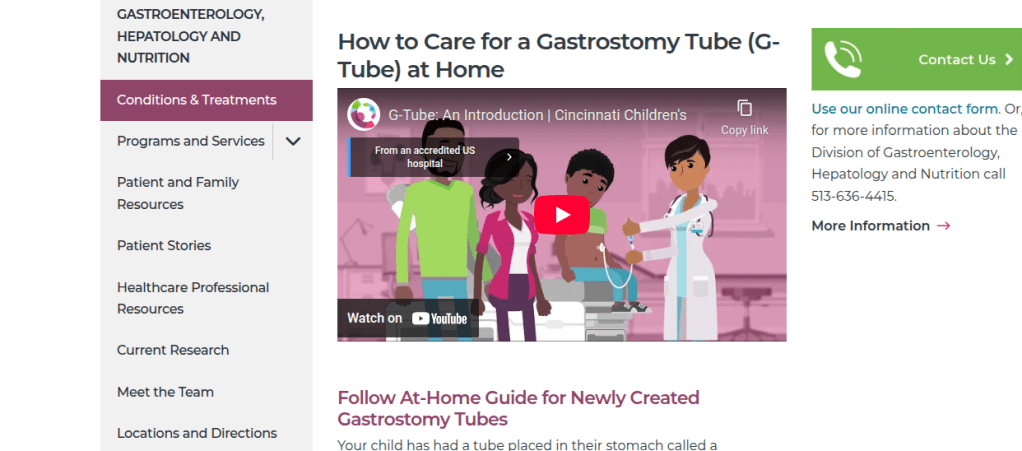
That personal experience changed how I provide parents information. It reminded me that families need trustworthy, simple, and reliable resources to help them feel capable and confident, and it showed me exactly where to look for them.
Why We Need Reliable Medical Context
For those of us working in early intervention, our job requires us to support children who often have underlying medical complexities. To write an effective Individualized Family Service Plan (IFSP) and collaborate well with an entire team, we need a strong grasp of the medical context.
This is why the comprehensive health libraries provided by institutions like the Mayo Clinic, KidsHealth, and Cincinnati Children’s Hospital are such powerful tools:
- Understanding the Diagnosis: These libraries offer medically vetted, in–depth condition information on everything from common developmental issues like Autism Spectrum Disorder to rare genetic diagnoses like Angelman syndrome. This helps us, as non-medical doctors, clarify the etiology (cause), prognosis, and standard medical treatments associated with a child’s diagnosis, which is sometimes needed for service planning.
- Health and Wellness: Beyond diagnoses, these sites offer valuable, evidence-based content on preventative care and wellness, covering topics like nutrition, safety, and general health maintenance, allowing us to support the family’s overall goals.
Bridging the Information Gap: Simple Information for Families
The most valuable aspect of these resources is their commitment to accessibility. Many tests and procedures must take place before families get answers, and they deserve information that is not overwhelming.
- Family Education: Resources like KidsHealth (Nemours Children’s Health) provide medical information in plain, non-technical language. This is ideal for sharing, ensuring a family receives facts that are trustworthy without the intimidation of medical jargon.
- Informed Conversation: Sometimes I am the one explaining complex medical concepts related to a child’s disability to the family in simpler terms; other times, the family is the one explaining their child’s unique medical history to me. In both scenarios, having access to these libraries is helpful. Whether I need to share the information with a family or quietly brush up on my own knowledge about a particular subject, these resources are useful.
- Supporting the Whole Family: KidsHealth also provides content geared toward kids and teens, which is a fantastic resource for sibling support, helping older children understand their younger brother or sister’s diagnosis in an age-appropriate way.
We are not expected to be medical doctors, but we are expected to be informed team members. Utilizing these health libraries ensures our practice—and our resource sharing—is grounded in reliable information.
Your Health Library Recommendations
If you work in early intervention, you know how vital these reliable, accessible health resources are for both our knowledge and for family support.
Are there any other children’s hospital information libraries or specialized medical resources you frequently use and would recommend? Tell me in the comments!
References
KidsHealth. KidsHealth. Accessed October 30, 2025.
Mayo Clinic. Mayo Clinic. Accessed October 30, 2025.
Cincinnati Children’s Hospital Medical Center. Health library. Accessed October 30, 2025.
 All Things Early Intervention