
Working with young children, especially those with sensory processing differences, can present unique challenges. One behavior that can be particularly distressing is fecal smearing.
The Brown Surprise
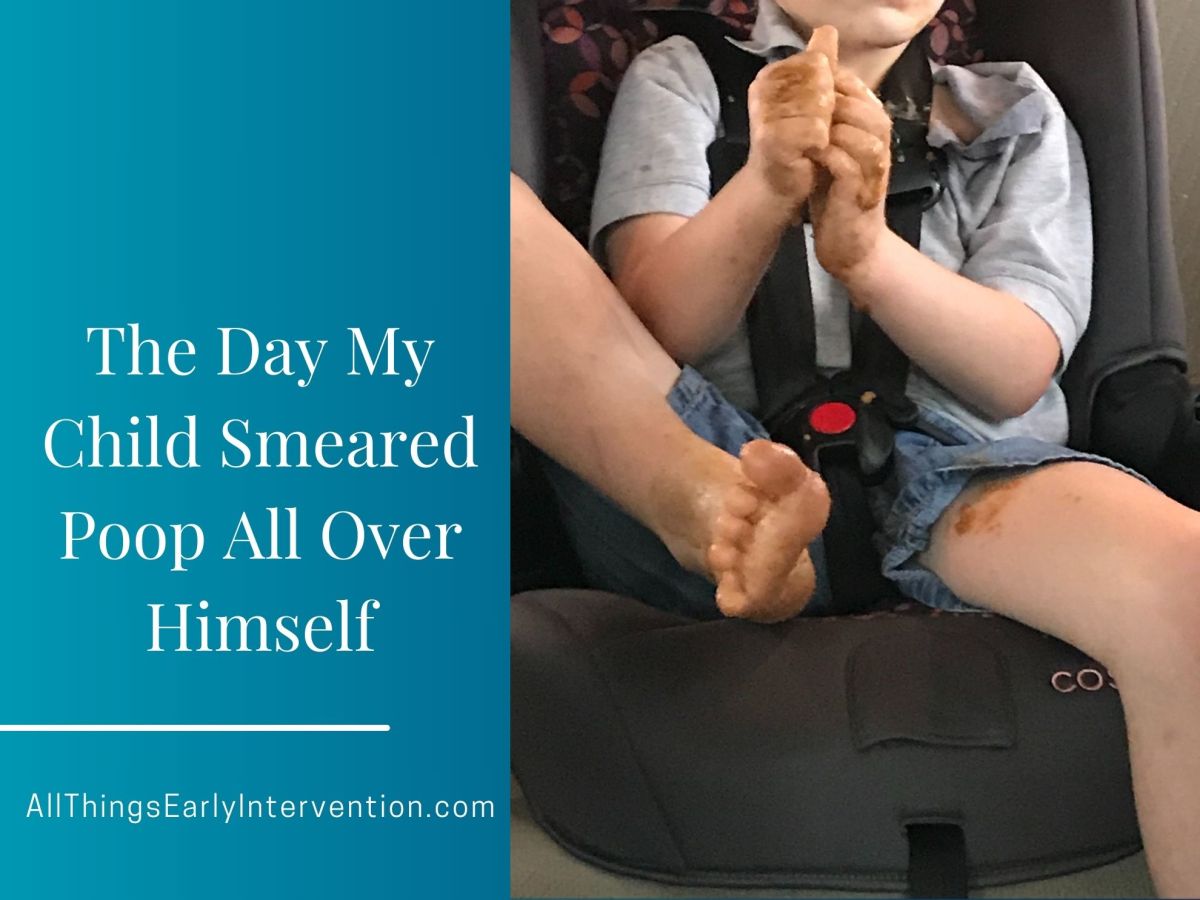
I was driving with our child, when I glanced in the rear view mirror.
To my horror, he was covered in what appeared to be POOP, gleefully playing with it. Panic set in as I navigated through traffic, desperately trying to find a safe place to pull over.
When I finally stopped, prepared for the worst, I discovered it wasn’t poop at all.
It was a pulverized apple-flavored Nutra-Grain bar.
He had been manipulating it like Play-Doh, creating a texture and shape that resembled smeared poop.
Relief washed over me.
He DID have a history of fecal smearing which is why when I saw him with brown stuff smeared I jumped to that conclusion.
The experience reminded me that this child had a strong sensory need for tactile input (which he met by smearing stuff), and he would seek it out any way he could.
Understanding Fecal Smearing Behaviors
Fecal smearing, while distressing, is a behavior with meaning. As Autism Parenting Magazine states,
“Fecal smearing is considered a behavior, and all behavior has meaning. A child who is smearing is using that behavior to meet a need and/or to communicate.”
Autism Parenting Magazine
Several factors can contribute to this behavior:
- Sensory Seeking: Children may seek the tactile or olfactory input.
- Communication Difficulties: They may lack the ability to express their needs.
- Anxiety: Smearing can be a way to seek attention or comfort.
- Reinforcement: Attention or avoidance can inadvertently reinforce the behavior.
Tip: Provide Sensory Alternatives to Playing with Poop
Our experience with the Nutra-Grain bar demonstrated how sensory input can influence his behavior. It also showed how sensory seeking behaviors can be redirected. So there is hope.
Offer Alternative Sensory Input: Provide messy play opportunities. Prevention and replacement. Slime play dough and tactile sand and any sensory texture and smell activities. Keep the child so busy exploring the stuff you do want him to touch that he has no need to explore the poopy stuff.
Research supports this approach:
- A case study from Middletown Autism highlighted the success of redirecting sensory-seeking behaviors to appropriate alternatives, such as Play-Doh and vibrating toys.
- “How to Help Reduce Fecal Smearing in Children with Autism” from NSPT4Kids recommends offering alternative sensory experiences, including textured play like Play-Doh and visual play like finger painting.
More Strategies
Here are some more practical strategies for addressing smearing behaviors:
- Understand the ABCs: Identify the Antecedent, Behavior, and Consequence.
- Establish a Routine: Consistent toileting routines can help.
- Make Toileting Comfortable: Adapt the environment.
- Limit Access: Use clothing that’s difficult to remove. Stores don’t offer Onesies in sizes bigger than 2T but I found a company on Amazon.
- Heavy Work: as always, provide plenty of heavy work activities for an ounce of prevention !!!! posts about heavy work
- Social Stories: Use social stories to reinforce appropriate behaviors. posts about social stories
Finding Solutions Through Understanding
Understanding the underlying reasons for smearing behaviors is crucial for developing effective interventions. By offering appropriate sensory alternatives and implementing consistent strategies, we can help children regulate their sensory needs and reduce these behaviors.
Some Related Products on Amazon
As an Amazon Associate, I earn on qualifying purchases.

Laundry Detergent
ARM & HAMMER™ Deep Clean Stain Formula Laundry Detergent Power Paks

Big Kid Bodysuits
CBObaby Short Sleeve Round Crew Neck Bodysuits For All Ages 2T-18yrs.


Nutri-grain Breakfast Bars, Apple Flavor
References
Autism Parenting Magazine. Autism and fecal smearing: Understanding and addressing the behavior.
Middletown Autism. Case study 1.
National Autistic Society. (n.d.). Smearing.
NSPT4Kids. (2025, March 14). How to help reduce fecal smearing in children with autism.
 All Things Early Intervention