
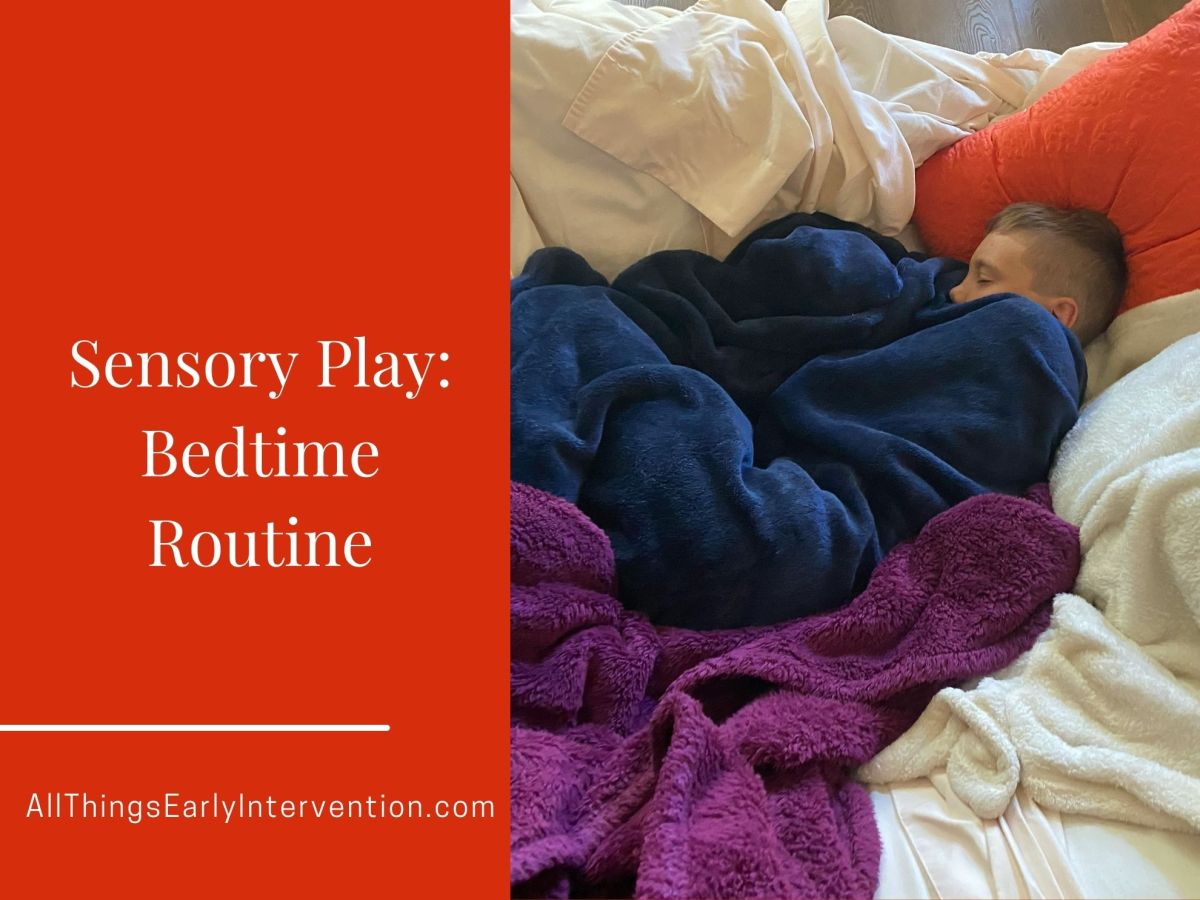
Bed Time Routine with a Sleep-Deprived Caregiver
Anyone who’s parented a child with special needs knows that bedtime can be a battlefield. Exhaustion sets in for both caregiver and child, and emotions can run high. But what if I told you that creating a peaceful bedtime routine starts not with your child, but with you? This two-part blog series explores the importance of self-care for caregivers navigating the often-stressful world of bedtime routines.
The Sensory Seeker and the Long Road to Bedtime
Our child was a sensory seeker, which meant constant movement and exploration. By the end of the day, we were often running on fumes, whether from dealing with epic tantrums or providing the sensory play he needed to feel regulated.
Eventually, we established a good routine: books, rocking, lullabies, and then waiting for him to fall asleep in his bed. On a good night, it took about an hour. But then there were the other nights…
He had a hard time settling down. He rolled, flipped, and flopped endlessly. Sometimes, it took another hour (or more!) for him to fall asleep. On those nights, it felt like he would never sleep. Do I try rocking again? Offer a snack? Be firm? It made me doubt my parenting and question everything. It was easy to fall into a negative mindset, beat myself up, and resent the time this torturous routine consumed.
Over time, resentment started to creep in. I resented losing those 1-2 hours of my life. That resentment turned to anger, which showed on my face. He picked up on it, got upset, and cried, and the whole process started over. We tried many things. The one thing that had the biggest impact on getting him to sleep was that I needed to do whatever it took to keep myself calm throughout the process.
My own emotional state had a profound impact on the entire bedtime process. The calmer I remained, the easier it was for my child to settle.
The Two Participants: Child and Caregiver
The first step toward bedtime peace is recognizing that there are two participants in the bedtime routine: the child and the caregiver. Both have needs. The child needs a patient caregiver and a calm routine to help them learn to fall asleep independently. But the caregiver? The caregiver has needs that must be met to manage their own emotional triggers and avoid becoming utterly frazzled.
We know that children with ASD experience sleep issues and challenging behaviors. Parents then experience stress, and then parent’s stress can worsen a child’s behavior problems. Therefore, effective stress management becomes a critical for both parent and child’s well-being.
Why Self-Care Matters
Kids with autism spectrum disorder (ASD) frequently experience sleep difficulties. These challenges, coupled with the inherent stress of parenting, create a perfect storm for caregiver burnout.
The U.S. Surgeon General’s Advisory on Mental Health & Well-Being of Parents (2024) acknowledges the emotional rollercoaster of parenthood, highlighting the potential for significant stress. This stress can negatively impact both caregiver and child:
“Both maternal and paternal mental health conditions are shown to impact the well-being of children. Maternal mental health conditions have been found to significantly impact a child’s well-being and environment and can serve as a critical determinant of child outcomes.”
(U.S. Surgeon General’s Advisory on Mental Health & Well-Being of Parents, 2024)
Remember, you’re not alone in this. The Mayo Clinic offers guidance on navigating bedtime battles.
Here is a quote from Mayo Clinic Article “Child Sleep: parent frustrations.”
“Bedtime battles can test your willpower. But you won’t solve the problems if you give in to your child’s demands or if you act annoyed or upset. Try to remember that you’re teaching your child an important skill, even if it puts your patience to the test. Sleep is an important skill for your child to learn. The key is to find a bedtime routine that works. Then stick with it. The payoff will be a good night’s sleep for everyone.”
https://www.mayoclinic.org/healthy-lifestyle/childrens-health/in-depth/child-sleep/art-20044338
Understanding the Factors at Play
It’s important to remember that sleep challenges are common, especially in children with ASD. As noted in Sleep Science,
“Sleep problems are common: Children with ASD frequently experience insomnia, trouble settling down at bedtime, anxiety about sleep, waking up during the night, and generally poor sleep quality. Sleep affects behavior: When children with ASD don’t get enough good sleep, it can worsen their behavior, leading to more anxiety and disruptive actions.”
Mayo Clinic Staff. “Children’s Sleep: Understand What’s Normal.” Mayo Clinic, Mayo Foundation for Medical Education and Research, 2023, https://www.mayoclinic.org/healthy-lifestyle/childrens-health/in-depth/child-sleep/art-20044338.
Create Your Bedtime Oasis
Here are some lessons I learned that prioritize the caregiver’s needs during bedtime:
Prioritize Your Needs:
- When designing a bedtime routine, consider your own comfort. Your well-being during this stressful time is just as important as the child’s.
- For me, it was crucial to distract myself from the resentment I felt about the long bedtime process.
- Remember, the child will eventually fall asleep. Reframe that time as an opportunity for yourself.
- If you have a TV in the room, watch something engaging but not overly stimulating. For me, it was Ken Burns documentaries like the National Parks series.
- If there’s no TV, bring an audiobook, podcast with earbuds, or use the time to scroll on social media or check emails.
- The goal is to become invested in something else, so every little movement or sound from the child doesn’t trigger your frustration.
Minimize Decision Fatigue:
- Keep the bedtime routine as consistent as possible. This reduces decision-making stress.
- You’ll operate more on autopilot, and your brain will find comfort in that predictability.
- This allows you to focus on responsive interactions with the child rather than constantly asking, “What’s next?”
Set the Stage for Your Comfort:
- Create a comfortable environment for yourself.
- Use a lavender diffuser (the lavender is for you, to help you relax).
- Have a comfortable chair.
- Change into comfortable clothes.
- Address any annoying little things that can be fixed.
- For example, we added a foam egg crate and mattress padding to the toddler bed. This was partly for the child, but also for me, because the sound of his body swishing against the plastic mattress and thin sheets was driving me crazy.
Choose Your Battles Wisely (or Don’t Choose Them at All):
- You’ve heard “choose your battles wisely” before. I’m suggesting you literally don’t engage unless it’s a major deal-breaker.
- For me, the rule was that he had to stay in bed and lay down. But I was lenient with everything else.
- I ignored wiggles, self-talk, and rolling around.
- I did not encourage conversation.
- Approach it like you are not there to have a chat, you are there to enforce bedtime, with love.
Conclusion: Prioritizing Caregiver Well-being
Supporting a child with sleep challenges is incredibly demanding. Remember that your well-being is not secondary; it’s essential for both you and the child.
Creating a peaceful bedtime routine starts with prioritizing your own well-being. By incorporating self-care strategies, you’ll be better equipped to manage the challenges of bedtime and foster a more restful night’s sleep for everyone.
What strategies have you found helpful in preserving your sanity during bedtime? Please share your tips and experiences!
Stay tuned for Part 2 where we’ll explore strategies for creating a calming bedtime routine for your child.
Documentaries Just Boring Enough for a Child to Fall Asleep But Interesting Enough to Keep Me Distracted from My Frustration with How Long Bedtime Takes …. on Amazon
- American Experience: New York: A Documentary Film by Ric Burns
- Ken Burns: The National Parks: America’s Best Idea DVD
- Baseball: A Film by Ken Burns (Includes The Tenth Inning)
 All Things Early Intervention