
Bean There, Done That: Rethinking Food Waste in Sensory Play
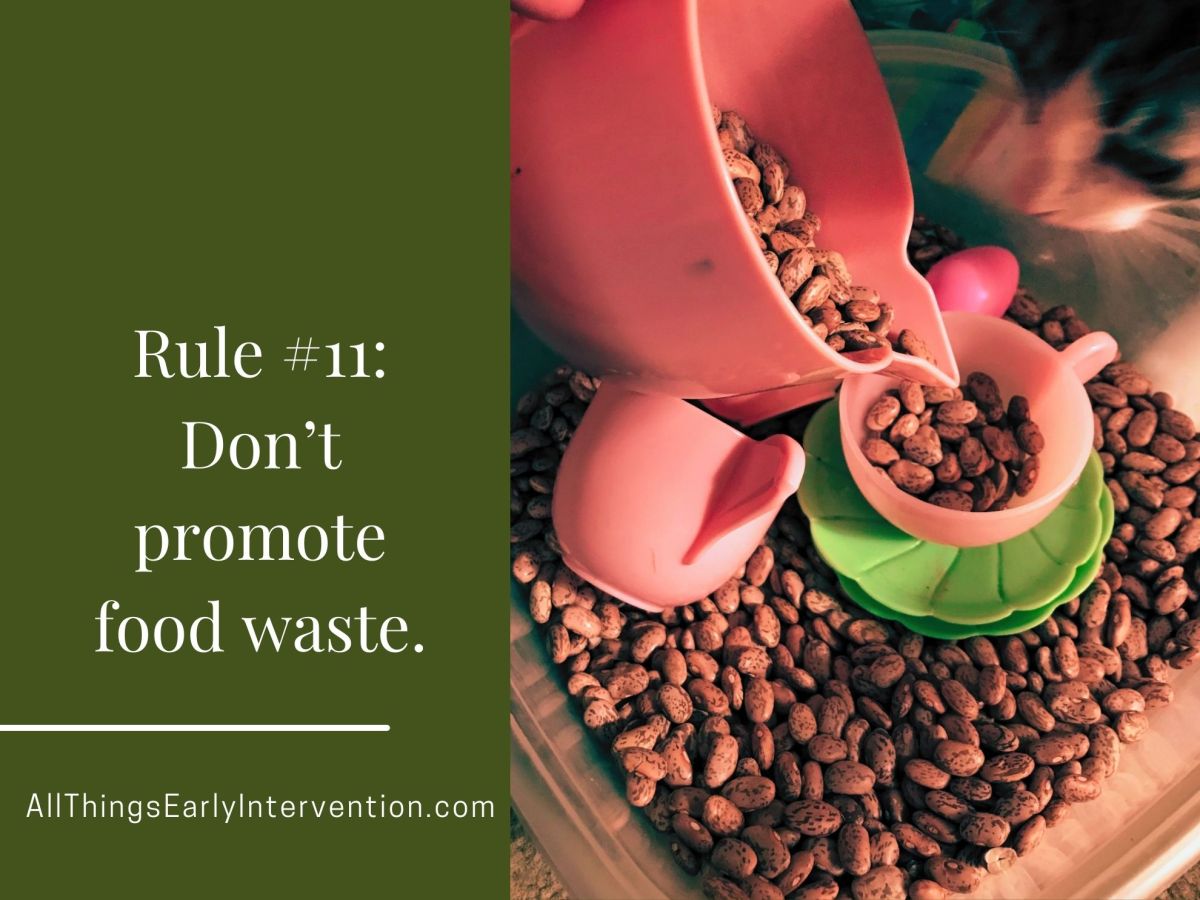
Let’s talk sensory bins, a staple in therapy rooms for good reason. They’re a fantastic way to engage little learners and explore textures. But have you ever stopped to consider the ethics of using food in these bins, especially when some families we work with struggle with food insecurity?
My Big Bag of Shame
I vividly remember this moment early on in my Early Intervention career. Brimming with enthusiasm, I marched into the Health Department toward my office, carrying a ten-pound bag of red beans – perfect for a new sensory bin!
But as I walked through the waiting hall filled with families participating in the WIC program, a kind lady eyed my giant bean bag with a mix of curiosity and awe. When she asked if those beans were in the WIC food package, I proudly explained they were for sensory play.
The look on her face after that – well, let’s just say it wasn’t excitement. It was a look that said, “Those beans could feed my family for a week!” My playful beans suddenly felt like a symbol of privilege, and a wave of guilt washed over me.
Food for Thought (and Play?)
The National Association for the Education of Young Children (NAEYC) actually discourages the use of real food in sensory bins due to potential allergic reactions and the issue of food waste. However, there are two sides of the story.
Check out Lisa Murphy’s perspective at www.OoeyGooey.com, where she argues that messy play with food can be a valuable learning experience.
For Further Reading: https://www.naeyc.org/resources/pubs/tyc/summer2021/ask-hello-food-sensory-table
https://www.naeyc.org/resources/pubs/tyc/feb2020/inequity-with-anti-bias-education
So, Beans or No Beans? Let’s Get Creative!
Here’s the thing: there are countless amazing alternatives to food in sensory bins that are just as stimulating and way less wasteful. Consider these fantastic options:
- Fish Gravel: This colorful aquarium staple provides a delightful underwater experience for tiny hands.
- Moon Sand: various sand recipes offer an endlessly fascinating moldable, squeezable texture.
- Crunchy Leaves: Nature’s sensory material! Dried leaves or pine straw offer a variety of textures, shapes, and even delightful rustling sounds.
- Pom Poms and cotton balls: These fluffy friends come in all colors and sizes, perfect for scooping, pouring, and sorting.
For more ideas, visit https://playtolearnpreschool.us/non-food-sensory-bin-ideas/ “Huge List of Non-Food Sensory Bin Ideas” by Jamie White and Gemma Kenworthy at Play to Learn Preschool (accessed April 22, 2024.)
The possibilities are endless! By getting creative with non-edible materials, we can create engaging sensory experiences that are both stimulating and respectful of the families we serve.
Remember, early intervention is all about meeting the child’s developmental needs, and that includes being sensitive to the family’s needs. So, let’s keep those sensory bins overflowing with fun while being mindful of what ingredients are best for that child.
Some Related Products on Amazon
As an Amazon Associate, I earn on qualifying purchases.



Fish Gravel

 All Things Early Intervention