
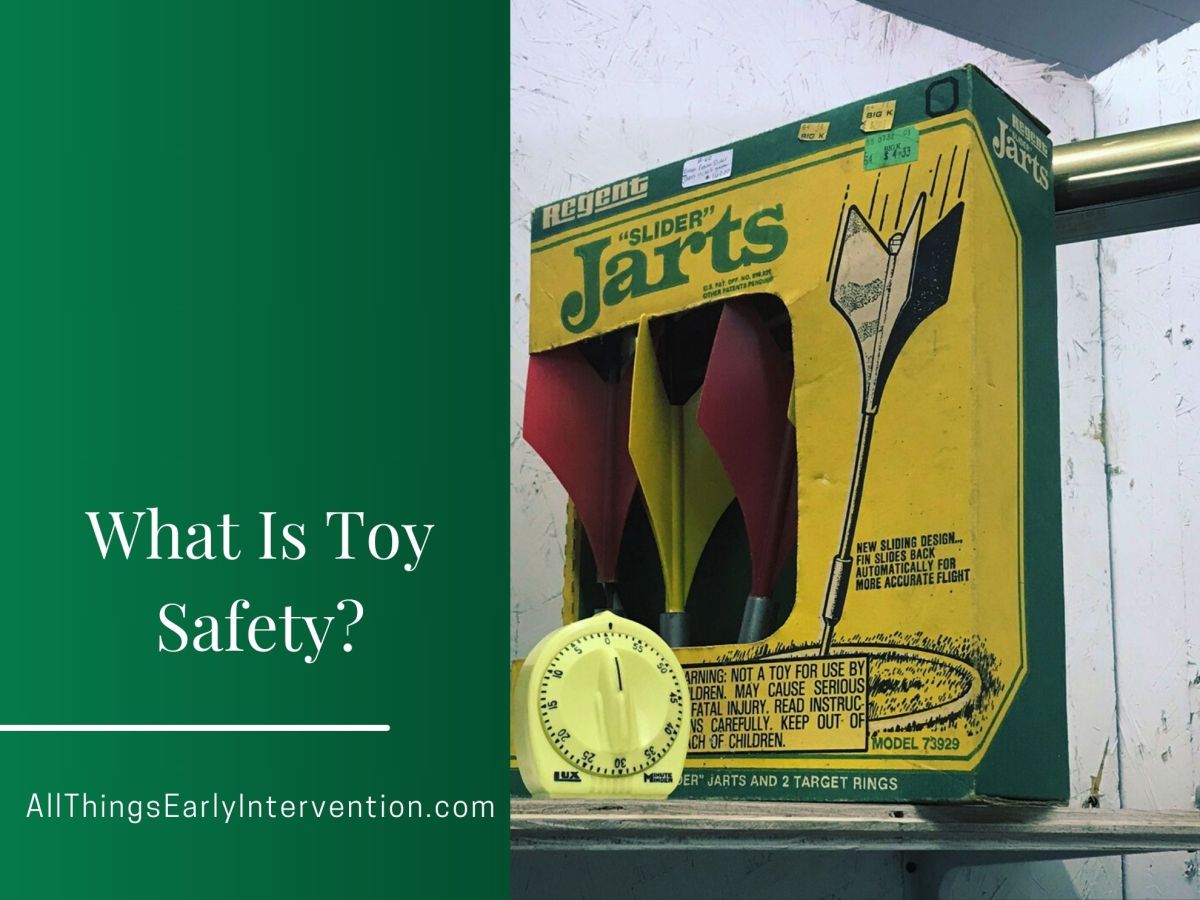
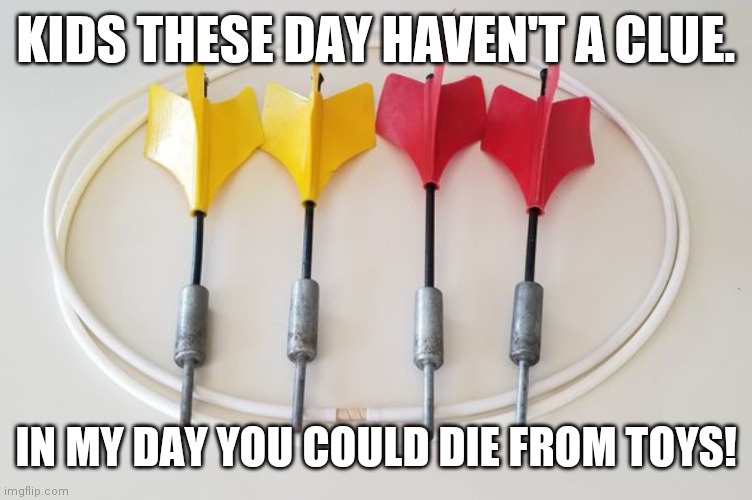
On a road trip with my mom, we stopped at a huge antique store with an elephant statue in the front lawn. It was fascinating. When I saw these bad boys on the shelf, I snapped a pic so I could share it with Josh because there were some funny memes going around on the internet at the time.
A little explanation…
The following press release was issued May 15, 1997.
After a recent serious injury caused by a lawn dart, the U.S. Consumer Product Safety Commission reissued its warning that lawn darts are banned and should be destroyed. Effective on December 19, 1988, CPSC banned the sale of all lawn darts in the United States. Pointed lawn darts, intended for use in an outdoor game, have been responsible for the deaths of three children. The most recent injury occurred last week in Elkhart, Ind., when a 7-year-old boy suffered a brain injury after a lawn dart pierced his skull.
“CPSC banned lawn darts in 1988, but some of these dangerous products may still be in garages, basements, or second-hand stores,” said CPSC Chairman Ann Brown. “Parents should destroy these banned lawn darts immediately.”
Before the 1988 ban, Lawn Darts were sold in sets that usually included four large darts and two targets. Lawn darts also were sold in packages with other sports equipment. The darts typically are about 12 inches long with a heavy metal or weighted plastic tip on one end and three plastic fins on a rod at the other end. The darts are intended to be grasped by the rod and thrown underhand toward a target. Lawn darts can cause skull punctures and other serious injuries. CPSC urges consumers to discard or destroy all lawn darts immediately. They should not be given away since they may be of harm to others.
https://www.cpsc.gov/Newsroom/News-Releases/1997/Following-Recent-Injury-CPSC-Reissues-Warning-Lawn-Darts-Are-Banned-and-Should-Be-Destroyed
Who is it that projects consumers from toys that could harm children?
The Consumer Product Safety Commission (CPSC) is the US Government agency that plays a crucial role in ensuring the safety of toys for children. They are responsible for regulating consumer products and protecting the public from unreasonable risks of injury or death.
https://www.cpsc.gov/FAQ/Toy-Safety
Additionally, they provide educational resources for parents and caregivers to help them choose safe toys and use them properly.
https://www.cpsc.gov/Safety-Education/Safety-Education-Centers/Toys
Who cares about toy safety?
Teachers, parents, grandparents, children, therapists…. and Discovery Toys.
 All Things Early Intervention