

This training was presented on Facebook, and is available to be presented upon request.
Toys for Talking: Toys and Activities to Promote Language
Are you worried about talking? Don’t wait and see if they grow out of it. Go ahead and speak to a professional about your concerns. Late-talkers, also called late-bloomers, seem to grow out of it, but many still struggle with language and literacy later in school.
Remember that you, the parent, are your child’s best toy to encourage talking. Playing with you is the best way to increase interactions that lead to talking. When choosing toys, be sure to stick to the basics, include some “people toys” and help your child use her imagination. The following material came from the “Toys for Talking” Facebook Training from Simply Special Instruction.
Late Talking: Don’t “Wait and See.”
If you have ever expressed concern about your child’s language development, you have probably been told he will “grow out of it” or maybe the doctor said to “wait and see.”
https://www.cdc.gov/ncbddd/actearly/concerned.html
Easter Seals, provides parents with FREE access to the Ages & Stages Questionnaires®, Third Edition, one of many general developmental screening tools.
Click here https://www.easterseals.com/mtffc/ to learn more. Be sure to share the completed questionnaire and results with your child’s doctor.
Have you ever expressed concerns about your child’s development?
Talking: What Can We Do to Help?
Do Late Talkers “Grow Out of It?”
Do Late Talkers “Grow Out of It?” by Lauren Lowry, 2016 at The Hanen Centre.
“Between 70–80% of Late Talkers seem to catch up to their peers by the time they enter school. Sometimes these children are called “late bloomers” because they eventually seem to catch up to other children their age.”
“Late bloomers” who seem to catch up actually show weaknesses in these areas: Some language and literacy skills – these include vocabulary, grammar, phonology (rules about the sounds used in a language), reading, understanding and creating stories, writing, and listening comprehension.”
“While these differences might seem small, it means that Late Talkers who seem to “grow out of it” are working at a disadvantage when it comes to developing later language and literacy skills.”
The website for Centers for Disease Control has a list of Early intervention in your state: 0-3 here
The Early Childhood Technical Assistance Center, ECTA has a list of preschool intervention programs in your state: 3-5 here.
Have you ever participated in an evaluation for a late talker? Why is it important to act early?
Helping Late Talkers: Parent Roles
Read about these these parent role profiles….
Parent Roles This reading material from the Hanen Center discusses the roles that parents play in their children’s language development.
The tuned-in parent is tuned in to their child’s interests and needs. They give their child a chance to start an interaction, and they respond immediately with interest.
We all TRY to be the tuned-in parent, but no one’s perfect. Which of the following parent roles do you find yourself in more often than you’d like?
Director: parents do most of the talking, telling children what to do and how to do it.
Tester: The parent asks many questions to see what your child has learned.
Entertainer: The parent does whatever it takes to keep the child amused, taking the lead and doing most of the talking and playing.
Helper: The parent that does everything for their child, not expecting much communication.
Mover: This parent is busy and works hard to stay on schedule, which keeps things moving fast.
Watcher: The parent watches and comments from a distance.
Helping Late Talkers: Be the Toy
You Are Your Child’s Best Toy! an article written by By Lauren Lowry at the Hanen Center, 2016.
“When you and your child play together without toys, you become the toy. This happens during social games like peek-a-boo, tickles, horsie rides, or chases. We call this type of social play “people games” because these games only involve people, not toys.”
What is your favorite people game to play? Do you have any not on the list?
Helping Late Talkers: Not All Toys Are Created Equal
What difference do toys make anyway?
NAEYC What the Research Says about Toys
In “What the Research Says: Impact of Specific Toys on Play,” NAEYC interviewed two researchers, Jeffrey Trawick-Smith and Judith Elaine Blakemore.
“Some toys have a powerful influence on children’s thinking, interaction with peers, and creative expression. Other toys do not. Some of the toys that look most interesting to adults are not particularly effective in promoting development.”
“Basic is better. The highest-scoring toys so far have been quite simple: hardwood blocks, a set of wooden vehicles and road signs, and classic wooden construction toys. These toys are relatively open-ended, so children can use them in multiple ways. Also, they have all been around for a long time. There may be a reason these toys have been enjoyed by children over the generations.”
“Interestingly, toys that have traditionally been viewed as male oriented—construction toys and toy vehicles, for example—elicited the highest quality play among girls. So, try to set aside previous conceptions about what inspires male and female play,”
Have you noticed your children engage in play differently depending on the toys?
Helping Late Talkers: Make yourself part of the fun with people toys.
People toys are hard-to-operate toys that require an adult’s help, like spinning tops, balloons, or wind-up toys.
People Toys is some reading material from the Hanen Center about Toys that involve people.
“Let him spend some time figuring out how to use each toy and wait for him to get frustrated or ask for your help.Then, step in and make the toy work.”
Wind-up and Squeeze Toys
“A jumping mouse or a moving train may appeal to your child. Squeeze toys are also fun. These are toys that are activated when you squeeze a small hand-held air pump. Make the toy go.When it stops, hand it to your child and wait for him to request that you make it go again.”
Bubbles
“Open a jar of bubbles and blow a few. As soon as your child starts to watch or pop the bubbles, close the jar. Wait for him to ask you in some way to open it again. Or, blow bubbles to get your child’s attention. Blow another bubble and then pause, holding the bubble wand at your mouth. Wait for him to ask you in some way for more bubbles.”
Music Boxes
“Wind up the music box and let the music play. Wait for your child to ask you to do it again.”
Jack-in-the-box
“Jack-in-the-box. Wind up the jack-in-the-box and let the character pop out. Wait for your child to ask for another surprise.”
Spinning Tops
“Spinning tops. Start spinning the top, and then wait for your child to ask for “more” when the top stops.”
Do you play with people toys with your child? Why is it important that the child is NOT able to operate these toys independently?
Helping Late Talkers: Use Pretend Play to Kick Start the Imagination
Toys That Kick Start the Imagination -some reading material from the Hanen Center written by Lauren Lowry about toys that promote imaginary play.
Toys that lend themselves to pretend play
Stuffed animal or doll
“Your child’s favourite stuffed animal or doll. Teddy bears aren’t just for cuddling and sleeping! Sometimes children’s first pretending is seen with their favourite stuffed animal or doll.
New pretenders might enjoy feeding their teddy bear or doll with a toy spoon or putting a blanket over it so it can go to sleep.
Experienced pretenders can have tea parties with several stuffed animals or dolls, or create a veterinarian’s office or hospital by placing stuffed animals or dolls in old shoe boxes which do double duty as beds!
Puppets
“…. and encourages new pretenders to feed them, talk to them, or comb their hair. More experienced pretenders enjoy putting on puppet shows using multiple puppets, or even puppets they’ve made themselves out of old socks. A cardboard box makes a great puppet theatre. Puppet shows encourage great collaboration and peer play in older children.”
Blocks and Lego
“Blocks are not just for building towers! Children new to pretending might build something simple and familiar like a house or a garage for their favourite car. More experienced pretenders might pretend individual blocks are beds for the hospital or pieces of garbage for the garbage truck. Or they might enjoy creating elaborate scenes out of blocks, such as various buildings for a block “city”.
Toy food and dishes.
“Children interact with food constantly – they eat, watch their caregivers prepare meals, and visit the grocery store. This makes food a great theme for new pretenders as it is so familiar. Often a child’s first pretending involves food, such as feeding a stuffed animal or feeding mommy with a toy cup. More experienced pretenders can play restaurant, have a tea party, pretend to shop for toy food, have a birthday party, play pizza shop…the possibilities are endless!
Keep things simple for new pretenders by demonstrating one simple action.”
Vehicles.
“Just like food, vehicles are something common in children’s experience, which makes it a good early pretend theme.
Keep things simple for new pretenders by demonstrating one simple action with the vehicle, like pretending to fix it with a toy tool, or pretending to race two cars (one for you and one for your child).”
Playdough
“Most children enjoy the sensory experience of squishing, rolling, and manipulating playdough. This can be a way to hook new pretenders into using their imagination. New pretenders can make something simple and familiar, like a car or an apple. For example, make playdough food to serve on the toy dishes, then feed it to a puppet. Or make playdough roads or tunnels for toy vehicles to drive on.”
Costumes and props for role play.
New pretenders can pretend to be something familiar, like dressing up as mommy or daddy by holding a purse or wearing a tie. Experienced pretenders can dress up and act out a scene, such as mommy going shopping (with her shopping bag) or daddy going to work (with his briefcase).
The Thing About Batteries
10 Tips for Selecting Toys for Your Speech Delayed Child
In an article for Friendship Circle, speech pathologist Katie Yeh shares her own tips for toy selection.
“My first recommendation, is to skip the batteries. If the toy requires batteries, you probably don’t want it.”
“Cars, trucks, transportation toys (they do NOT need to make noise! That is what your child is for. Take the batteries out!)”
“Simple train tracks and trains (we have wooden set with NO batteries. However, I do have a plastic set WITH and without batteries to use with clients. Let’s be honest..it *is* fun to watch the trains go around the track sometimes!)”
There’s an App for That!
Did you know there is an app you can use to track your child’s developmental milestones?
CDC App The Center for Disease Control created an app to help parents track their child’s milestones. Check it out and tell me what you think.
Did you know? Discovery Toys
Did you know that Discovery Toys offers products that may be just the thing you need to make learning fun for your child?
You know you can host a training event (similar to this, but you choose the topic). By hosting a training, you could earn your teaching tools for free. Ask me about hosting if you’re interested.


As an Amazon Associate, I earn from qualifying purchases.

Prelanguage Skills: Steps To Communication
This training session looks at the prelinguistic skills every child must learn before they can learn to talk. Participants will learn playful intervention strategies to promote these skills and, as a result, promote language to the little ones in their care.
Keep reading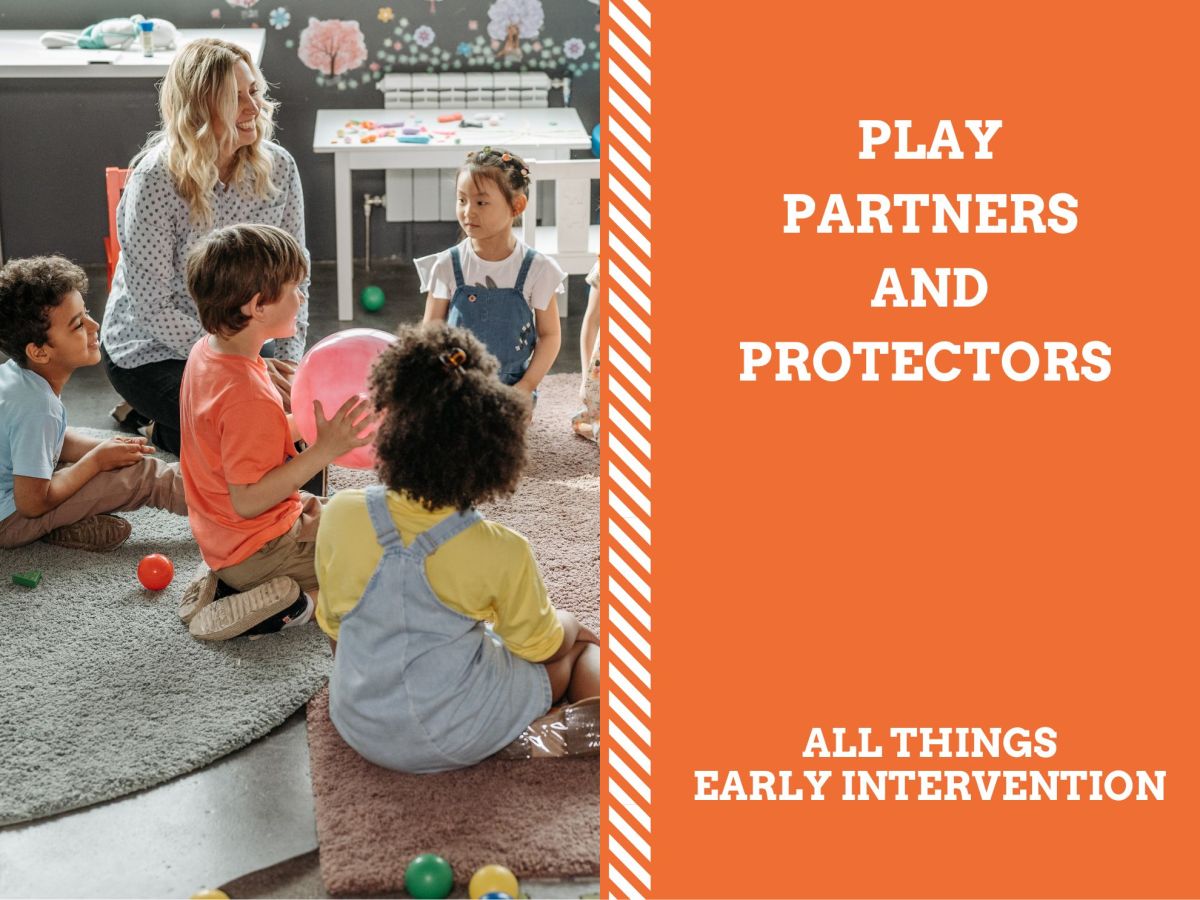
Play Partners As Well As Protectors
This training, available upon request, was created to orient new childcare providers to the basics of best practices in childcare. Those providing high-quality care for children are called to be play partners and protectors of little ones. The training emphasizes play and safety.
Keep reading
Grace-Based Discipline For The Preschool Classroom
This presentation is for teachers who teach in a Christian faith-based classroom, such as those located in a church, which is where many preschool programs are based across the state. This presentation, available upon request, draws connections between neuroscience, positive discipline strategies, and lessons in grace to promote positive discipline in a preschool classroom.
Keep readingSomething went wrong. Please refresh the page and/or try again.
 All Things Early Intervention