
MILK OR JUICE? Teach your toddler to communicate using pictures
Working with 2-year-olds who aren’t talking is the most common thing that I do in early intervention. It takes some experimenting to find a strategy that works. One strategy that I try early on is using a picture, an object, or a sign/gesture to bridge the gap in communication. Especially for those kids that know what they want to say but JUST CAN’T GET IT TO COME OUT.
You can use images to help toddlers with language delay to communicate what they want.
Parents and teachers should ALWAYS model the spoken word when teaching pictures or signs so that your toddler can hear language as much as possible.
Picture Choices In the Toddler Classroom:
Once upon a time, I had a classroom of two-year-olds. This was an inclusive classroom. Two of the eight children had significant communication delays. I was always looking for new ways to improve everyone’s ability to communicate with or without spoken words. One activity I implemented was our music choice picture menu. I made a CD with a mixture of unique songs for creative movement time. I wanted the children to be able to associate pictures with the songs so that they knew what the song choices were.
For example,
- picture of Pete the cat to choose the “I Love My White Shoes” song.
- picture of a ballerina for Tchaikovsky’s Waltz of the Flowers.
- picture of a marching band represented our university’s fight song played by the marching band.
- picture of a dancing chicken cartoon to choose the chicken dance.
I made the songs and the pictures unique and fun.
When I announced, “It’s music time! Who’s ready for music?” they’d run over to the picture menu, which was taped to the wall at their level. When I pointed to the laminated pictures and asked, “Which song should I pick?” Each child could pick songs by pointing, talking, or combining both. By having these pictures available, I was able to model a variety of words that expanded their vocabulary. I had the opportunity to describe both the picture and the music. Each child had his favorite and knew how to request their song even if they didn’t know how to say it. They were highly motivated to use pointing to communicate because they wanted to play their song and dance!
In the home:
I’ve mentioned before that my husband and I are therapeutic foster parents. With our nonverbal , I used images to teach him how to communicate what he wanted to drink.
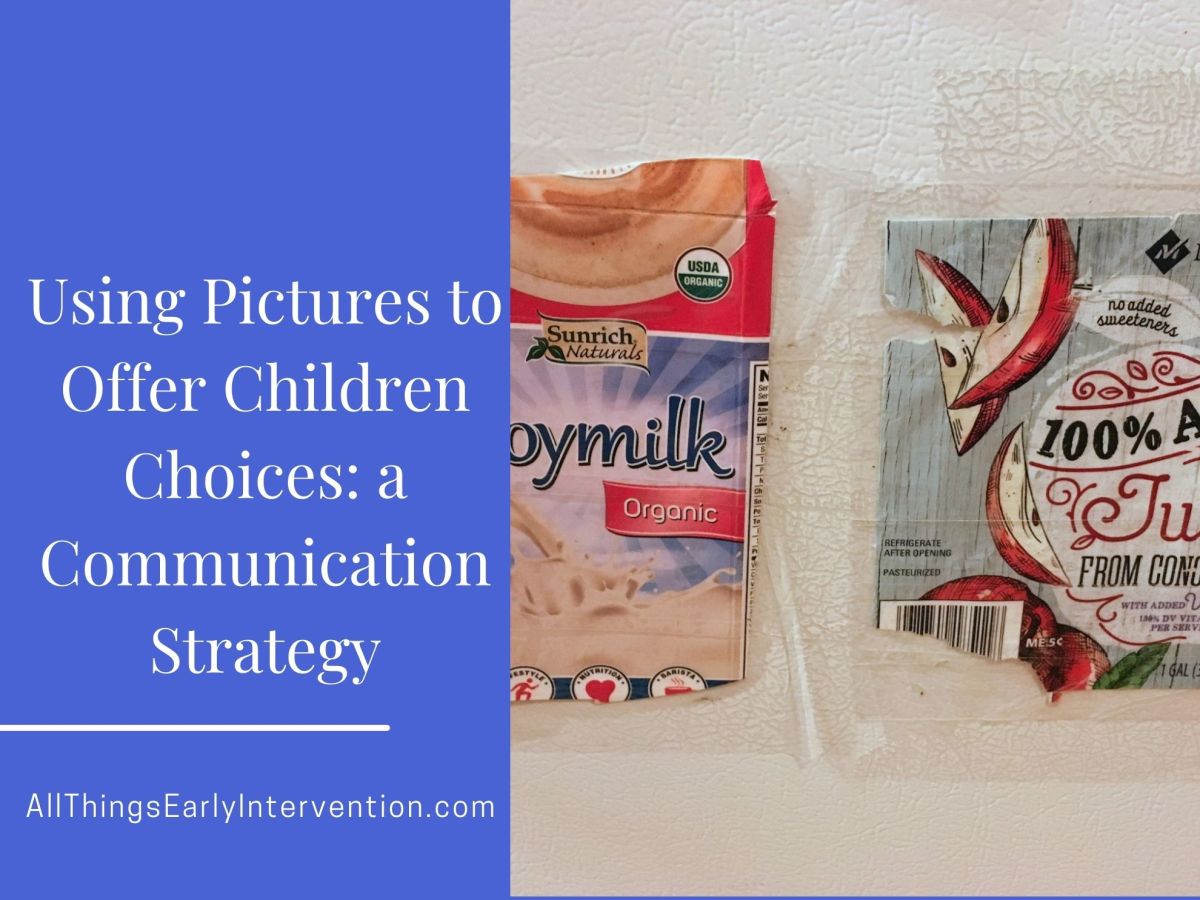
For images, I used the milk container cardboard and the juice wrapper from the bottle to keep things as easy, cheap, and as real as possible. I taped them to the fridge using packing tape as a laminate.
When Little Dumpling brought me his empty sippy cup, I pretended that I didn’t know what he wanted. When he dragged me to the fridge, I pointed to the milk and the juice pictures and asked him, “Do you want milk? Or Juice?” This went on for MONTHS. He hated it when I did it at first, but I kept doing it. One day, when we did this familiar routine, he pointed to the juice picture and said, “ju.” I did a happy dance! This came out of the blue. I had started to lose hope that he would ever point or talk. He did both on the same day!
Using visual aids to support learning is also called visual support. The Resource Center for Autism at Indiana University Bloomington offers more information about visual supports for various ages and situations. There’s even one for daylight savings time!
Offering pictures for children to communicate is a great way to meet children where they are in their language development and help them make choices. It can enhance their receptive vocabulary, listening skills, and symbolic thinking. You can invest in very expensive tools, or it doesn’t have to cost much at all.

Songs with a Purpose: Teddy Bear, Teddy Bear
When I need a high-motivation, movement-based activity for teaching the ability to follow simple one step verbal instructions, I turn to an old classic: “Teddy Bear, Teddy Bear, Turn Around!” When I start singing the song, the children know exactly what to do. It’s a joyful, musical cue that instantly gets them moving.
Keep reading
Simple Tools in Early Intervention: The Mirror
Language starts long before the first word is spoken; it begins with awareness, body movement, and imitation. The mirror is so powerful because it provides immediate visual feedback—a principle supported by speech-language research.
Keep reading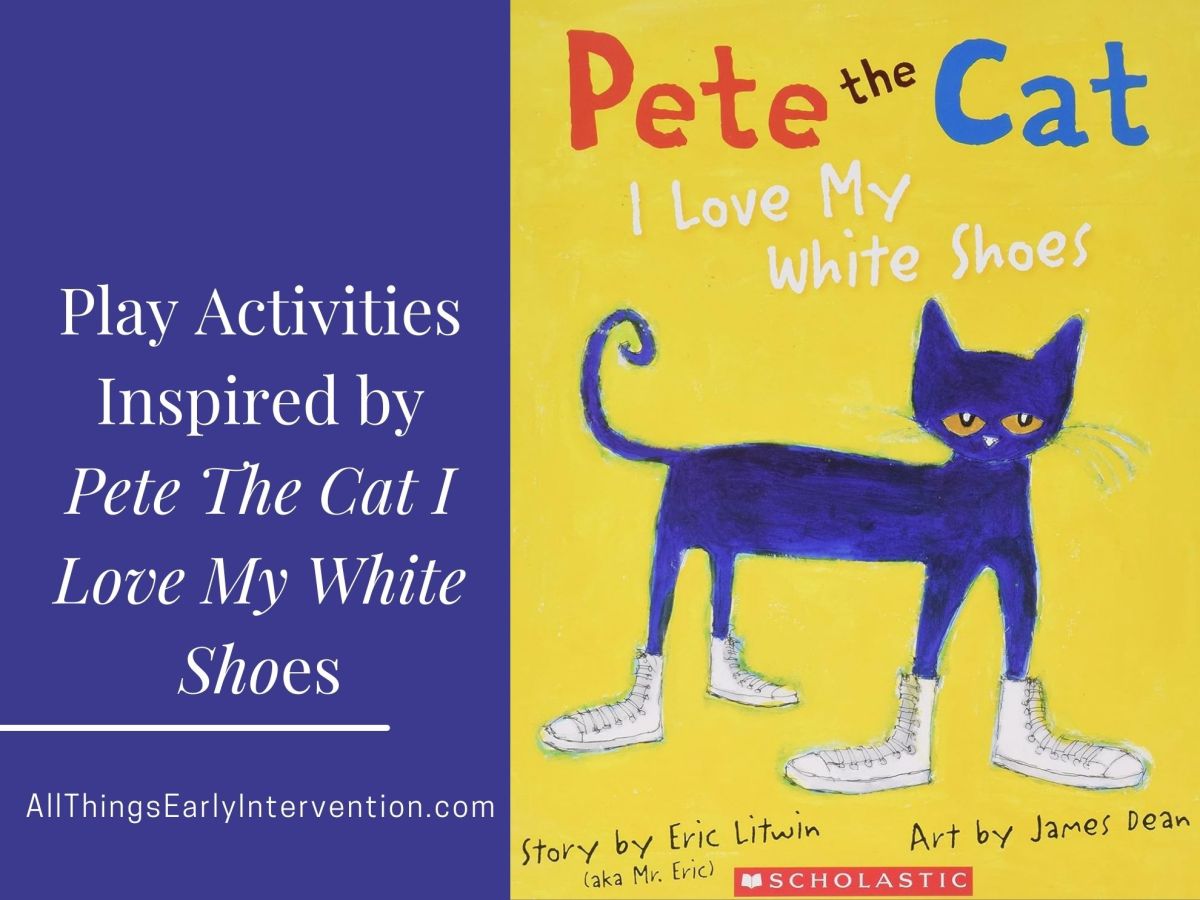
Early Intervention Activities with Pete The Cat I Love My White Shoes
If you’re a teacher or early interventionist wanting to help children develop their language skills: Use play-based activities that go along with the books you read. Whatever book it is! Read the books over and over again.
Keep readingSomething went wrong. Please refresh the page and/or try again.
 All Things Early Intervention