
updated April 27, 2024
The Early Intervention: How to Explain Your Job
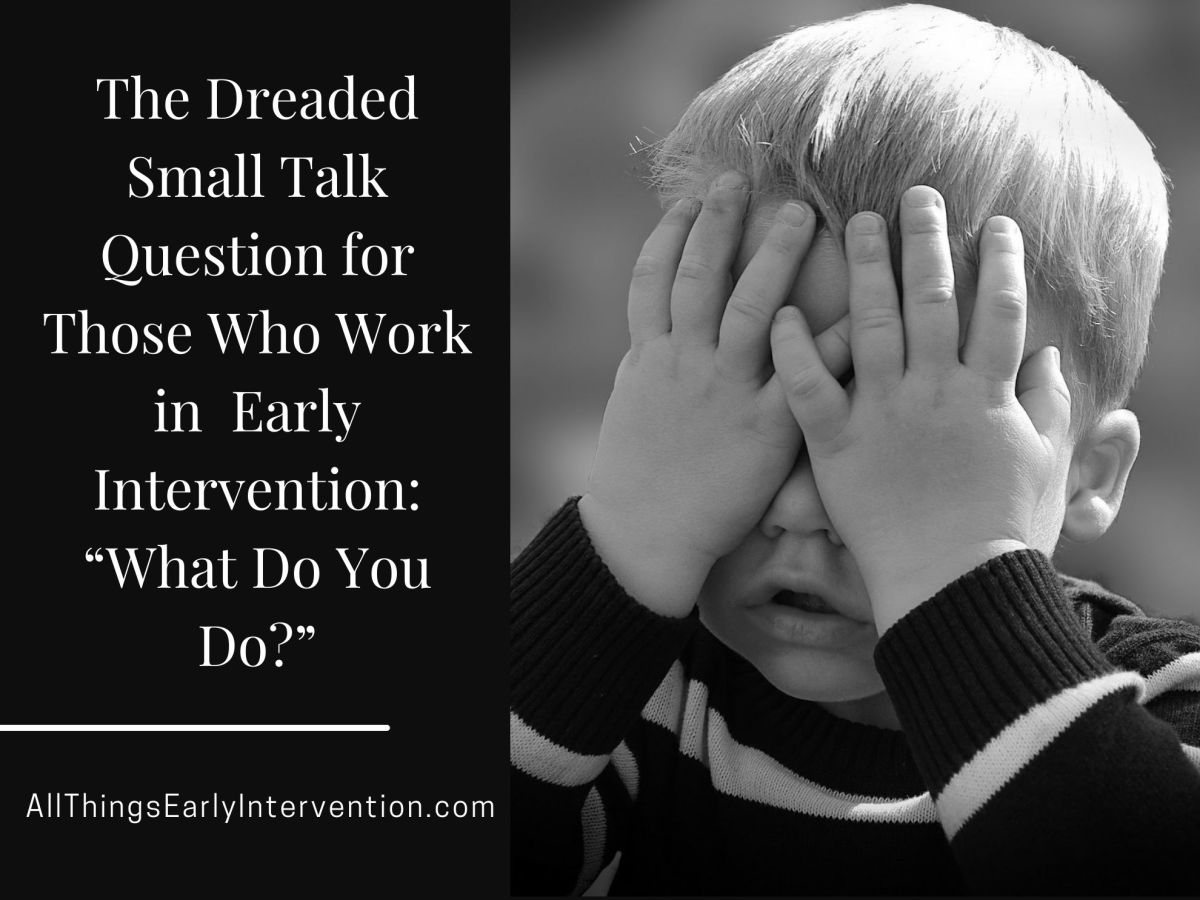
When you meet someone new, small talk starts flowing, and then they say, “So, what do you do?” For me, this question used to be a dreaded one. For Early Intervention providers, it can be a social tap dance because no one has ever heard of us, so we have to explain everything. I wondered if anyone else experienced this, so I did some googling. Let me share with you what I found.
First of all, I am already awkward at small talk. It turns out work is considered a good small-talk topic. If you search the web for tips on small talk, you can find some helpful advice.
For example, Very Well Mind offers advice in the article “Small Talk Topics, The Best and Worst Things to Talk About” by Arlin Cuncic.
“Another popular small talk topic is work. You may be asked what you do or whether you like your job. If you do something unusual that is hard to explain, consider keeping business cards in your wallet. This works particularly well if your company has a website that people can visit.”
Quote from “Small Talk Topics, The Best and Worst Things to Talk About” by Arlin Cuncic posted on verywellmind.com accessed April 27, 2024.
Business cards are not a bad idea, but I’m not likely to pass out a business card in a relaxed social setting. They say, “What do you do?” I say “Early Intervention.” They look puzzled. Usually, the rest of the dialog goes something like this.
“Is that like drug rehab?”
No, um, actually, I work with babies, helping them meet their developmental milestones, like walking or talking.
“You take care of babies?”
Not quite. I work one-on-one with little ones from birth to age 3 who may be experiencing developmental delays.
“Kinda Like a Teacher? Do You Have a Class?”
I am a licensed teacher but with a twist! My classrooms are living rooms, playrooms, and anywhere the learning happens. And I actually work for the health department.
“The Health Department? Kinda Like Home Health?”
We collaborate with the medical world, but our focus is on the whole child—their development, play, and communication.
“Traveling to Homes? Kinda Like a Social Worker?”
Social workers are part of our Early Intervention village, but our main focus is directly supporting a child’s development.
Is it just me?
If you’ve made it this far, the person you are talking to may be very confused, tired of talking about your job, or really impressed and want to hear more.
Megan McLachlan shares “7 Tips for Dealing with a Job Nobody Understands” at Primer Magazine. Check out tip six.
“Assemble a “misunderstood jobs” support system. Sometimes you just need to vent and when you can’t vent to someone who doesn’t understand your job, it’s good to find someone who will. They don’t have to be people who are in your field. They can be friends who have similar job situations. You can find them online, through social networks, at job conferences, etc. A good example is Ryan Bingham’s relationship with Alex in Up In the Air. While this relationship was romantic, it existed based on two jobs that left both characters frequently airport-bound.”
From “7 Tips for Dealing with a Job Nobody Understands” by Megan McLachlan at Primer Magazine, accessed Apr 27, 2024.
Let’s build that support system for each other by joining the Facebook group.

The struggle is real, friends. But here’s the upside: Explaining Early Intervention is worth the struggle because…
- We are educating the world, one confused party guest at a time! You’re raising awareness about the amazing work of early intervention and building your reputation as the person to go to if they have any development concerns in the future.
- We are finding our “people!”
At my ten-year high school reunion, the “what do you do” question came up all night.
“What do you do?”
“Early Intervention.”
Then, one magical response…. “Me too!”
I’ll never forget the unexpected joy for both of us. Those rare gems who light up when they hear “Early Intervention” – they’re your kindred spirits!
Even though explaining our job can feel like a tap dance routine, remember this: We are not alone, and we are important.
We help tiny humans reach their full potential!
(P.S. If you have any “Early Intervention Tap Dance” stories, share them in the comments! We’re all in this together.)
 All Things Early Intervention